Is it Safe to Ride a Scooter in Southeast Asia?
If you’re dreaming up travels to places like Indonesia, Thailand, or elsewhere in Southeast Asia, you’ve probably noticed that scooters, mopeds, and motorbikes are the main way people get around. And it makes sense — in places where cars can be expensive or traffic can be overwhelming (hello Bangkok, Ho Chi Minh City, and South Bali…), two-wheelers are often the easiest and most efficient way to get from A to B.
I’ll be the first to admit that once you get the hang of it, riding a scooter can make your time in Southeast Asia feel easier, freer, and even a little more romantic. But I’ll also be the first to tell you not to take it lightly. Two-wheelers are a much more vulnerable form of transportation than cars, and the risks are real. When things go wrong, the consequences can be serious — not just for riders, but also for destinations that are increasingly impacted by inexperienced or careless travelers on the road.
In this article, I’ll walk you through the key things to consider before hopping on a scooter in Southeast Asia — whether as a driver or a passenger. We’ll cover personal safety, accident risks, insurance, local laws and regulations, and motorbike rideshares like Grab and Gojek.
My goal is to help thoughtful travelers like you decide whether riding a scooter is the right choice for your trip — and how to approach it safely if it is.
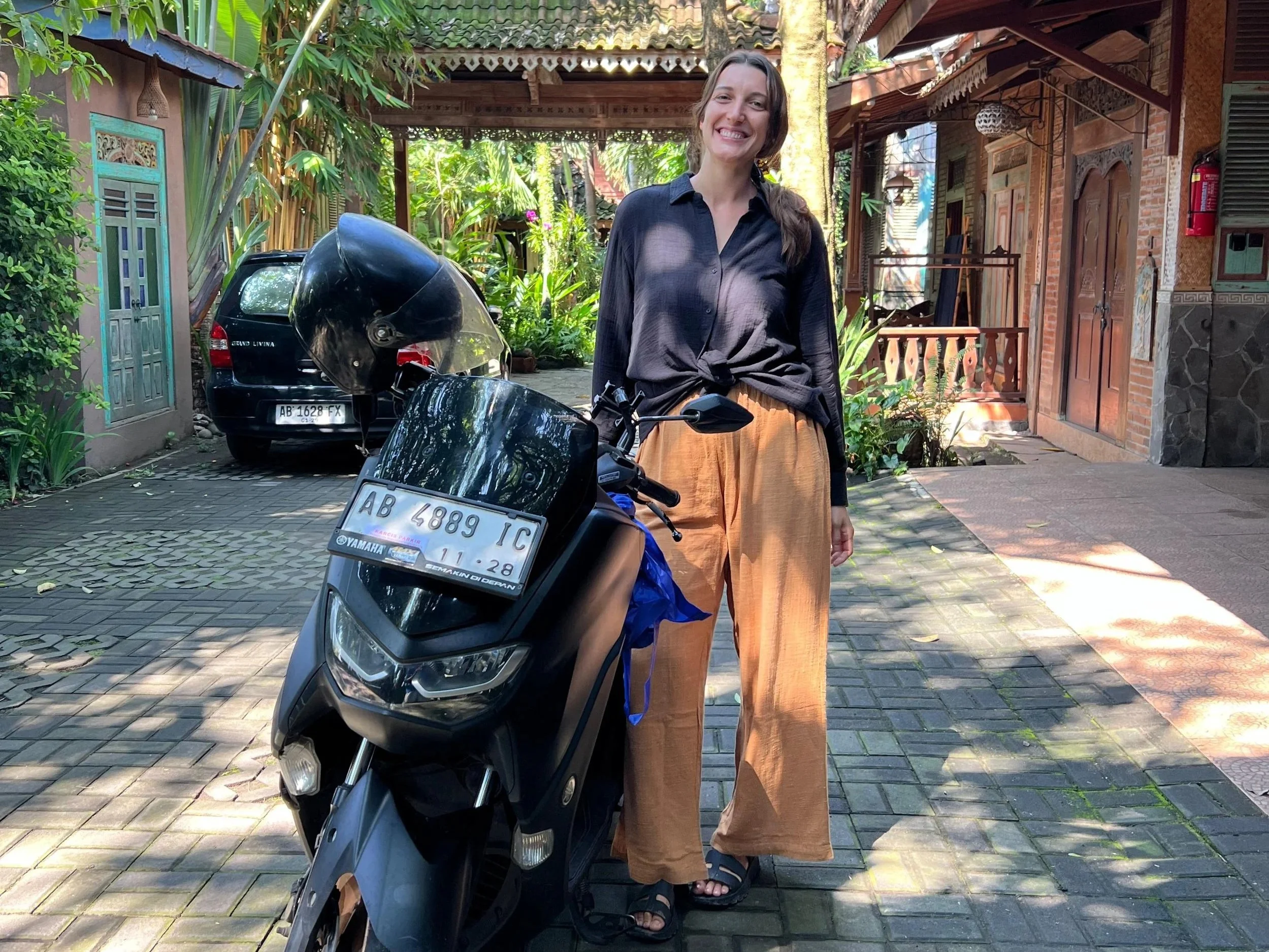
My rental scooter in Yogyakarta, Java, Indonesia, allowed me to explore the green countryside and temples more freely than I would have with tour groups.
So… is it safe?
So… is it safe to ride a scooter in Southeast Asia?
The honest answer is that it depends.
Riding a scooter in Southeast Asia can be safe — with the right level of experience, awareness, and conditions. For many travelers, it becomes one of the most freeing and memorable parts of their trip. And we all need to start somewhere!
At the same time, it can also be risky — especially for beginners or in more challenging environments. The difference often comes down to a few key factors.
In general, safety depends on three things:
Your experience level
The environment you’re in — including the country/area, road conditions, and traffic
The decisions you make — from how and where you ride to things like insurance and preparation
Understanding the risks and how these elements come together can help you make a more informed decision about whether riding is the right choice for you. Let’s break down what that actually looks like in practice.
Is it Safer to Ride as a Passenger on a Scooter?
If you’re not planning to drive yourself, riding as a passenger — whether through apps like Grab or Gojek, or with a friend you make at a hostel — can feel like a simpler and safer option for those without scooter experience.
In many cases, local drivers are experienced and very comfortable navigating traffic in their own environment, which can make the ride feel better than trying to figure it out on your own. That said, local drivers tend to go fast, and you’re still exposed to the same road conditions, with less control over what’s happening.
For shorter distances or in busier areas like South Bali and in cities, riding as a passenger can be a good option — especially for inexperienced drivers. As for meeting new friends in hostels or on dating apps (haha), please be cautious. Many tourists quickly become overconfident drivers.
Make a helmet a non-negotiable and wear closed shoes and pants if possible — these things can really help you in case of an accident, and ensure you can claim your medical insurance.
Even as a passenger, please approach the situation with awareness. Just because you’re not the one driving doesn’t mean the risks disappear entirely. Things like helmet quality, driving style, and how much you trust the driver all play a role in how safe the experience is (and feels).
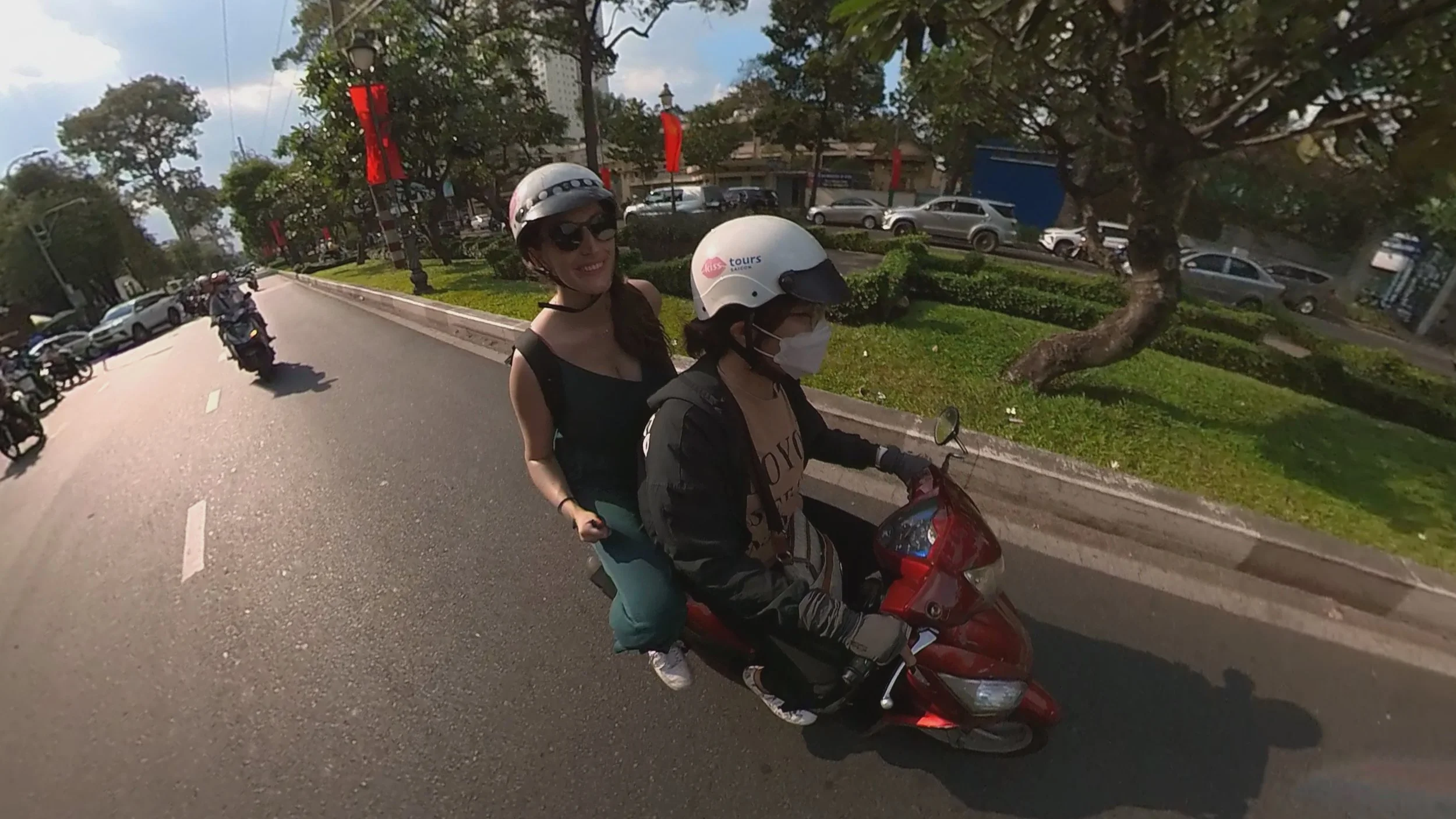
One of the best days I spent in Ho Chi Min City, Vietnam, was on the back of a scooter for a day trip by local university students showing us historical spots, their favorite spots, and the best banh mi sandwiches.
🚧 Road & Traffic Conditions in Southeast Asia
Especially for those coming from developed Western countries, you need to consider some major differences when it comes to driving in Southeast Asian countries:
Local driving culture and patterns
Sharing lanes is commonly accepted in Southeast Asian countries, whereas it is not in Canada, for example
You need to watch and pay attention to understand the local driving culture — such as when and how people pass, when they give way, when they honk, etc.
Driving on the left vs. the right
Traffic direction varies across the region, which can add another layer of complexity, especially if you are already learning to ride
See below ⤵️ for more info, including a list of which countries drive on which side
Unspoken rules (or what I like to call “jungle rules”)
Driving culture can vary a lot from country to country in this region
For example, Thais don’t really honk — whereas the Vietnamese do
In Indonesia, a quick honk at a pedestrian or scooter is normally just a warning that there is a car behind you — not them telling you to move (i.e., it is not an aggressive move)
Rural & mountain road conditions
You may be surprised at how great some roads are — such as the Mae Hong Son Loop in Northern Thailand or many roads in Bali’s main island
Then again, you’ll find many places with few paved roads — like in Laos and Cambodia — or rough road conditions like Bali’s Nusa Penida island
Mountain roads — such as Northern Thailand, Laos, Vietnam, and even parts of Indonesia’s Bali, like near Kintamani — will have many steep curves and hills, which can create challenging conditions for beginners (but fun conditions for intermediate to advanced drivers)

Planning a complicated Asia itinerary? I help independent travelers design custom trips that balance logistics, local culture, and meaningful experiences. Click here to learn more about my travel planning services.
Driving Sides in Southeast Asia
If you’re traveling through multiple countries in Southeast Asia, you may need to adjust to different driving sides depending on where you are.
It sounds simple, but it’s surprisingly easy to fall back into a habit — especially when crossing the street. Make a conscious effort to look both ways, not just the direction you’re used to.
| Driving Sides in Southeast Asia | |
|---|---|
| Drives on the LEFT (like the UK & Australia) | Drives on the RIGHT (like the USA, Canada & most of Europe) |
|
Brunei Indonesia Malaysia Singapore Thailand |
Cambodia Laos Myanmar Philippines Vietnam |
| Travelynne.ca | |
And of course, in many parts of Southeast Asia, traffic doesn’t always follow the “rules” anyway 🙃 You’ll often see people driving on either side of the road, which adds another layer to be aware of — especially if you’re still getting comfortable on a scooter.
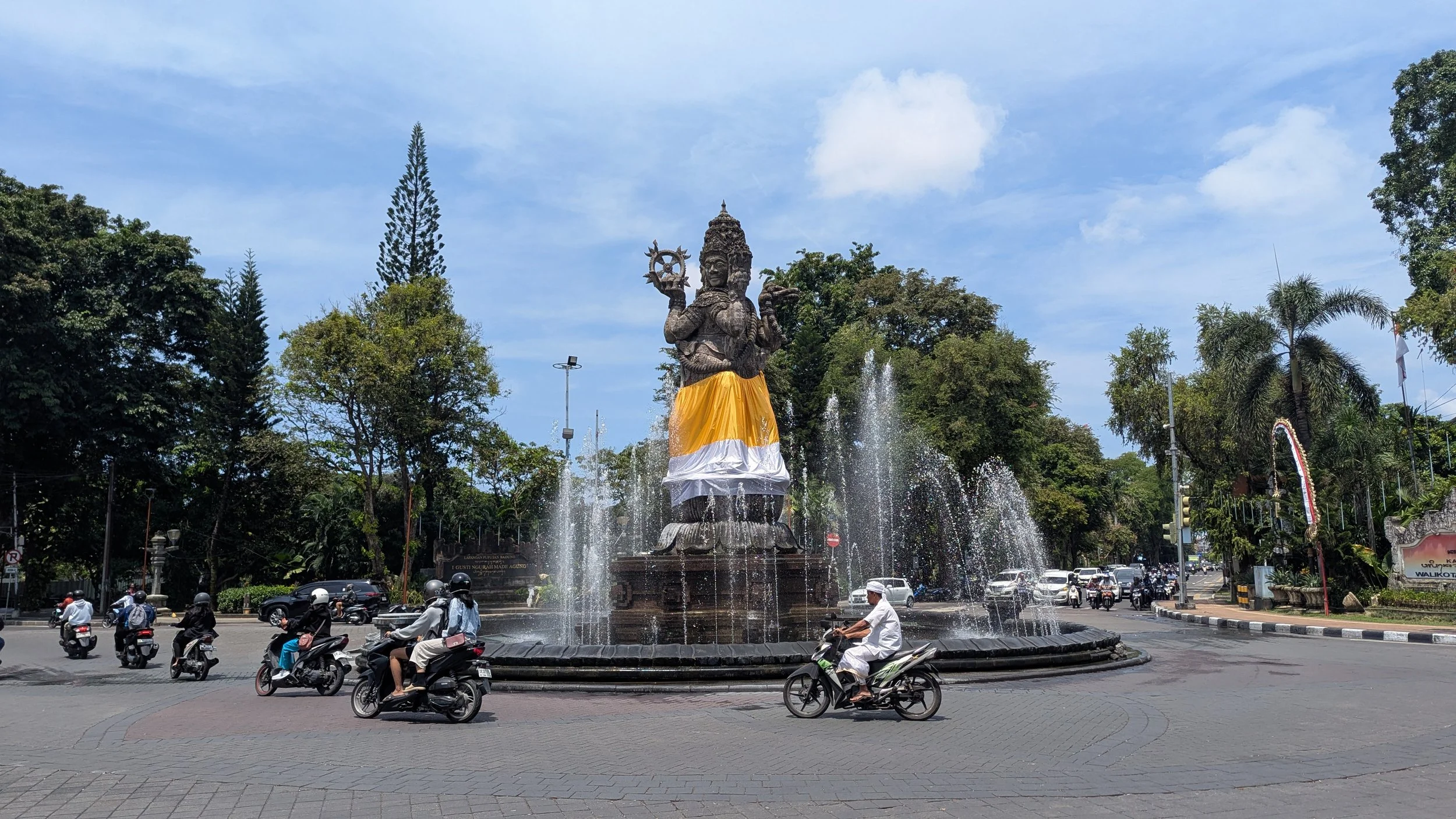
One of many roundabouts in Denpasar, Bali, Indonesia — where they drive on the left-hand side.
🛵 Understanding the Skill Gap When Riding a Scooter
Many travelers have never ridden before, so in tourist-dense places like South Bali, Indonesia or Phuket, Thailand, you’ll encounter many new drivers on the road — drivers who are learning on the road and who aren’t yet familiar with local driving culture and rules.
Just because everyone is doing it doesn’t mean it’s beginner-friendly. Beginners should start with a class or learning in a safe environment (ex. I started learning in a safe resort road).
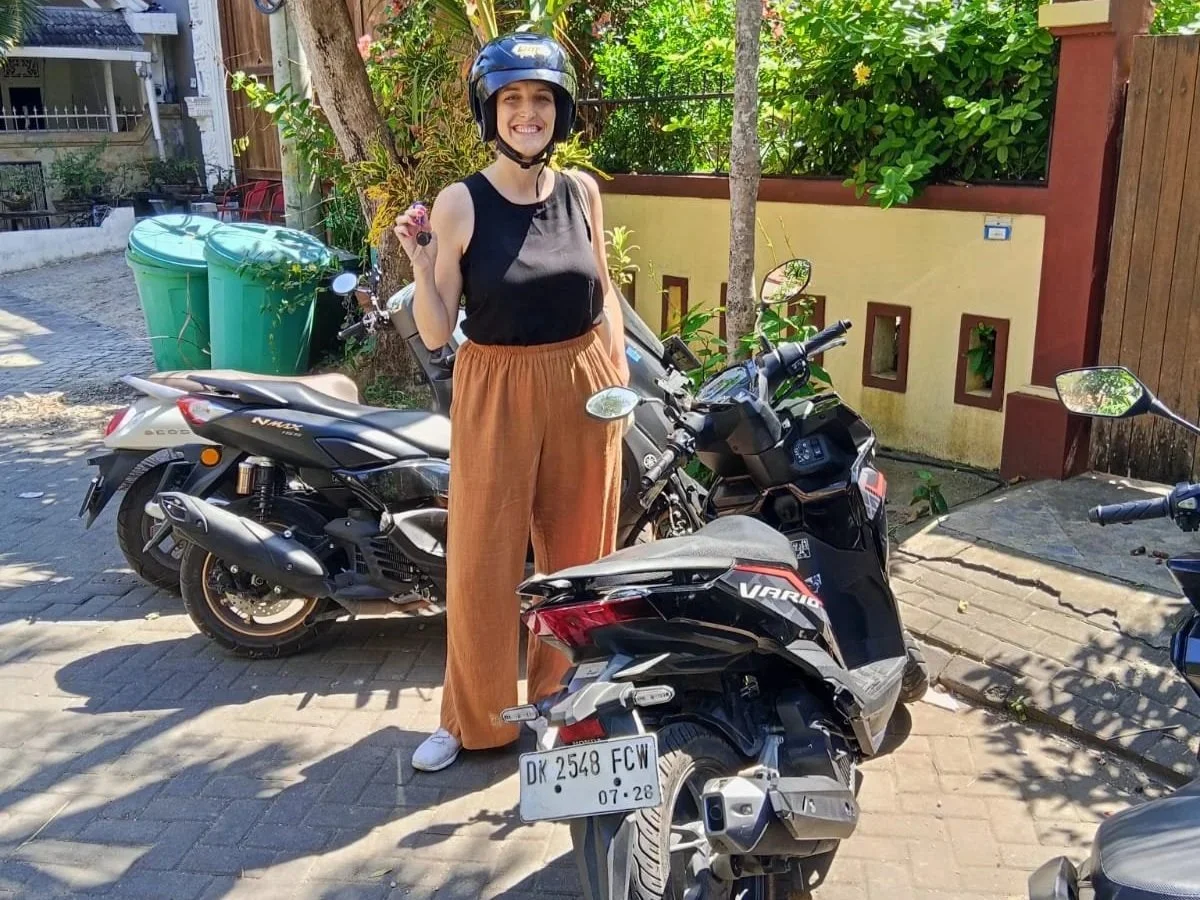
My first scooter rental when I moved to Bali was a smaller bike - Honda Vario - and I took lessons before getting it. I only drove it around the resort I worked at for the first few weeks while I got the hang of it.
🩹 Scooter-Related Accidents & Injuries
When learning to ride a scooter or figuring out unfamiliar conditions, minor falls are relatively common.
These can happen for simple reasons — braking too hard (especially those front brakes 🫣), driving too quickly, hitting loose gravel, or misjudging road conditions. While many accidents are not serious, even a small fall can result in cuts, scrapes, or burns (for example, from the exhaust pipe).
I once misjudged space on a left turn in Bali and caught my foot between my bike and the concrete curb — luckily nothing was broken, but painful and bruised for the week afterwards.
More serious injuries can and do happen — particularly when speed, traffic, or inexperience are factors — which is why it’s important to get to know the local conditions and get familiar with driving in general.
This is also where insurance and proper licensing become especially important, as medical costs can add up quickly if something does go wrong.
👮 Legal & Insurance Considerations for Scooter Travel
These are some of the most important considerations — and ones that many travelers don’t fully understand before getting on a scooter:
License Requirements
Most countries require you to have a motorcycle license to legally ride a scooter, along with an International Driving Permit (IDP).
In reality, many rental shops will still accept a regular car license. This often depends on how strict enforcement is at the time. However, if you are stopped by police, the IDP is what they are most likely to check — and it is supposed to be used together with a valid motorcycle license from your home country.
If you are planning to stay longer-term in a Southeast Asian country like Thailand or Indonesia, it is absolutely worth getting a local license. It’s not just about legality — it also makes things much simpler legally and medically if anything happens.
Travel Insurance Loopholes
Most travel insurance policies do not automatically cover riding a scooter or motorcycle, so it’s important to check your policy carefully.
If you go with SafetyWing (my preferred insurer), you’ll need to add the “Adventure Sports” add-on to be covered for scooters, or choose the SafetyWing Complete Plan, which already includes motorbike coverage.
That said, even with insurance, there are usually strict conditions, so you want to make sure you’re adequately licensed and protected. In most cases, you will only be covered if you were wearing a helmet and had the proper license at the time of the accident. If not, your claim may be denied.
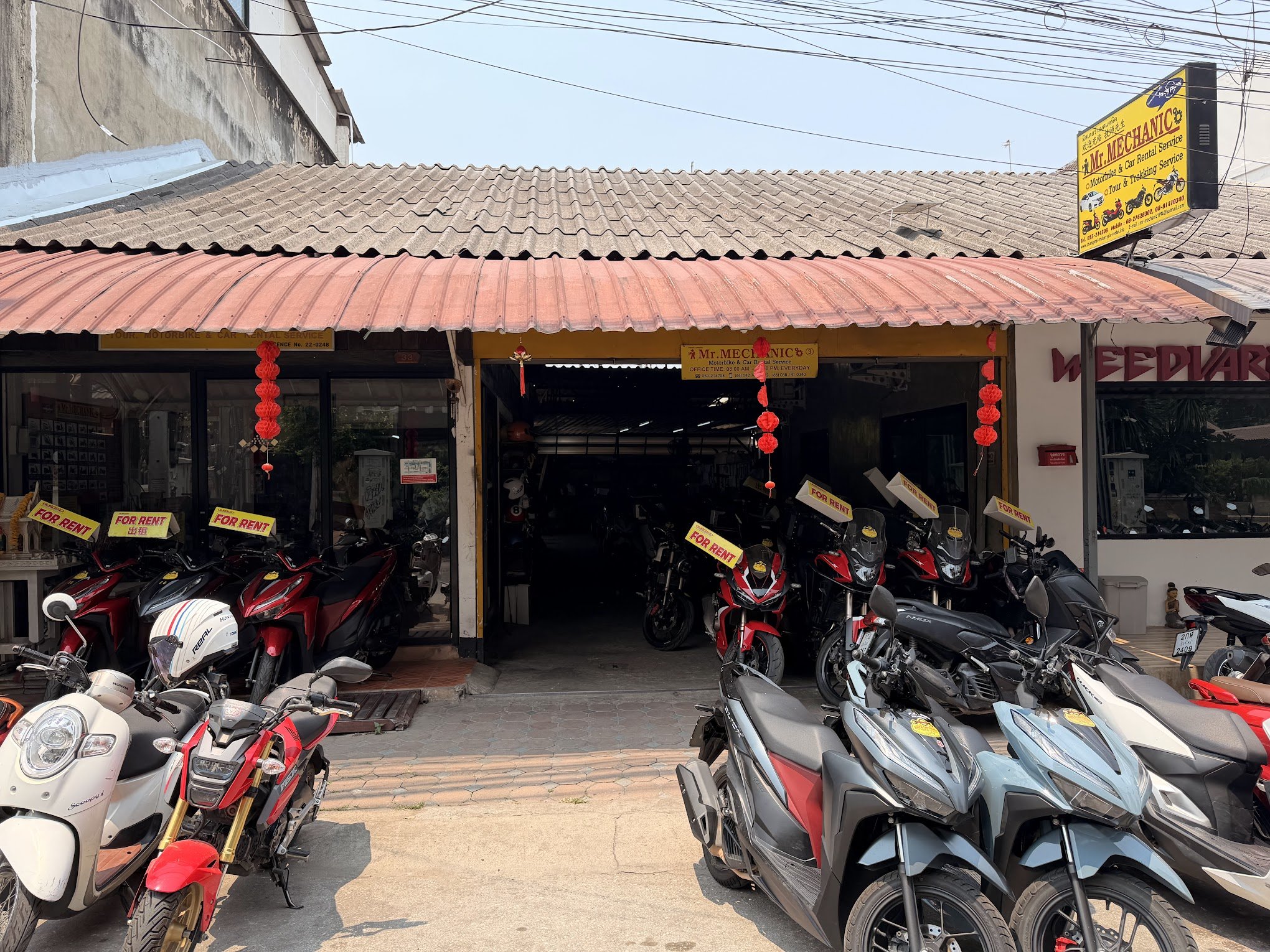
Rental Shop Limitations
Accident insurance is not as standard in many Southeast Asian countries as it is in the West, so there is a good chance that the bike you rent will not include accident insurance.
This means that if something happens, you may be responsible not only for damage to the bike but also for your own medical costs, which is why understanding both your insurance coverage and the rental terms is so important before you ride.
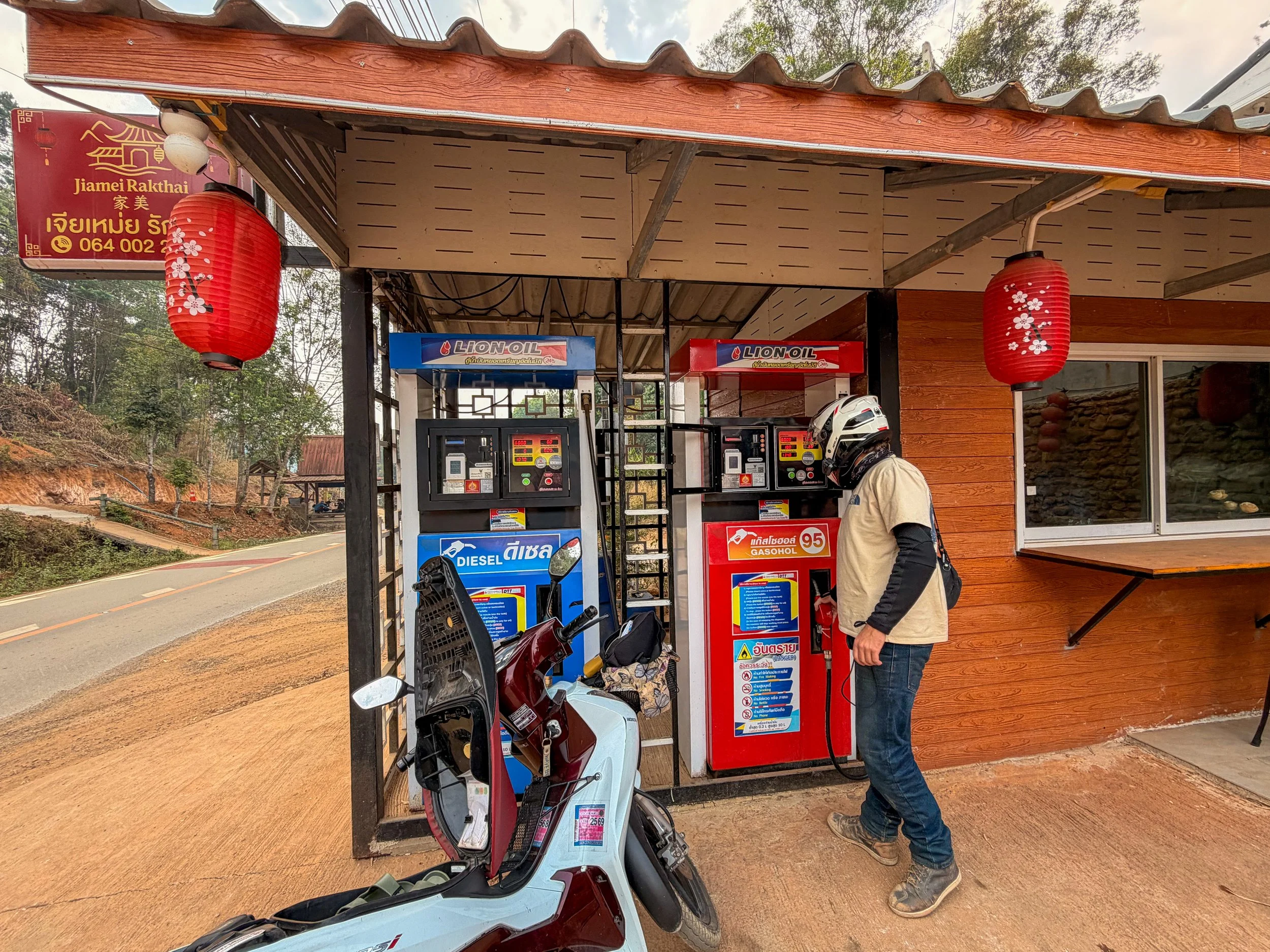
In some cases, such as our rental on the Mae Hong Son Loop, you can add accident coverage, and I strongly recommend you do. In other places, like Bali, it just isn’t really an option.
What if Something Goes Wrong While Driving a Scooter?
Even with the best preparation, things don’t always go exactly as planned. Knowing what to do in the moment can make a big difference — both for your safety and for how smoothly things are handled afterwards.
If you’re riding a scooter or a motorbike while traveling, it’s worth keeping a few things in mind:
Take clear photos and video of your rental scooter
As soon as you rent the scooter, and while still at the rental shop, take clear photos and/or a video of all angles of the bike so you can clearly document its condition and any existing scratches or dings. This will help prevent you from getting blamed for damage that was pre-existing.
Check the condition of your rental bike
Before heading off on the bike, test it out a bit. For your safety, the brakes, tire tread and lights should all be in good working order. Make sure you know how this particular bike works before you leave the shop, and ask any questions if you’re unsure.
Have access to emergency funds
In case of an accident or unexpected situation, you may need to pay for medical care or bike repairs upfront. Having a buffer — whether in cash, card, or accessible savings — can make things much less stressful.Let someone know where you are
Especially if you’re heading out on a longer ride or into more remote areas, it’s a good idea to share your plans with someone you trust. Sharing your live location with a trusted family member or friend can also be a good comfort to you and others.Document what happens
If there’s an accident, take photos or videos of the bike, the surroundings, and any damage if you’re able to do so safely. This can be helpful for both rental shops and insurance claims.File a local report if needed
In some cases, especially if another party is involved, you may need to file a police report. This can also be required for insurance purposes.Get medical care — even for minor injuries
It can be tempting to brush off small falls, but it’s always better to get checked out if something doesn’t feel right, and absolutely get checked out if you hit your head (even with a helmet on!). What seems minor at first can sometimes need proper treatment.Follow up with your insurance provider
If you have coverage, start the claims process as soon as possible and keep all documentation, receipts, and reports. Most claims for big expenses need to be filed before you get treatment, so if it’s a major accident, you want to call the insurer right away to get approval.
It’s not about expecting something to go wrong — it’s about being prepared enough that if it does, you can handle it with clarity and confidence.
When Riding a Scooter in Southeast Asia Is (and Isn’t) a Good Idea
After everything we’ve covered, the question isn’t just “is it safe?” — it’s whether it’s the right choice for you, in your specific situation.
Riding a scooter can be an incredible way to experience Southeast Asia, but it’s not something to rush into or take lightly. Here’s how to think about it:
When it can be a good option
Riding a scooter can be a safe and enjoyable experience when a few key things are in place.
If you already have some experience riding or are willing to take lessons, you’ll have a much easier time adapting to new environments. Even if that experience is minimal, having a basic understanding of balance, braking, and control makes a big difference.
Taking the time to practice beforehand — whether at home or in a quiet area once you arrive — can also help you build confidence before getting into heavier traffic. Starting somewhere calm, like smaller roads or less crowded areas, allows you to get familiar with both the bike and the local driving style at your own pace.
Choosing the right environment matters just as much. Some destinations are far more forgiving than others, and opting for quieter areas with better road conditions can make the experience feel much more manageable — for example, a quiet island like Koh Lanta or some areas of Krabi in Thailand will be much more forgiving than Bangkok.
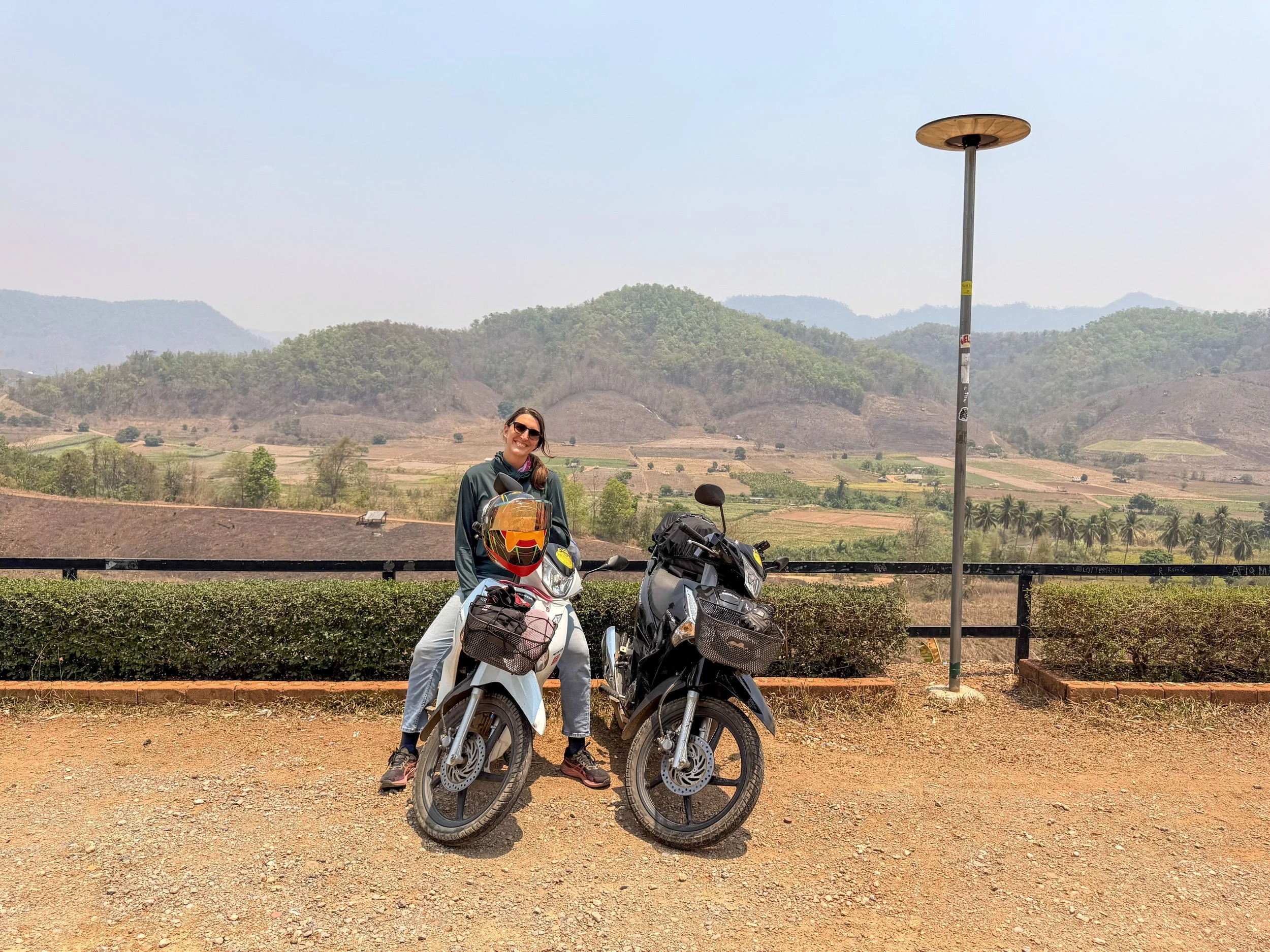
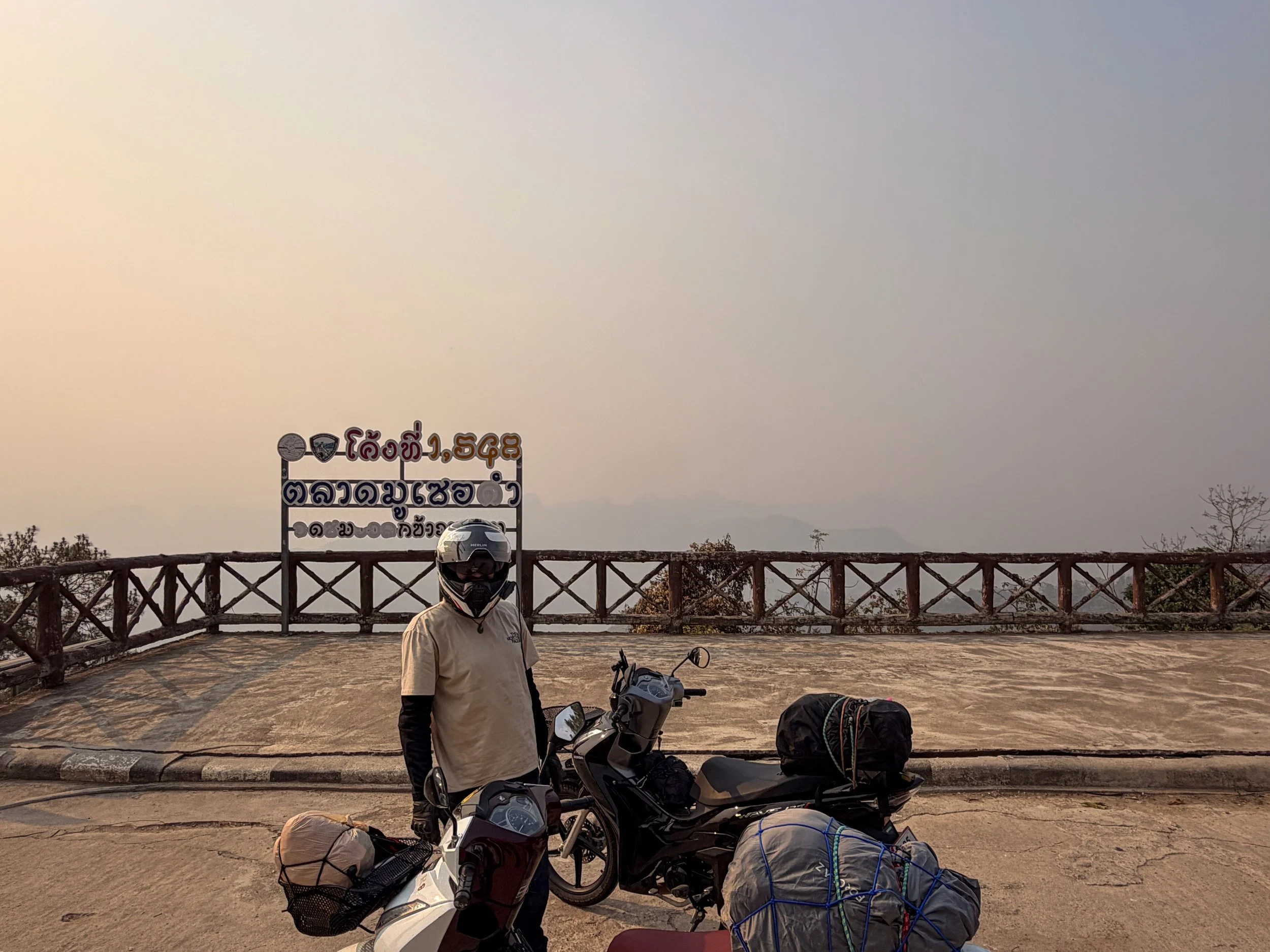
After a couple of years of riding automatic scooters with confidence around different Asian countries, I decided to learn semi-automatic driving on a 750km trip around the Mae Hong Son loop in Northern Thailand
When it’s probably not the right choice
There are also situations where riding a scooter is more likely to feel stressful or risky than enjoyable.
If it’s your very first time riding and you’re in a busy destination like South Bali or central parts of cities like Bangkok or Ho Chi Minh City (aka Saigon), the learning curve can be steep. These environments require quick reactions and a level of awareness that’s hard to develop on the spot.
Riding without the proper license or insurance is another factor to take seriously. Even if it’s common for travelers to do so, it can have real consequences if something goes wrong — both financially and legally.
It’s also worth paying attention to why you feel drawn to riding. If it’s something you genuinely want to experience, it can be incredibly freeing and rewarding. At the same time, if part of that feeling is coming from seeing others do it or feeling like it’s something you should do while you’re here, it’s worth taking a moment to check in with yourself. The experience is meant to feel empowering and freeing — not pressured.
A quick reality check
Riding a scooter can be one of the most freeing and memorable ways to experience Southeast Asia — but it’s not the only way.
For some travelers, it brings a sense of independence and flexibility that really enhances their trip. For others, it can feel stressful or overwhelming. Both are completely valid — and the best choice is the one that allows you to feel comfortable, present, and able to fully enjoy where you are.
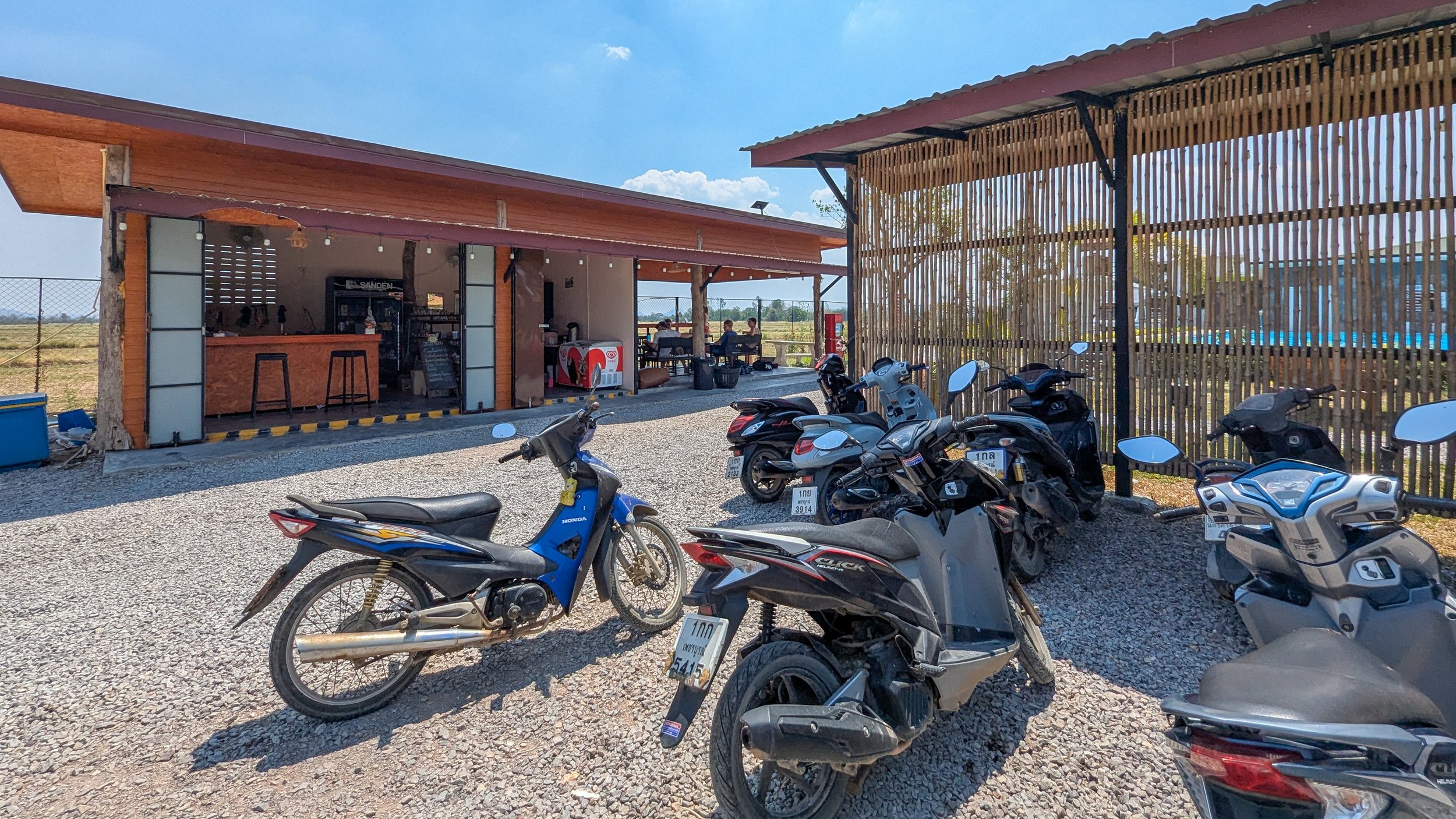
The condition of rental bikes available in rural Thailand was not so good compared to what I could get in busier Bali — and the prices were higher, too. Always check your bike for minimum safety before riding <3
A More Mindful Approach to Scooter Travel
Riding a scooter in Southeast Asia can be an incredible experience — one that brings a sense of freedom, connection, and spontaneity that’s hard to replicate any other way.
At the same time, it’s an experience that’s worth approaching with intention.
Taking the time to learn before you go, choosing a rental shop you trust, and giving yourself space to build confidence gradually can make a meaningful difference in how safe and enjoyable it feels. It’s not about doing everything perfectly — just about being a little more prepared and aware.
It’s also okay to take your time deciding whether it’s right for you. You don’t have to rush into it, and you don’t have to do it at all to have a rich and memorable experience. In many places, alternatives like hiring a driver or joining a tour can offer a different kind of ease, while still allowing you to explore fully.
In the end, a more mindful approach doesn’t take away from the experience — it enhances it. Making thoughtful choices helps protect not only your own safety, but also the places you’re visiting and the communities that call them home.
And that’s really what this comes down to: traveling in a way that allows you to feel both free and grounded, wherever the road takes you.
Travel (and drive!) well,
Lynne
Was this helpful? Have more questions? You can reach me by Instagram DM or sending me an e-mail!
HEADS UP: Some links on Travelynne, including SafetyWing, are affiliate links, meaning I earn a small commission if you purchase select experiences from my links — at no extra cost to you!
This helps me invest more time and resources into creating helpful travel content like this article. Learn more about my offerings and how to support Travelynne on my booking page, where you can book tours, transportation, and accommodations.
READ NEXT: