Bali Trip Prep: Everything You Need to Know Before You Go (2026)
First of all, congrats & yay — you’re going to Bali! The flights are booked, your countdown is on, and now you're wondering what actually needs to happen between today and your tropical touchdown. This guide will help you prep with less stress and more clarity.
My name is Lynne — I live in Southeast Asia and help travelers like you design custom, meaningful trips around the region. Bali is a soul-stirring place, but it can also be overwhelming if you arrive unprepared. This article covers the practical stuff so you can land feeling calm, confident, and connected. Let’s dive in.
HEADS UP: Some links on Travelynne are affiliate links, meaning I earn a small commission if you purchase select experiences from my links — at no extra cost to you! This helps me invest more time and resources into creating helpful travel content like this article. Learn more about Travelynne & my offerings on my About page.

Everything is just a bit more relaxing when we’re a little prepared :)
IN THIS ARTICLE:
1. Arrival Logistics: Visa, Airport + Getting to Your Hotel 🛬
Ngurah Rai International Airport (DPS) is the main international gateway to Bali. The arrival process is usually straightforward, but knowing what to expect helps:
VOA (Visa on Arrival): Most nationalities can get a 30-day visa on arrival. It’s ~$35 USD, and you can get in online in advance (called e-VoA) or pay in cash on arrival (there’s a ATM) — but you’ll save time by getting it in advance.
Immigration & Customs: Have your hotel address and return ticket ready to show immigration. They don’t always ask, but they sometimes do, and you can be denied entry without them. With an e-VoA, many passports can pass through e-gates, entering much more quickly than by in-person immigration counters.
Baggage Claim: Luggage can take time to arrive, so start exercising your patience the moment you land. There is free Wi-Fi available in the airport.
Grab or Gojek: You can use ride-hailing apps from the airport, but you’ll need to walk to the designated Grab or Gojek lounge outside the airport. Do not let someone who says they work for them “guide” you (they will guide you to their vehicle and charge you too much), just call for a car on either app once you’re at arrivals, and follow green signs saying Grab or Gojek to the appropriate lounge.
Getting to Your Hotel From the Airport
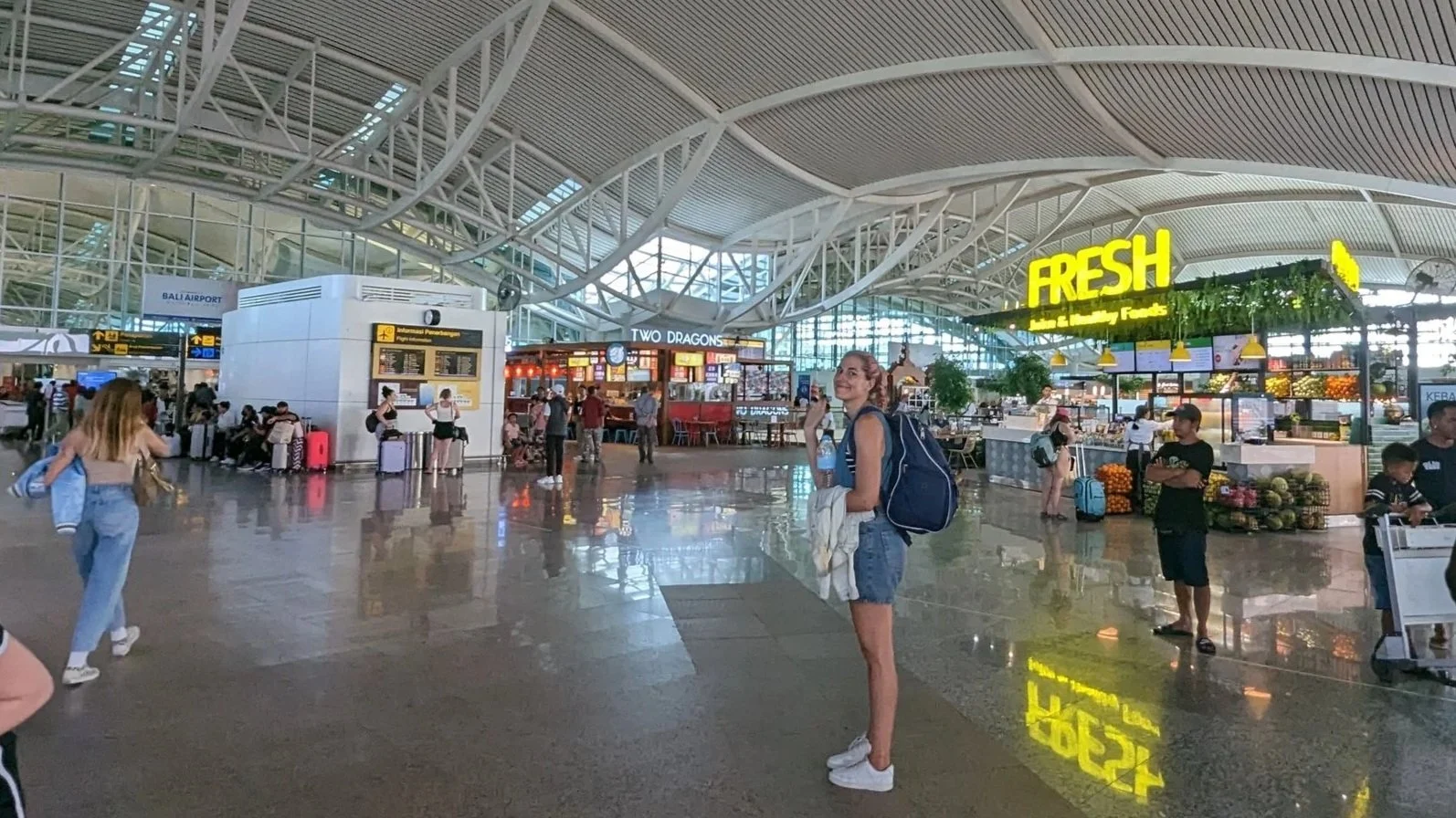
The main terminal of Ngurah Rai International Airport (DPS) in Bali, Indonesia
2. Staying Connected: Accessing Data with a Local SIM 📶
Access to data has become really important for travelers as we increasingly need access to reliable data to call for a ride, access tickets and boarding passes, look up directions, or ask for help. While your hotel should have Wi-Fi, you will need access to data for things in between. There are two main options here:
1️⃣ eSIM: Download and install an eSIM before you leave.
Personally, I use Airalo because it’s been reliable and easy to use. You need to install it before take-off, when you still have Wi-Fi, and it will be active within minutes of you turning off airplane mode. It costs a bit more than a physical SIM, but I have found the convenience (one less stop before I get to start exploring!) to be worthwhile.
2️⃣ Physical SIM Card: Purchase locally after arrival
If you don’t mind waiting until you get to a shop, you can purchase a local SIM physical SIM card. Telkomsel has great coverage in Bali. For the best price, you usually want to buy one after you leave the airport, but they generally aren’t too expensive.

Your phone is an important communication tool while in Bali, and with the right apps it can help you with a lot more than texting!
📣 COMMUNICATION TIPS FOR BALI:
Saying “suksma” instead of “terima kasih” will be very appreciated by the Balinese!
Google Lens or Google Translate photo can be really handy for translating signs or menus (especially in rural areas where there’s less English)
An Airalo eSIM is handy because it can be easily tracked & topped up from the app
3. Must-Have Apps for Bali 📱
Here are the apps I personally use every time I visit Bali — from getting around to staying connected (scroll down to learn more about each app):
BEFORE YOU TAKE OFF, INSTALL THESE APPS:
Your airline’s app for easy access to check-in, e-boarding pass & updates
Grab & Gojek ride-hailing apps (there is no Uber)
You can also order food from these apps and even make deliveries
Be sure to download offline maps for Bali so that you’ll always have access
Google Translate (Android/iOS) & Google Lens (Android Only)
Wise for international money transfers and withdrawls ⬇️
Get a FREE card or zero fees on a transfer up
to £500 by signing up for Wise here!
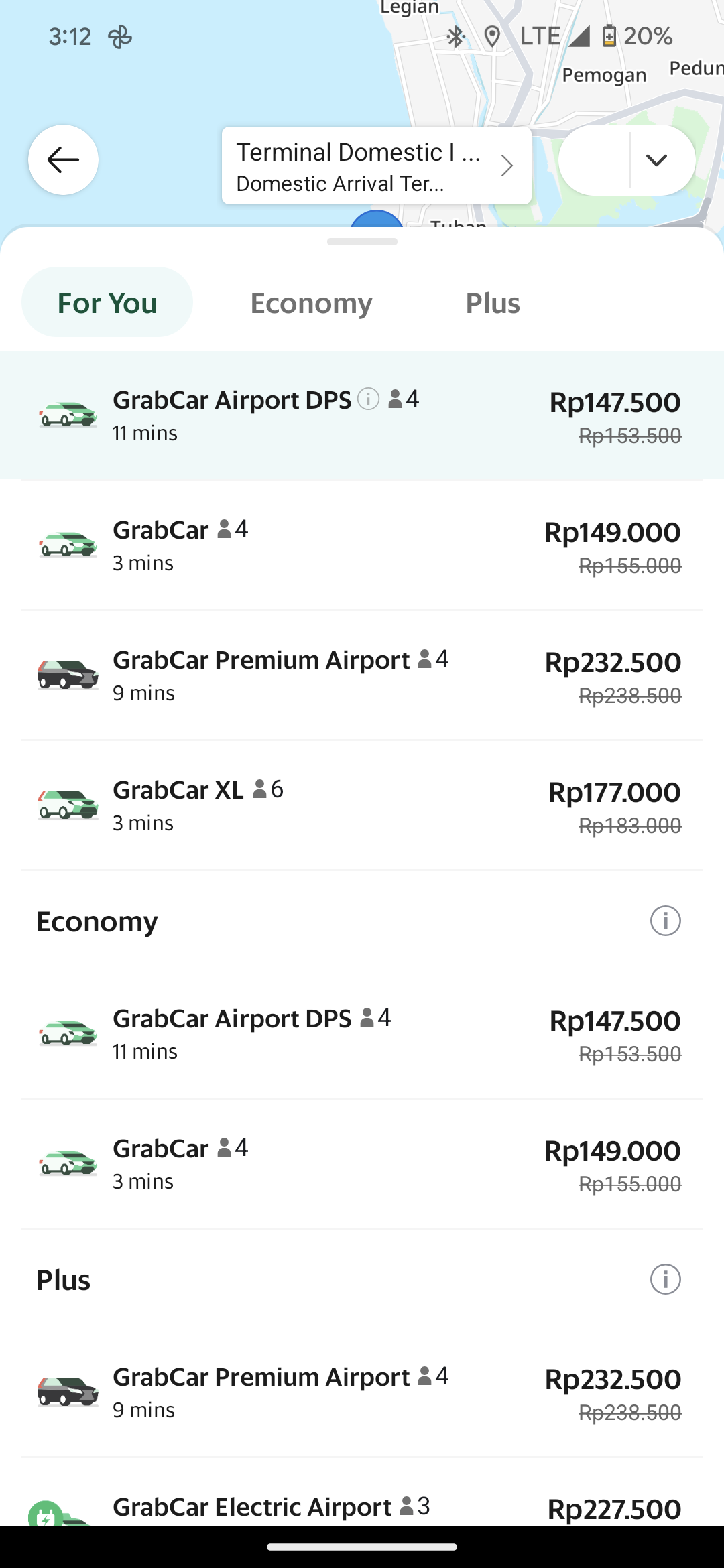
When calling a Grab, you’ll have several car options, or you can take a Grab Bike, which is much faster in South Bali.
Here’s some info on how each app can help you during your Bali trip:
| Purpose | Tool | What to Know |
|---|---|---|
| Ride-hailing & Food Delivery | Grab & Gojek | Install both local apps and create an account in advance. You can connect your credit card or opt to pay cash. Stick to Grab or Gojek rides booked through the app — don’t accept offers on the street. Both apps can also be used to order takeout food and make deliveries. |
| Messaging | Everything happens on WhatsApp: your guide, driver, or hotel will likely use it to confirm bookings or updates. You can keep it connected to your usual phone number and use it as usual, even with a local SIM or eSIM. | |
| Navigation | Google Maps | Download offline maps for Bali in Google Maps so you always have access, even without data. Handy for directions and saving locations like your hotel or favorite warung. |
| Currency & Payments | Wise | I use Wise to avoid high foreign transaction fees and for peace of mind. It acts as a backup to my main card and lets me pay or withdraw cash at better exchange rates than most banks. |
| Translation | Google Translate / Lens | Use Google Translate to type, speak, or scan text for quick help with signs, menus, or conversations. |
4. Language in Bali 🗣️
Balinese people speak their own local language (Balinese), which you’ll see on signs and hear especially in homes and temples. But not everyone you meet in Bali is Balinese — many drivers and shopkeepers come from nearby islands like Java or Lombok, where other languages are spoken.
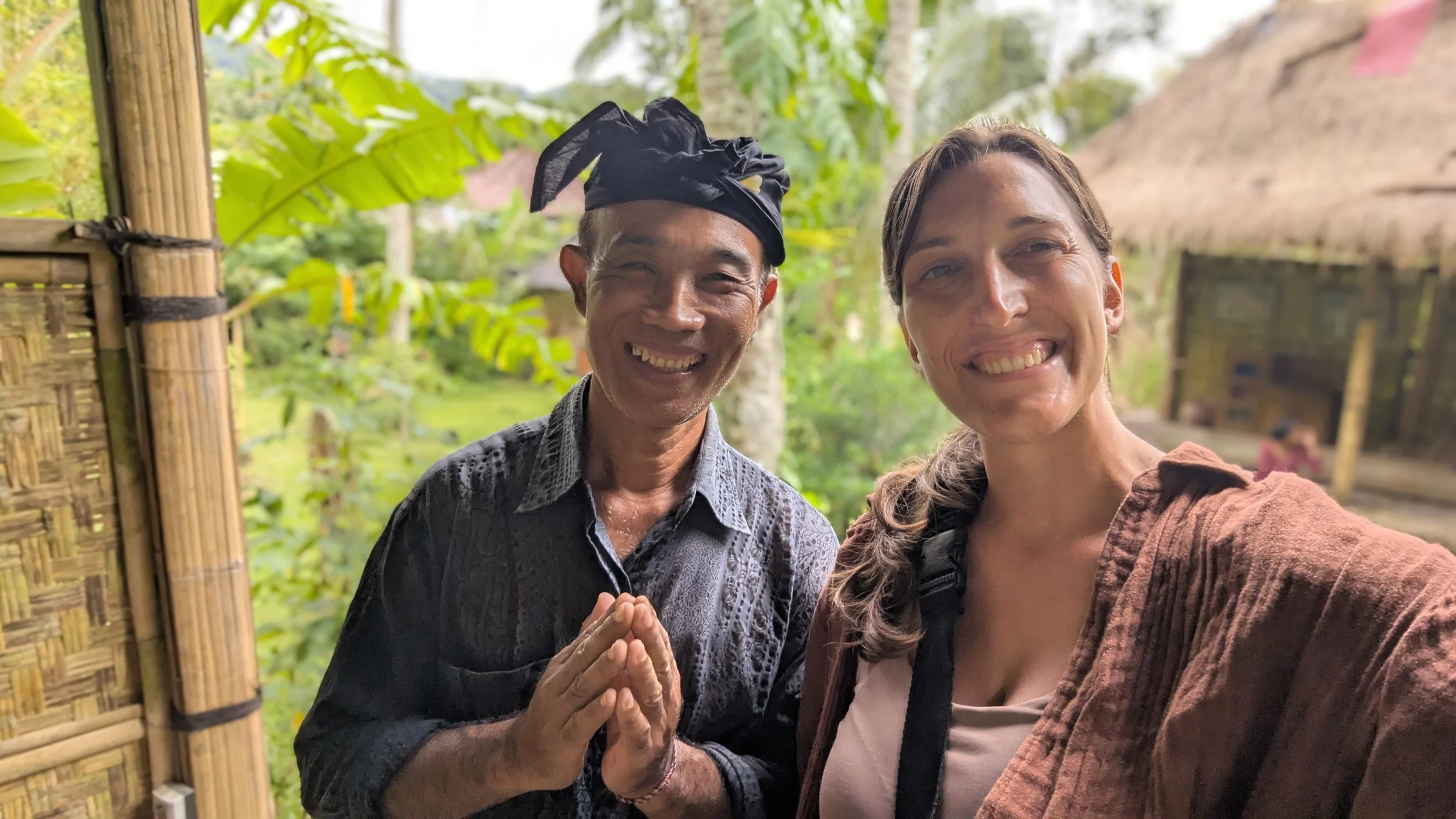
Even 1-2 words in Indonesian or Balinese can help show your appreciation for the place you’re visiting, and help you connect with others
That’s why Bahasa Indonesia (the national language) is used for a lot of daily life, media, and communication between people from different islands. In touristy areas, you’ll often find someone who speaks a bit of English, but don’t be surprised by the occasional language barrier. Be patient, smile, and lean on tools like Google Translate — or your guide or driver — if you get stuck.
It’s always respectful to learn a few local words. You don’t need to be fluent, but even a simple “thank you” can go a long way.
⬇️ Here are a few words/phrases to try! ⬇️
| Context | Phrase | Meaning / Notes |
|---|---|---|
| Basic Indonesian | Halo / Hai | Hello (formal / casual) |
| Selamat pagi | Good morning | |
| Selamat siang | Good day / lunchtime greeting | |
| Selamat sore | Good afternoon | |
| Selamat malam | Good evening / night | |
| Apa kabar? | How are you? | |
| Baik, kamu? | Good, and you? | |
| Terima kasih / Makasih | Thank you (formal / casual) | |
| Sama-sama | You’re welcome | |
| Permisi / Maaf | Excuse me / Sorry | |
| Please | Please isn't commonly used — instead, you can use terima kasih (or makasih) where you would normally say "please". | |
| Common Balinese | Om Swastiastu | A formal Balinese greeting. You’ll hear it often, especially near temples — you’re not expected to say it. |
| Suksma (SOOKS-mah) | Thank you (Balinese) | |
| Suksma mewali / Mewali | You’re welcome (Balinese) | |
| Cultural Tip | 🙏 Gesture | Placing your hands together in a prayer pose is a respectful way to greet or thank someone. |
5. Getting Around Bali: What to Know Before You Ride 🛵
There is no real public transportation in Bali, so you’ll rely on private drivers or ride-hailing apps:
Grab & Gojek:
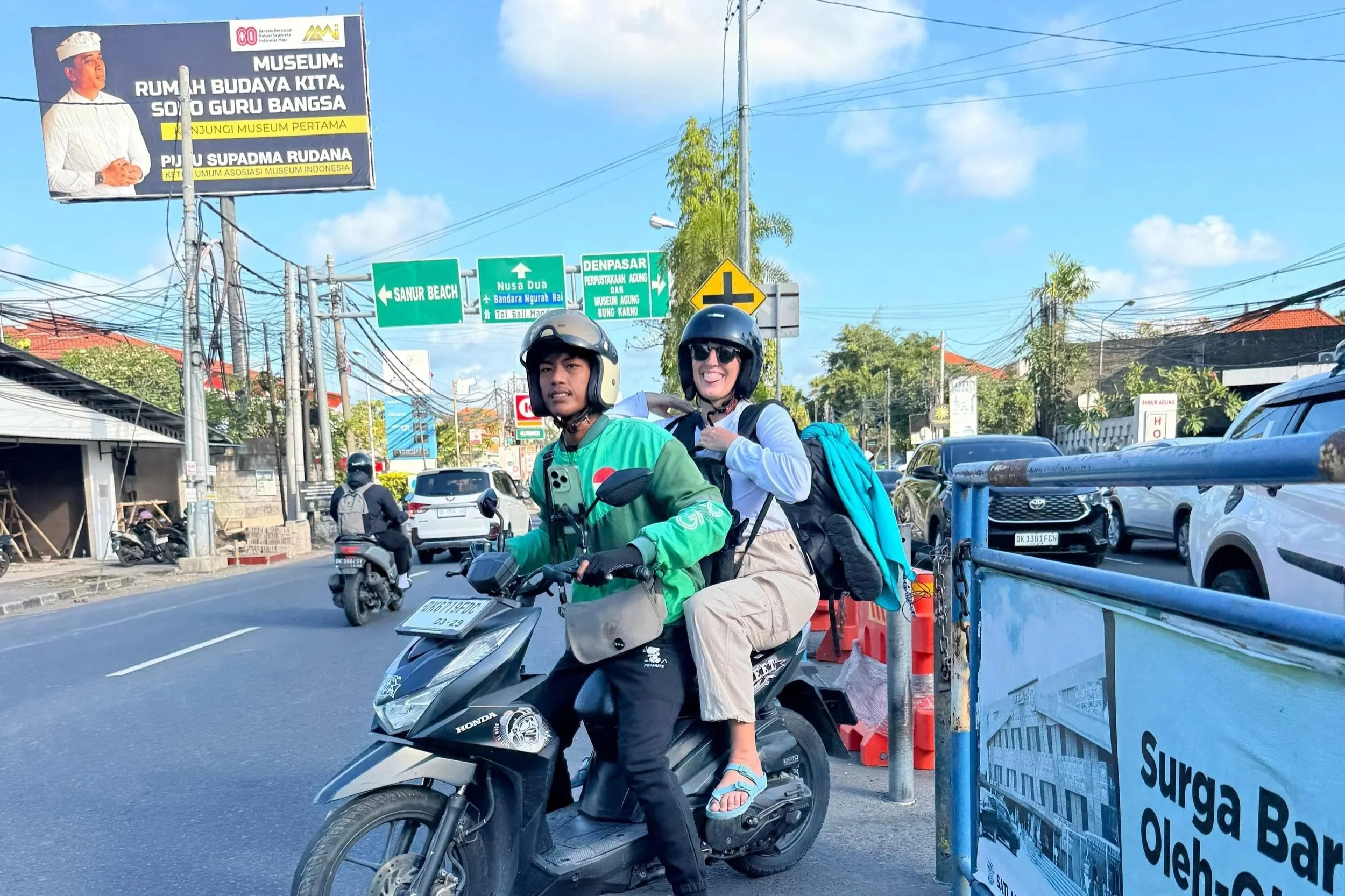
These are great for short distances. Bike taxis are fast and cheap.
‼️ Please always ask for a helmet! They will have a helmet for you (and in the rare case they don’t, you can cancel and call another driver). Accidents can happen, and you should know that travel insurance is unlikely to cover you if you weren’t wearing one.
You can also call a car with these apps; however, I avoid it as much as possible in Ubud, Canggu, Kuta and Uluwatu, where traffic tends to be very tight. You can easily triple the time it takes to get around if you take a car instead of a bike.
Car + Driver:
A private driver is best for longer journeys (30+ minutes).
You can contact me for transportation arrangements with reliable and honest local drivers anywhere in Bali and Java.
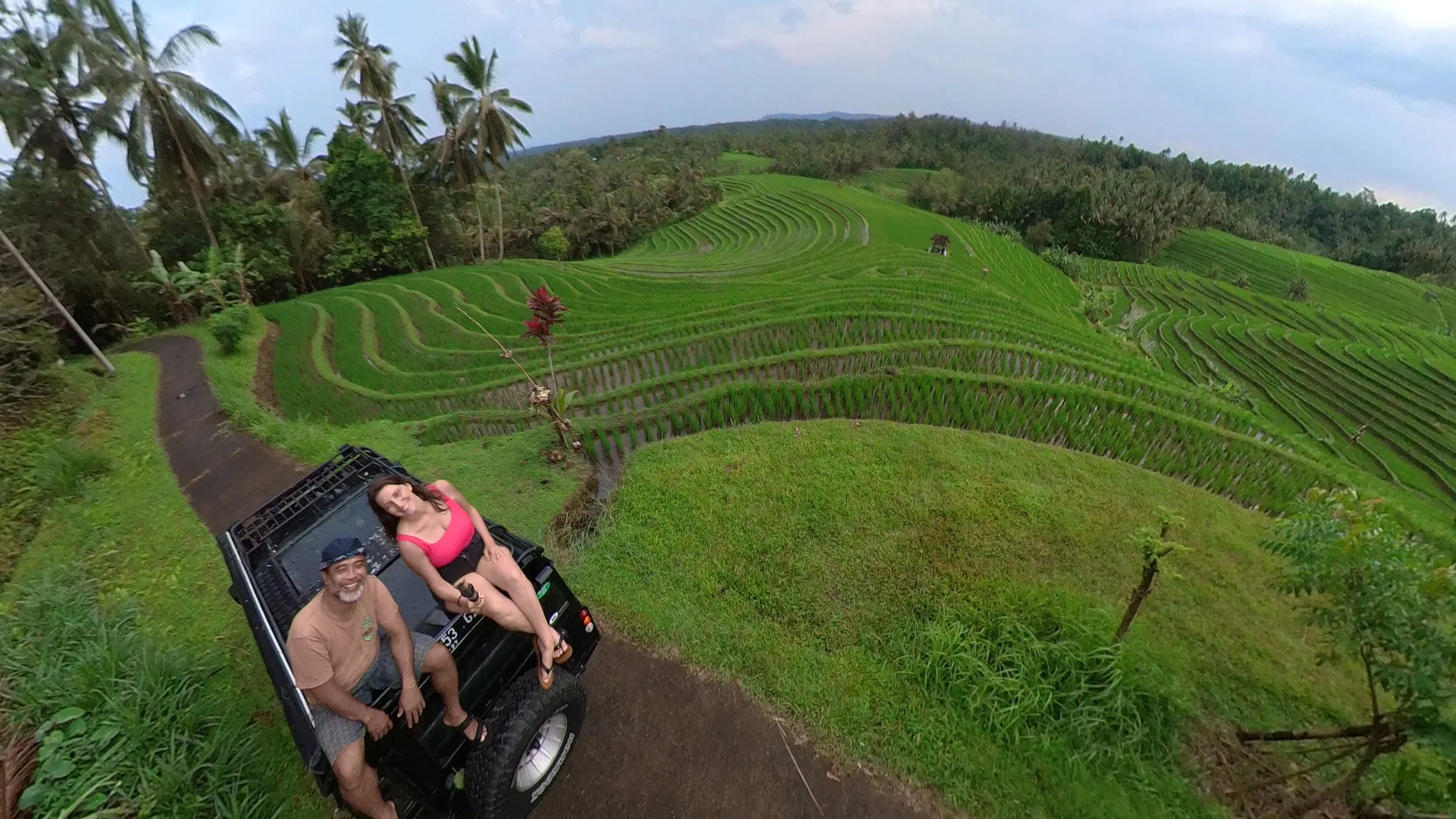
On a land rover tour in Tabanan, Bali… one of my fave tours! Contact me for details.
Scooter Rentals:
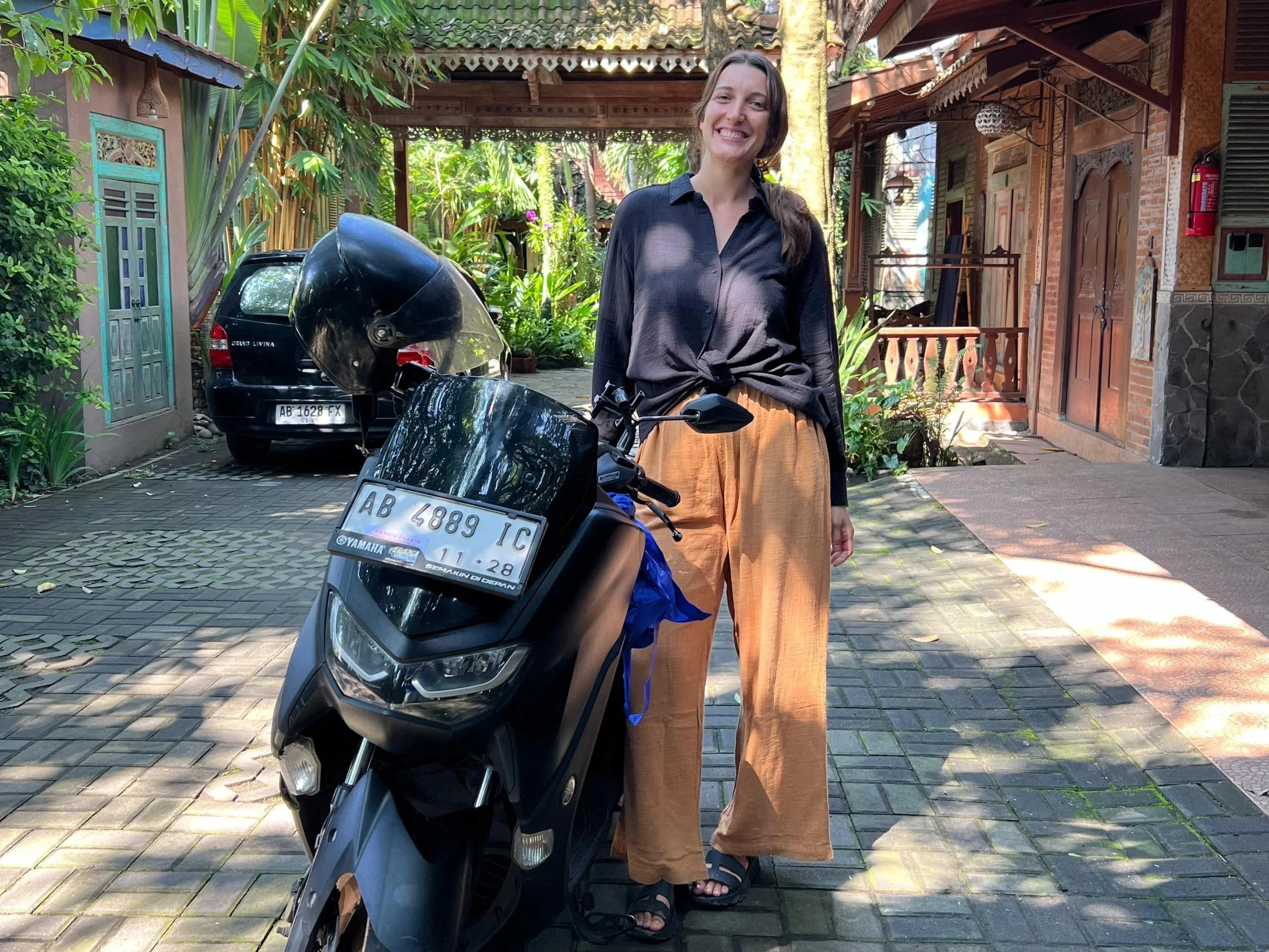
If you are renting a scooter, you can contact me to get the WhatsApp number of a reliable renter with honest prices.
I only recommend this option if you have experience driving a scooter. Driving a scooter in Southeast Asia takes practice, and Bali is a tough place to learn.
If you’d like to learn, you can also contact me for a driving teacher in Bali.
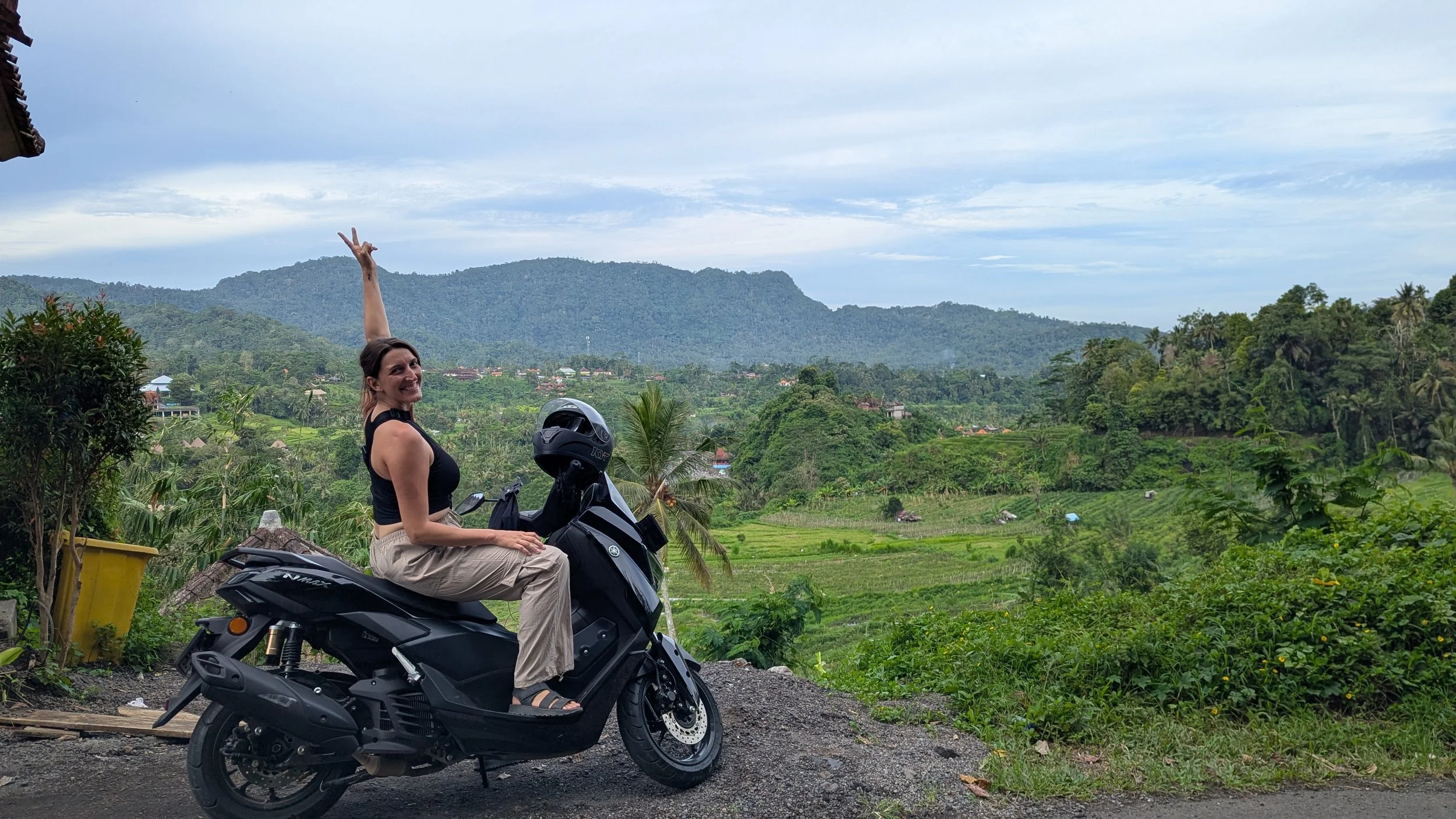
I took a few scooter driving lessons when I moved to Bali and eventually got the confidence to take long rides on my own. Now I love nothing more than a road trip!
6. What to Pack for Bali 🎒
Bali has a tropical climate year-round, with hot, humid days and cooler evenings in upland areas like Munduk or Kintamani. Think breathable, casual, and versatile — and don’t worry, most basics are easy to find locally if you forget something.
👚 Clothing Tips
Lightweight, breathable clothing — skip cotton if you can (it traps moisture)
Temple-appropriate outfit — long skirt or pants + covered shoulders (sarongs are usually provided)
Light sweater or jacket for chillier mornings in the mountains
Swimwear — at least 1–2 sets for the pool, beach, or waterfalls

South Bali is usually quite warm (30C +), but other places in Bali, like Mount Batur (pictured here), Kintamani and Munduk, are higher in altitude and can get significantly cooler. So prepare accordingly with long sleeves if you’re headed to these areas (recommended!) and bring a warm layer and sneakers for climbing up Batur.
👟 Shoes to Bring
Slip-on sandals or slides — perfect for beach days and temple visits
Closed-toe running shoes — necessary for hikes like Mount Batur, Agung, or Ijen
Hiking-friendly sandals — great for jungle treks around Munduk or Sidemen
🧴 Essentials to Pack
Reef-safe sunscreen
Reusable water bottle (you’ll drink a lot!)
Day bag or small backpack
Bug spray (or grab some locally at Circle K or Indomaret)
Hair conditioner — Bali’s water can be a little rough on your strands
Any personal medications you might need
💡 Most toiletries and everyday travel items are easy to find in Bali, so don’t stress or overpack. Save room for local finds!
7. Looking After Your Health 🤕
I have to be real with you: Paradise may throw you some curveballs. Most travelers have a wonderful, safe experience in Bali, but a little awareness goes a long way. Here's how to stay healthy and avoid common mishaps.
💉 Vaccinations
For travel to Bali, routine childhood vaccinations are commonly recommended, as well as:
Hepatitis A & B – spread through contaminated food or water; strongly recommended even for short stays.
Tetanus / Diphtheria / Pertussis (Tdap) – should be up-to-date, with a booster every 10 years.
Typhoid – especially if you’ll be eating at local warungs or street food vendors.
In some cases: Rabies – if you’ll be spending time in rural areas, trekking, or around animals like stray dogs or monkeys.
If you get bit by a dog in Bali (unlikely), you should immediately go to a clinic and take your rabies shots (note that you’ll need to get 2 more doses after the initial visit).
🧠 A travel doctor can give personalized advice based on your itinerary, health, and vaccine history. It’s best to check at least 6–8 weeks before your departure.
⛑️ Check the health advice from your national travel advisory, like Global Affairs Canada.
🦟 Watch Out for Mosquitoes
Dengue fever is present in Bali and other parts of Indonesia — there’s no vaccine for it and it's no joke.
Buy mosquito repellent when you arrive (available at any minimart or pharmacy).
Use it especially at sundown and when visiting jungles or forested areas.
🥥 Protect Your Gut
Bali has amazing food, but different bacteria or hygiene standards can upset your stomach.
If you're prone to digestive issues, consider taking a probiotic in the weeks before your trip to strengthen gut resilience (and continue taking it during your trip).
Always drink filtered or bottled water — even when brushing your teeth.
If you do get sick, don’t panic. Most pharmacies (called Apotek locally) can help. Pick up charcoal tablets at any local pharmacy — they help!
If your illness feels severe, go to a local klinik or hospital.
💧 Stay Hydrated
Bali’s heat and humidity can zap your energy fast. Don’t let yourself get to the point of dehydration.
Carry a reusable water bottle and fill it with filtered water (many hotels have a water dispenser for this) — or purchased filtered water from any convenience stall or shop.
You can also grab hydration salts or Pocari Sweat (an electrolyte drink like Gatorade) to boost hydration on days when you’re more active / walking a lot in the heat.
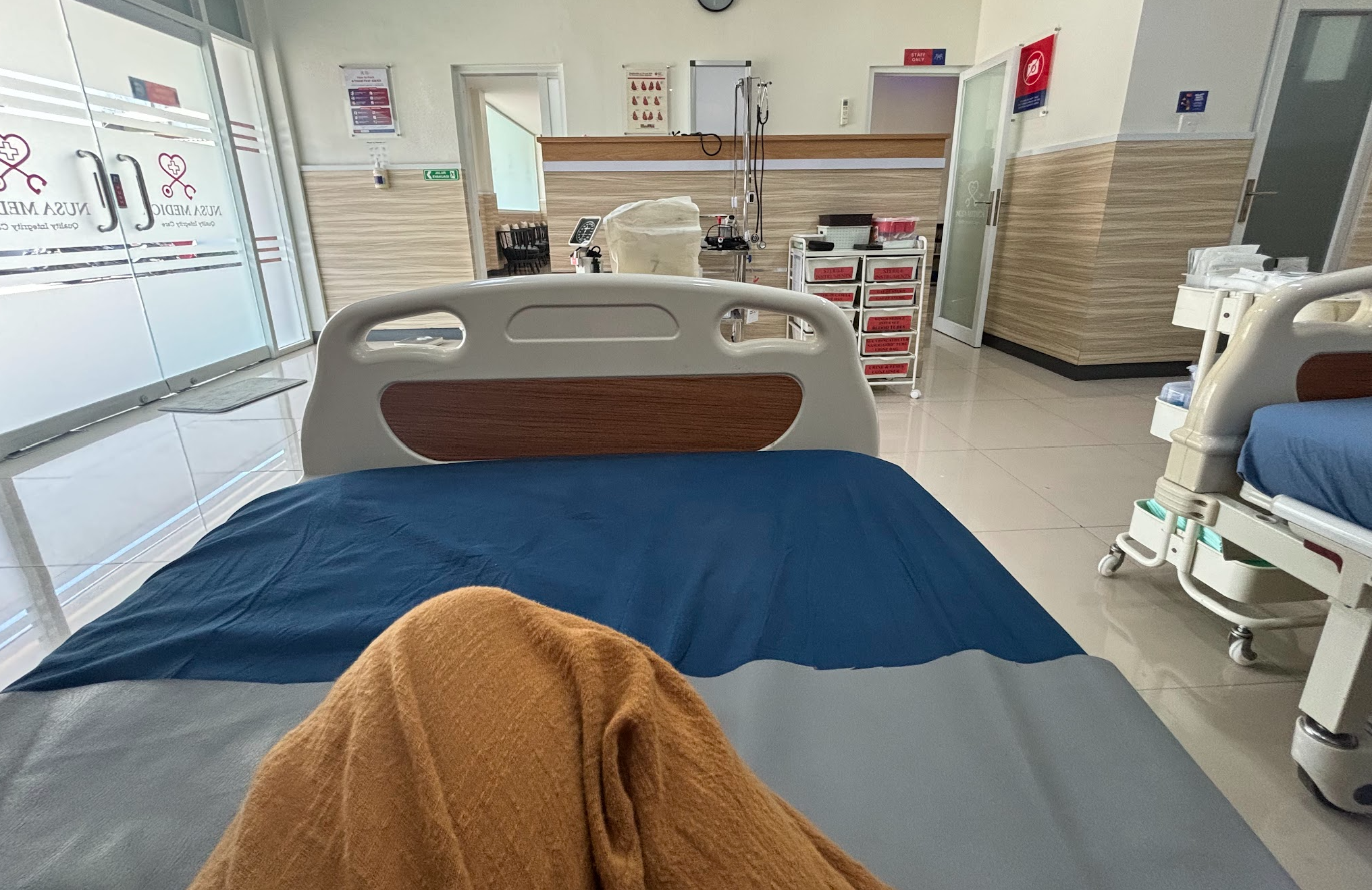
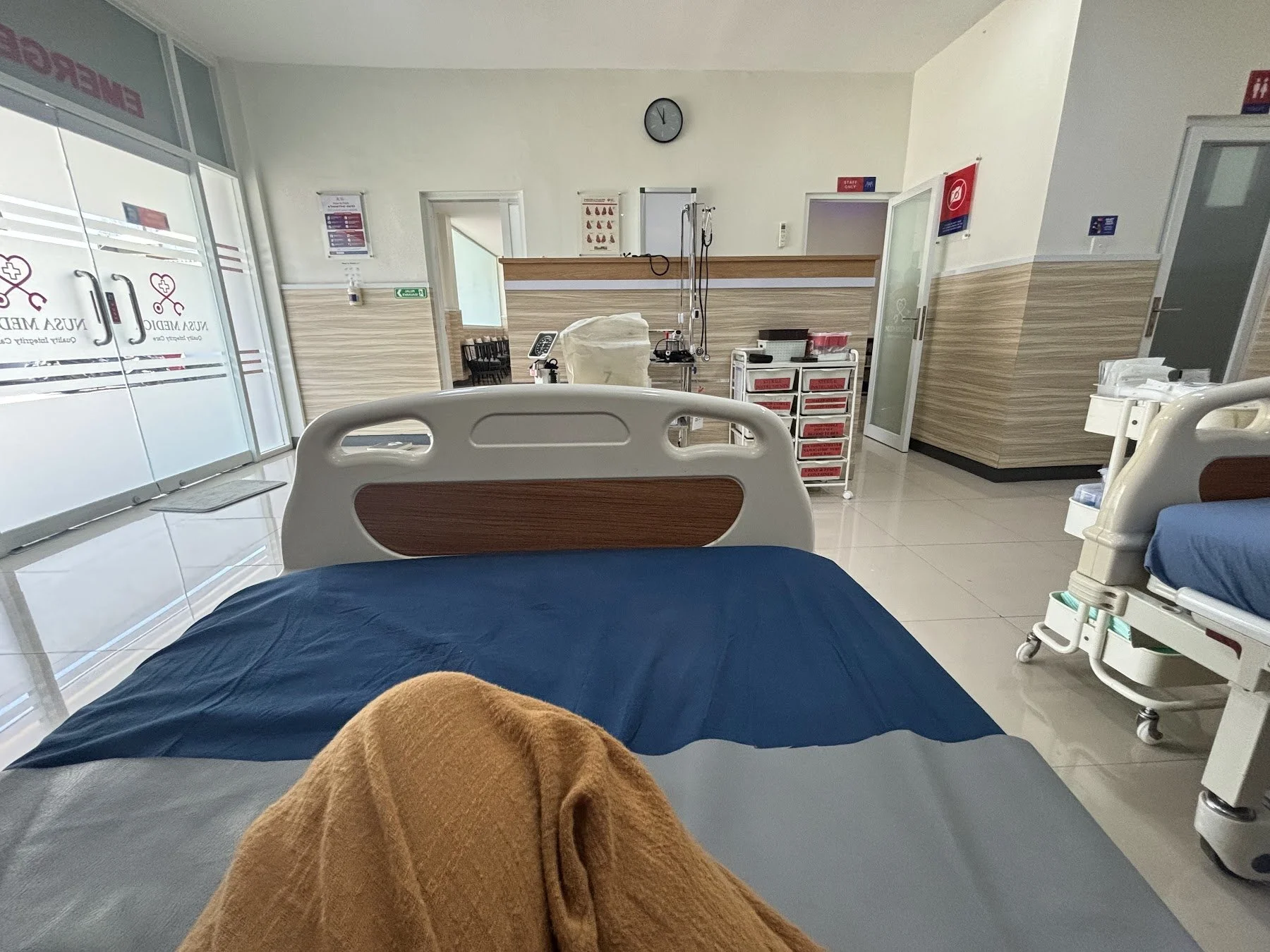
Waiting to have my eye checked in an Uluwatu clinic after a rock flew into my eye while driving my scooter…
🛵 Be Careful in the Streets
South Bali is notorious for its crazy traffic and lack of sidewalks — especially in Uluwatu, Kuta, Seminyak and Canggu.
Be aware of your surroundings when walking — look out for random uncovered holes, tripping hazards, and traffic around you.
If you’re on a Grab or GoJek Bike and feel your driver is driving too fast, you can say “Tolong kak, hati hati ya” (“Please brother, be careful”) or “Tolong pelan pelan kak” (“Please go slowly brother”)
If you choose to drive a scooter in Bali (which I only recommend for experienced drivers), watch your surroundings carefully to get the hang of local customs — it’s definitely hard to get the hang of the “jungle rules” here, and it is chaotic, but there are some rules within the chaos.
☀️ Sun Protection
The tropical sun is serious business! With temperateures averaging 28-35C, near the equator, the sun is blazing.
When possible, cover your skin to protect it from the sun.
When it isn’t, use sunscreen (try to use reef-safe cream)
Use sunglasses and a hat, and seek shade for breaks when you’re outside for a long time
If driving a scooter, consider buying a UV layer from Uniqlo for sun protection that is still breathable.
If snorkeling or diving for a while, consider a UV layer.
Avoid wearing non-reef safe sunscreen when snokeling, as it kills coral.
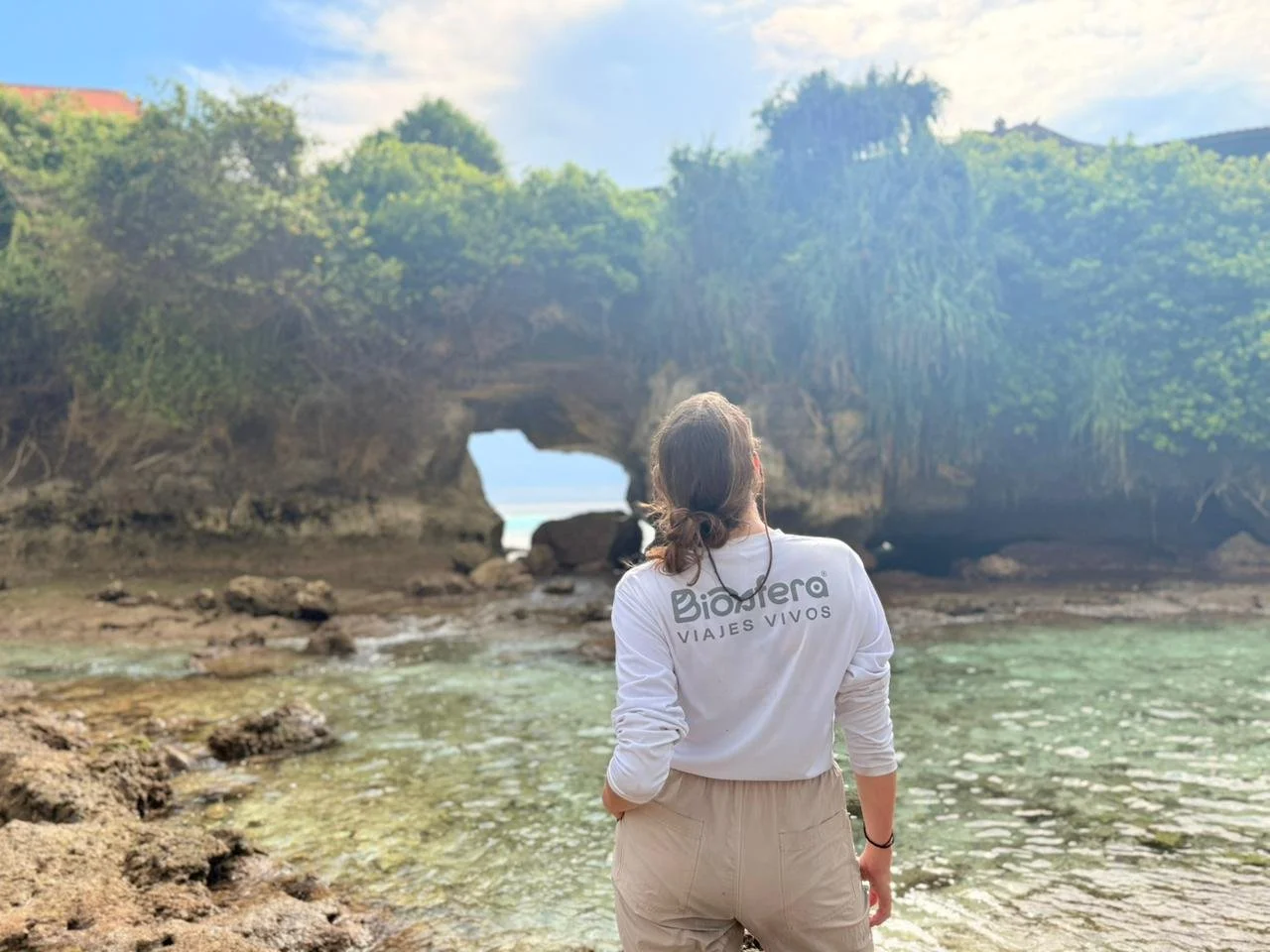
When I’ll be in the sun for a longtime, I often wear pants and a long sleeve. After too many sunburns, I learned my lesson!
🌧️ Floods
Rain can be torrential in Bali, with increasing risks for flooding, especially in more developed areas in the South.
Where possible, avoid travel during the rainy season (inclusive December-March)
Avoid driving during torrential ongoing rains
Keep updated with local news or local friends to know about road closures or areas at-risk
🛡️ Don’t Skip Travel Insurance
Whether it’s a scooter spill, a case of Bali belly, or something unexpected, travel insurance can save you a lot of stress and potentially thousands of dollars.
I recommend SafetyWing — it’s affordable, flexible, and made for travelers or digital nomads. I have personally made several claims with them over the last year and it’s easy to do with their app and quick customer support.
You can get coverage you whether you're gone for a week or traveling long-term.
8. Staying Safe & Avoiding Scams ❌
Bali is generally a safe destination, but like anywhere, there are a few common scams and safety tips to keep in mind — especially around transport and money.
🚗 Use Ride-Share Apps Carefully
Only book Grab or Gojek through the official app.
Don’t trust someone just because they’re wearing a green jacket — many people hang out in similar uniforms to official drivers and will ask you “Grab?”, “GoJek?” or the infamous “Bike? Bike? Bike?” — these are not official drivers.
Always double-check the driver’s app (or the plate) in the app before getting in or on.
If you get into the wrong vehicle (by mistake or persuasion), they might demand cash even though you “booked” through the app.
🛵 Drive Carefully
I recommend only renting a scooter in Bali if you have prior experience driving one.
Note that, in Indonesia, traffic drives on the left and roundabouts are common.
Traffic is often notoriously jammed in South Bali, especially Canggu, Uluwatu, Kuta, and Seminyak.
Besides the usual traffic, in Bali you need to beware of potholes, patches of sand dogs, cows, and people (since there are rarely sidewalks).
💳 Stay Smart at ATMs
Use ATMs inside or directly beside real banks (like BCA, Mandiri, BRI, BNI, CIMB…).
Avoid machines where someone is lingering nearby or where the card slot feels loose or tampered.
Beware of "helpful" strangers near ATMs — some scammers will try to distract you and memorize your PIN.
💸 Money Tips & Currency Exchange
I recommend using a Wise card and withdrawing money from bank ATMs — it’s safer and gives you better exchange rates.
Doing this, you can avoid using money changers alltogether.
If you must exchange cash, make sure your US dollars are new bills — “old” or damaged notes will absolutely be refused, even at banks.
9. Travel Kindly in Bali 💚
Bali is as magical as you imagine — but like many beautiful places, it’s under pressure. Overdevelopment, pollution, and tourism-driven strain have impacted both the environment and local communities.
The good news? You can help just by traveling more thoughtfully. Here are a few things you can do to minimize your impact:
🙏 Be Temple-Savvy
Dress modestly when visiting temples (knees and shoulders covered).
Most temples provide sarongs and sashes at the entrance, and will even tie it for you.
Walk respectfully, avoiding offerings on the ground, and follow signs or instructions from locals or signs

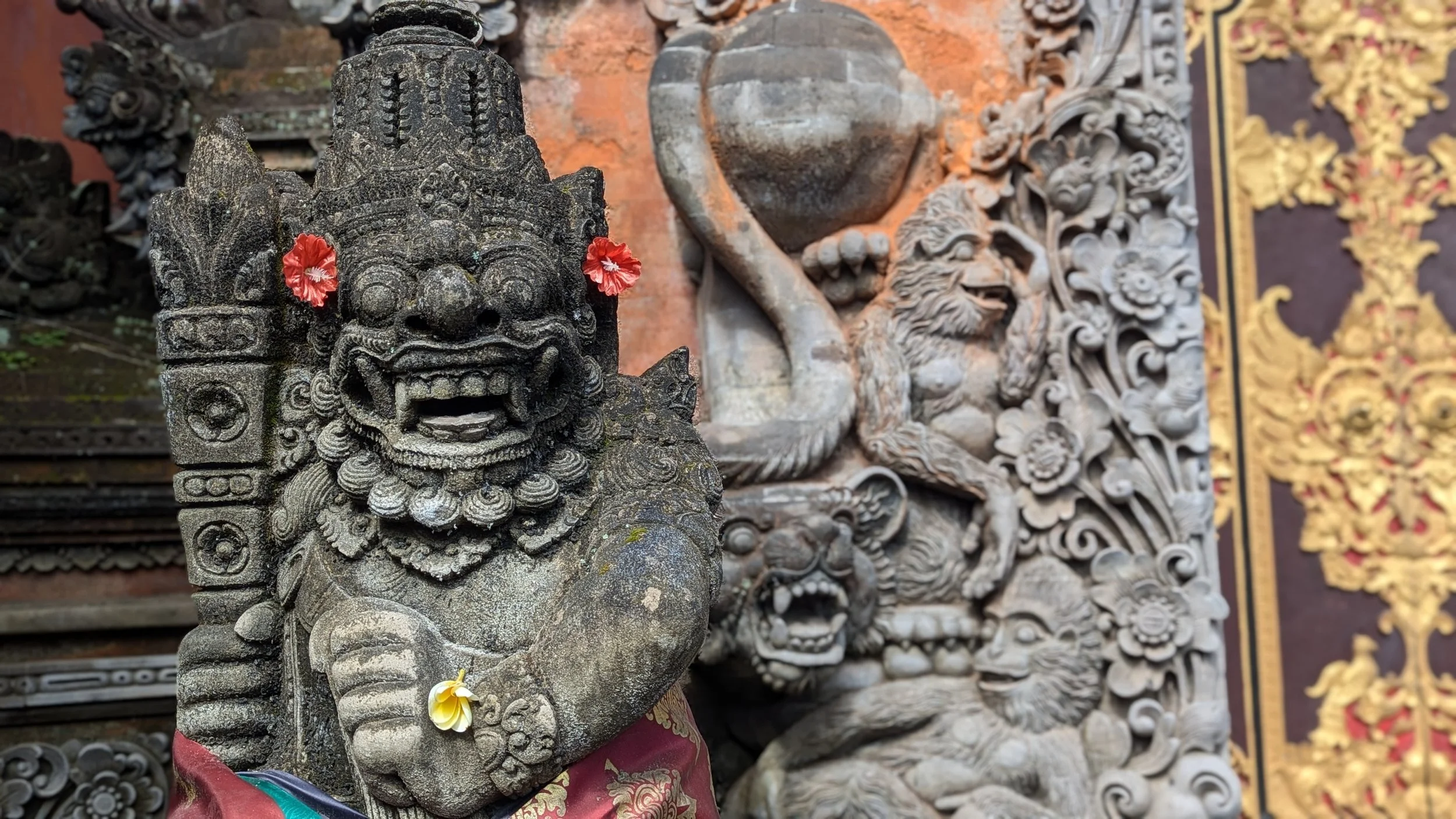
Tourists aren’t allowed in every temple (like this one), so always ask if it’s not clear. Sarongs are usually provided in temples where tourists are allowed.
🌺 Watch Your Step
You’ll see offerings (called canang sari) everywhere — on sidewalks, stairs, beaches.
Try not to step on them if you can avoid it (occasionally you can’t) — they’re placed with love and intention.
🛍️ Reduce Waste
Say “no, thank you” (“tidak, terima kasih”) to unnecessary packaging when shopping or ordering takeaway.
Bring a tote bag with you to avoid needing plastic bags
🐘 Avoid Unethical Animal Attractions
Skip places that offer elephant rides or selfies with animals, like snakes.
Did you know? Elephants aren’t native to Bali — they’re imported and kept in less-than-ideal conditions for tourism.
If you’re interested in seeing wild elephants in their natural habitat,
contact me about ethical trips to Sumatra, Sri Lanka, or Borneo!
🏡 Support Local Communities
Stay at locally owned homestays, guesthouses, or boutique hotels when possible.
Eat at family-run warungs (local restaurants with affordable and delicious food!) and buy souvenirs from Balinese artisans, not mass-produced stalls.
Hire local guides — they know the culture, land and stories best.
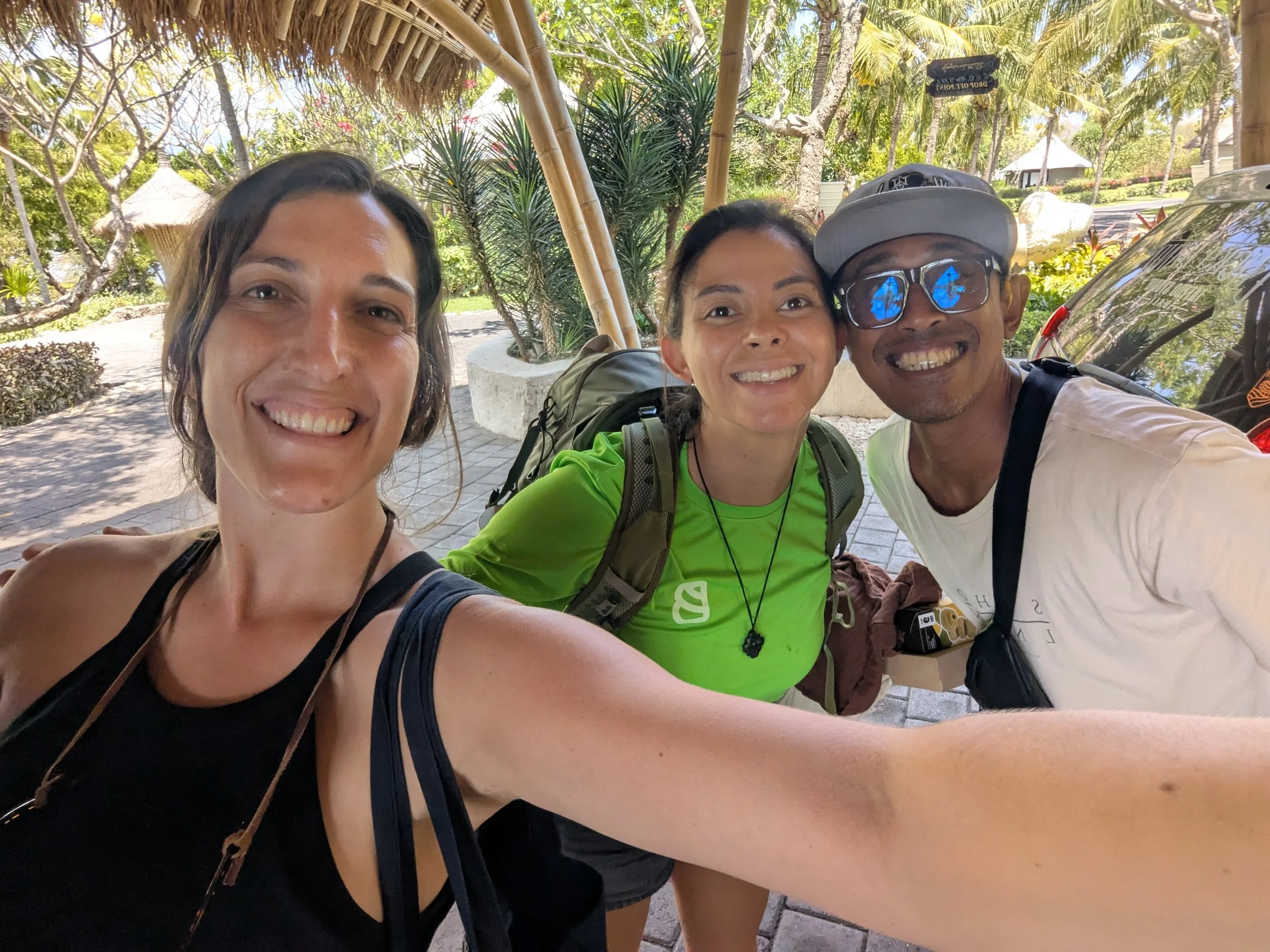
I’ve scouted the best Bali guides! <3 Just contact me for recommendations.
🧘♀️ Embrace the Pace
Bali runs on its own rhythm — slower, yet somehow kind of chaotic at times…
Be patient. Some basic things might (will) take longer than you expect.
Let Bali slow you down in the best way.
🔗 Want to dive deeper? Check out my Responsible Travel Guide
10. Final Pre-Departure Checklist
Before you board that flight, take a moment to run through these quick steps so you arrive in Bali prepared to enjoy fully:
✅ Screenshot or save offline copies of key documents
Flights, hotel confirmations, Visa on Arrival (VOA), travel insurance, and any key contact info
✅ Set up your eSIM or SIM plan
Activate your Airalo eSIM before flying, or keep your plan ready to swap to a Telkomsel SIM after landing
✅ Notify your bank
If required, let them know you’ll be using your card in Indonesia so you don’t get locked out
✅ Download offline Google Maps for Bali
Super useful for directions when the signal drops
✅ Note what to buy after landing
Pick up mosquito repellent and charcoal tablets locally if needed
✅ Bring your meds
Pack any personal medications and keep them in your carry-on
✅ Choose Your Mindset
Prepare to go with the flow — things won’t always go to plan, but these moments will become your best memories.
If you let it, Bali can slow you down in the best way.
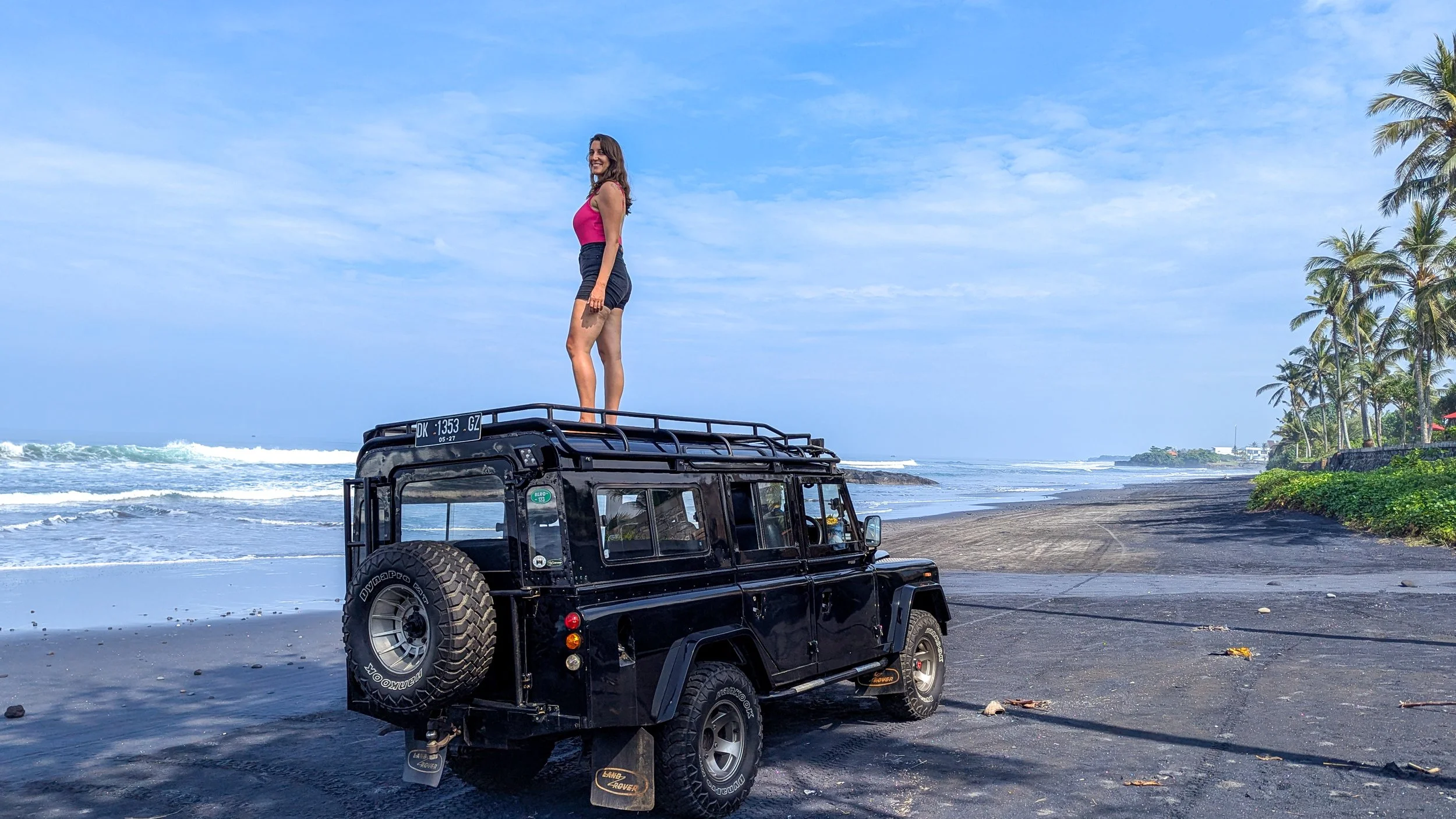
One of my fave Bali tours is exploring the rice fields and black sand beaches in Tabanan!
🌺 Selamat Jalan! Happy Travels in Bali!
Now that the logistics are handled, you can start dreaming about everything you'll do in Bali – the temples, the food, the waterfalls. More guides are coming soon, but if you want custom help planning a meaningful trip, you can use my travel planning services to help you design the perfect itinerary, pick the best hotels, and find the best drivers and guides.
And hey – if you found this helpful, I’d love it if you shared it or joined the newsletter to get more thoughtful travel tips (and crazy stories 🙃) straight to your inbox.
Happy packing!
— Lynne

Planning a complicated Asia itinerary? I help independent travelers design custom trips that balance logistics, local culture, and meaningful experiences. Click here to learn more about my travel planning services.
KEEP PLANNING YOUR ADVENTURES: