Common Mistakes to Avoid on the Mae Hong Son Loop
On paper, the Mae Hong Son Loop can look pretty straightforward — a scenic route through Northern Thailand that you can complete in just a few days.
In reality, it’s one of those experiences where the details matter. Small decisions, like how many days you give yourself, what bike you choose, or even the time of year you go, can completely shape how the trip feels.
This isn’t about doing it “perfectly”; rather, let’s just prep you to avoid a few common mistakes so you can truly enjoy this scenic ride.
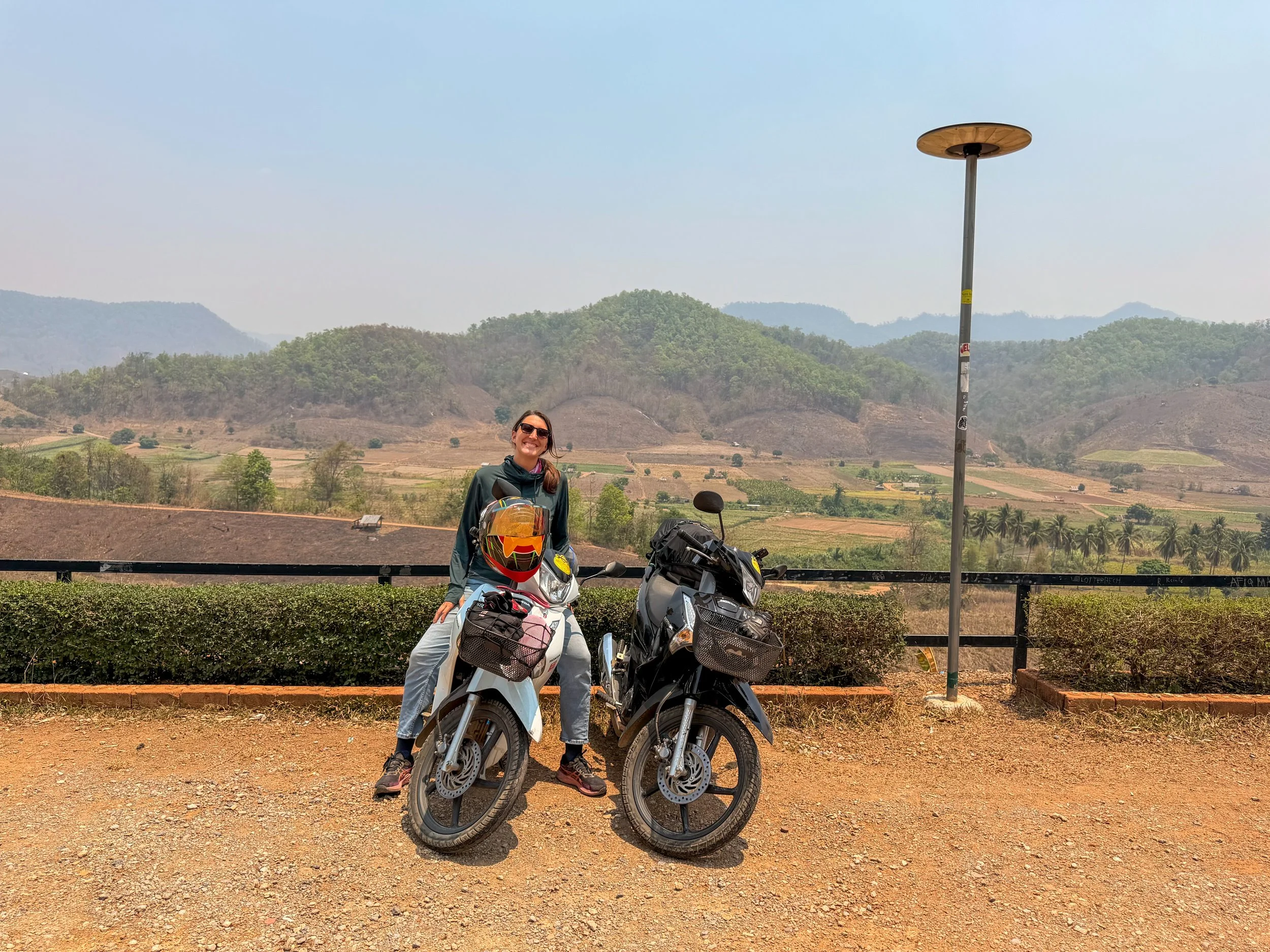
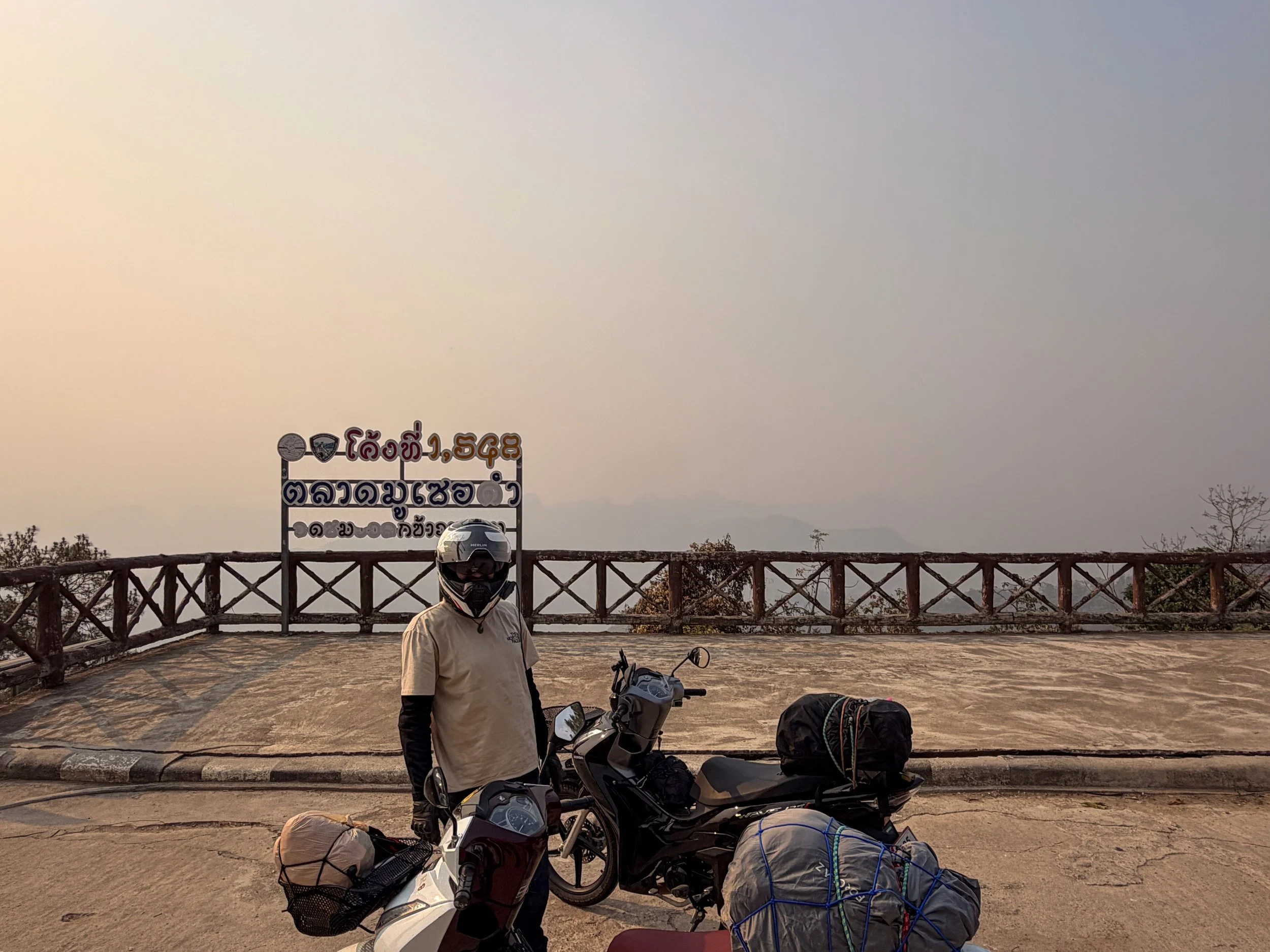
Even in hazy conditions, we had breaks to enjoy Northern Thailand’s hilly landscapes.
Underestimating the Riding Difficulty
While the road conditions on the Mae Hong Son Loop are generally very good, the ride itself shouldn’t be underestimated.
The route is known for its constant curves, switchbacks, and mountain roads. It’s physically and mentally engaging, even for experienced riders — and can quickly become overwhelming if you’re still getting comfortable on a scooter or motorbike.
This is an intermediate to advanced route, not something I’d recommend for anyone learning to ride for the first time.
If you’re unsure, it’s worth building up experience elsewhere before taking this on.
Visiting During Smoke Season
This is one we learned the hard way.
Northern Thailand’s smoke season (typically March to April) can significantly impact air quality and visibility. During our trip in April, we had very limited visibility at times, which meant missing out on many of the views the loop is known for. Not to mention, it impacted our well-being, because it’s not ideal to be breathing in those air quality conditions.
It didn’t ruin the experience completely (because we have fun no matter what 😜), but it definitely changed it. Be sure to plan your trip outside of smoke season for clearer skies and a more enjoyable ride overall.
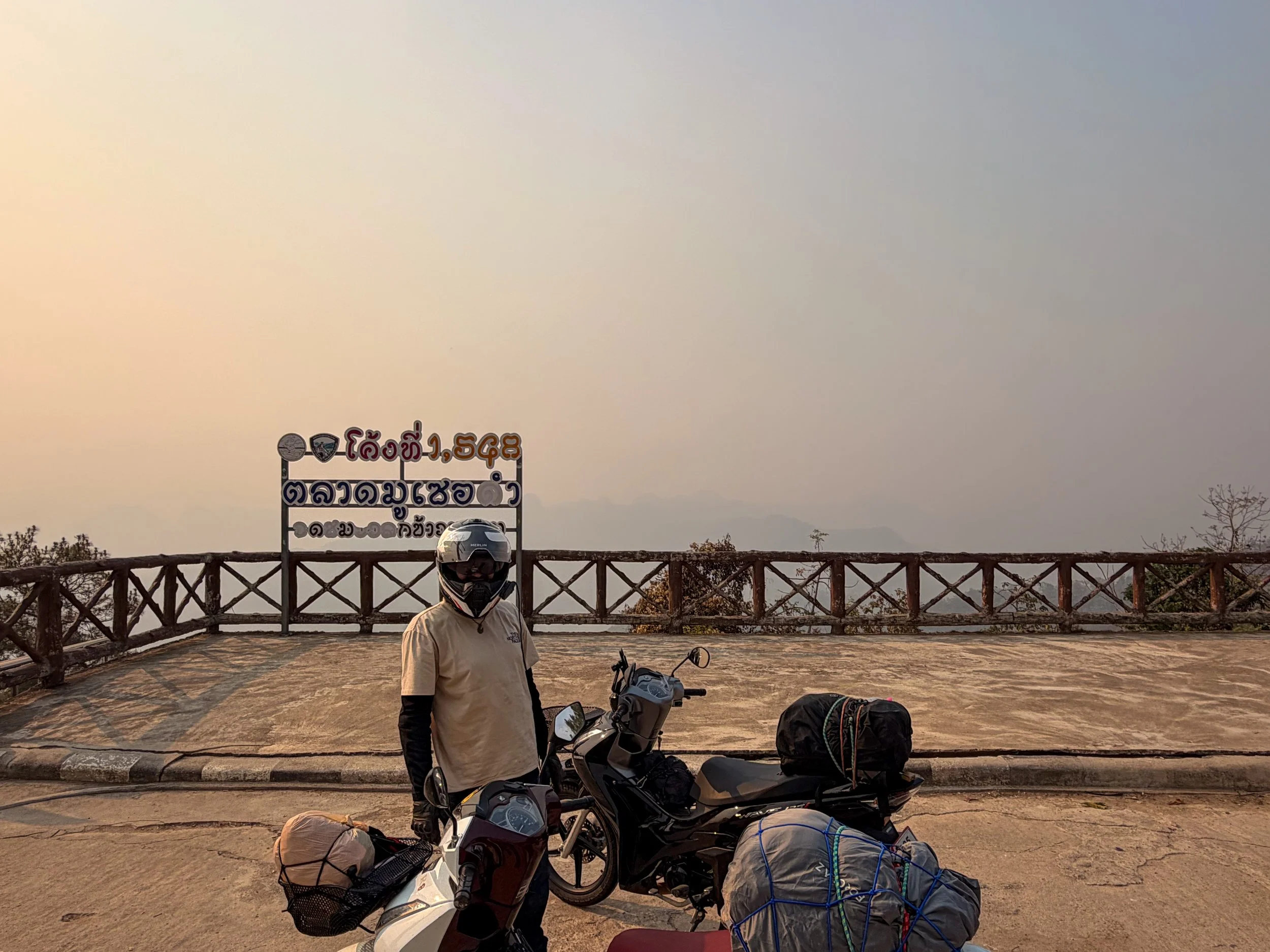
Rushing the Mae Hong Son Loop in 3 to 4 Days
One of the most common recommendations you’ll see is to complete the loop in 3–4 days.
And while that’s technically possible, it can easily turn the experience into more of a checklist than a journey — moving quickly from stop to stop without really taking in the places in between.
We chose to stretch the loop over a full week, and it completely changed how the trip felt.
Instead of long, exhausting riding days, we kept most of our drives to around 2–3 hours. That gave us the flexibility to stop when something caught our attention, take little “side quests,” and spend more time in the places we enjoyed.
It also made the ride feel much more manageable. The loop is known for its constant curves and mountain roads, which can be physically and mentally tiring — even for experienced riders. Shorter riding days meant we stayed more present, less fatigued, and better able to enjoy the experience.
The Mae Hong Son region isn’t just about the road — it’s about the landscapes, the slower pace, and the village life along the way. Rushing through it means missing a big part of what makes it special.
If you’re considering the loop, you’ll find plenty of fast-paced itineraries online. But taking your time allows you to experience it differently — living it instead of just passing through.
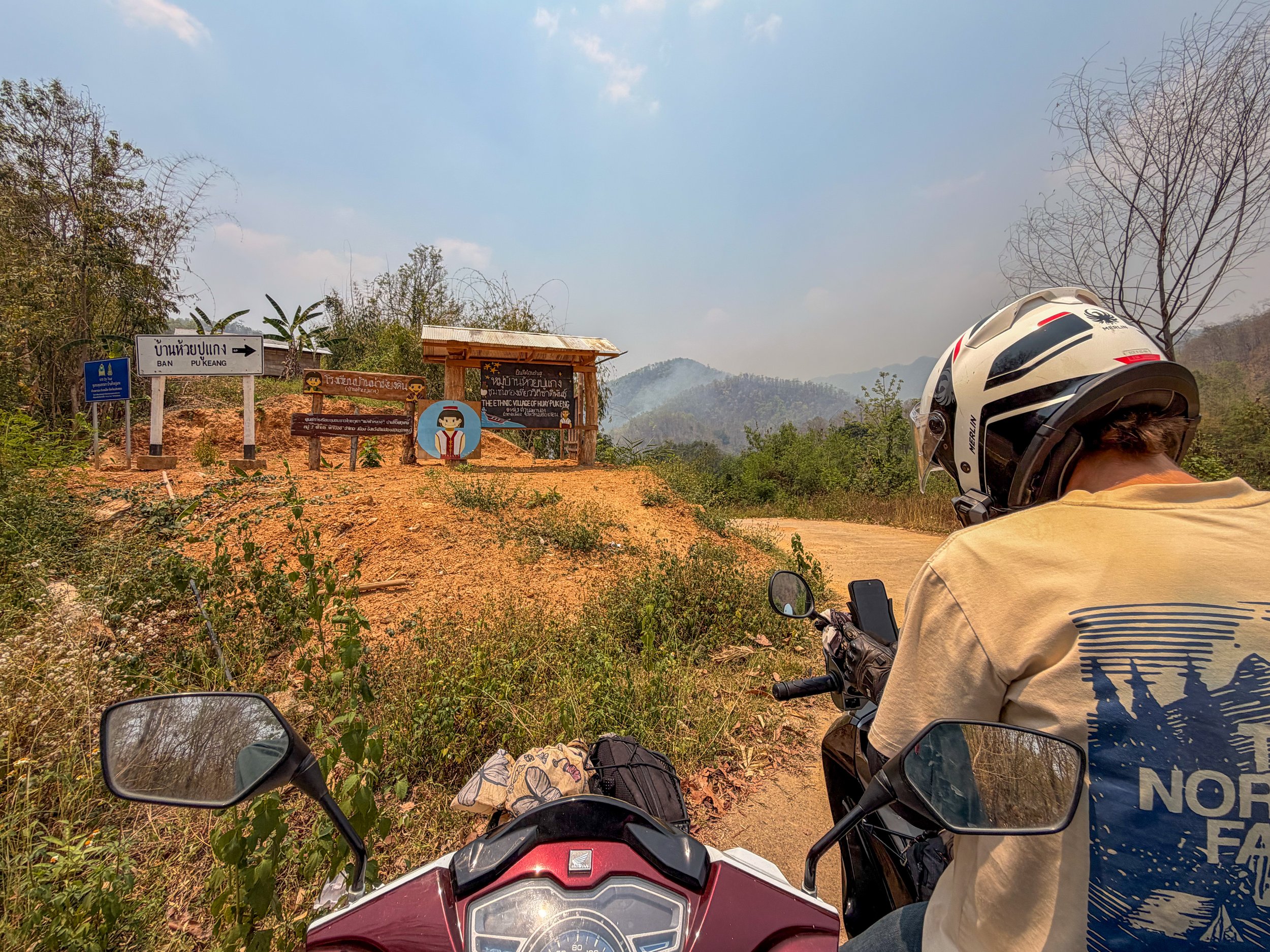
Leaving time (and energy!) for random side quests is what will make your experience on the Mae Hong Son Loop 🤍
Choosing the Wrong Motorbike
Technically, you can do the Mae Hong Son Loop with an automatic scooter, although we’d recommend at least a 125cc, but preferably a stronger scooter in great condition. That’s because you need power to make it up the many hills along the route.
For the best riding experience, you likely want a semi-automatic or fully manual bike. Just know that the price will be significantly higher for larger cc motorcycles. For the best value, semi-automatic scooters offer a great price for power. If you have the option, a semi-automatic can offer better acceleration on inclines and better control going downhill compared to a fully automatic scooter — especially on longer or steeper sections of the loop.
We rented semi-automatic Honda Wave 125i bikes, which gave us enough power for the hills while still being lightweight and easy to handle.
Not Checking Your Bike Properly
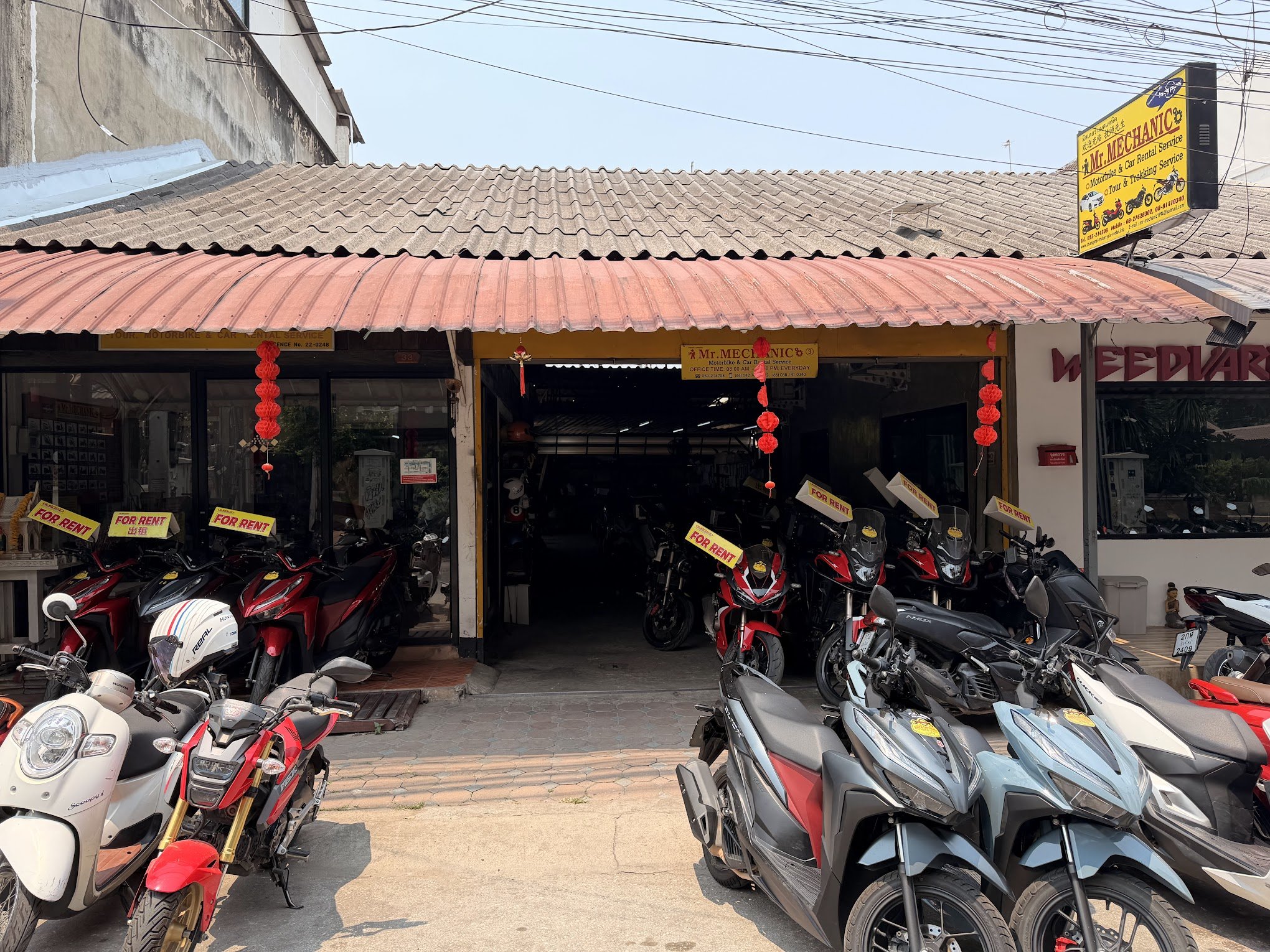
Not all rental shops are created equal — and the condition of bikes can vary a lot. Before heading out, it’s worth taking a few minutes to properly check your bike.
At a minimum, make sure the:
bike feels stable when you test it
brakes feel responsive
tires have good tread and proper inflation
lights and indicators are working
mirrors and phone holder are stable (they commonly come loose!)
We also took a video walking around the bike to document any existing scratches or damage — something that can save you a lot of hassle (and money) later on.
It’s a small step, but one that can make a big difference if anything comes up during or after your rental.

Planning a complicated Asia itinerary? I help independent travelers design custom trips that balance logistics, local culture, and meaningful experiences. Click here to learn more about my travel planning services.
Overpacking for the Loop
When you’re heading out on a multi-day ride, it’s tempting to pack for every scenario.
In reality, less is better.
You’ll be moving around frequently, and managing a large bag on a motorbike can quickly become uncomfortable and dangerous — especially on winding roads. A heavy bag on the back can make your bike more unstable, too, and affect suspension. So keep it simple — it’s actually part of the fun anyway 😉.
We stuck to small backpacks with just what we needed, and relied on the fact that laundry services are widely available along the route. Packing light made the ride noticeably easier.
Any reputable scooter/motorbike rental shop will offer you a place to store a bag there if you need to during your trip.
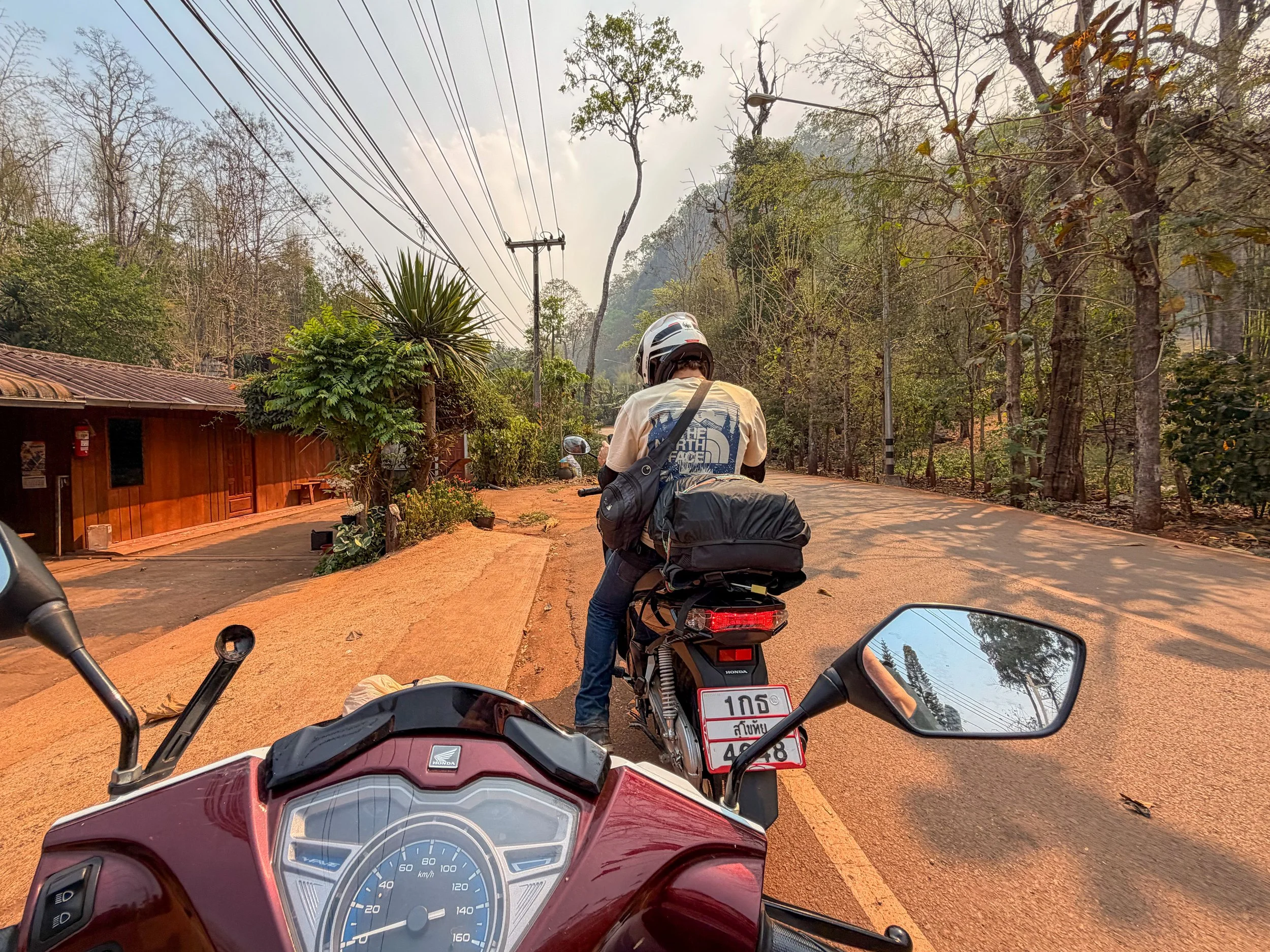
We used bungee cords (provided by our rental shop) to strap our backpacks onto the back of our scooters. We left a bigger bag stored at the rental shop in Chiang Mai and took only what we needed for the week.
Not Planning for Fuel Stops
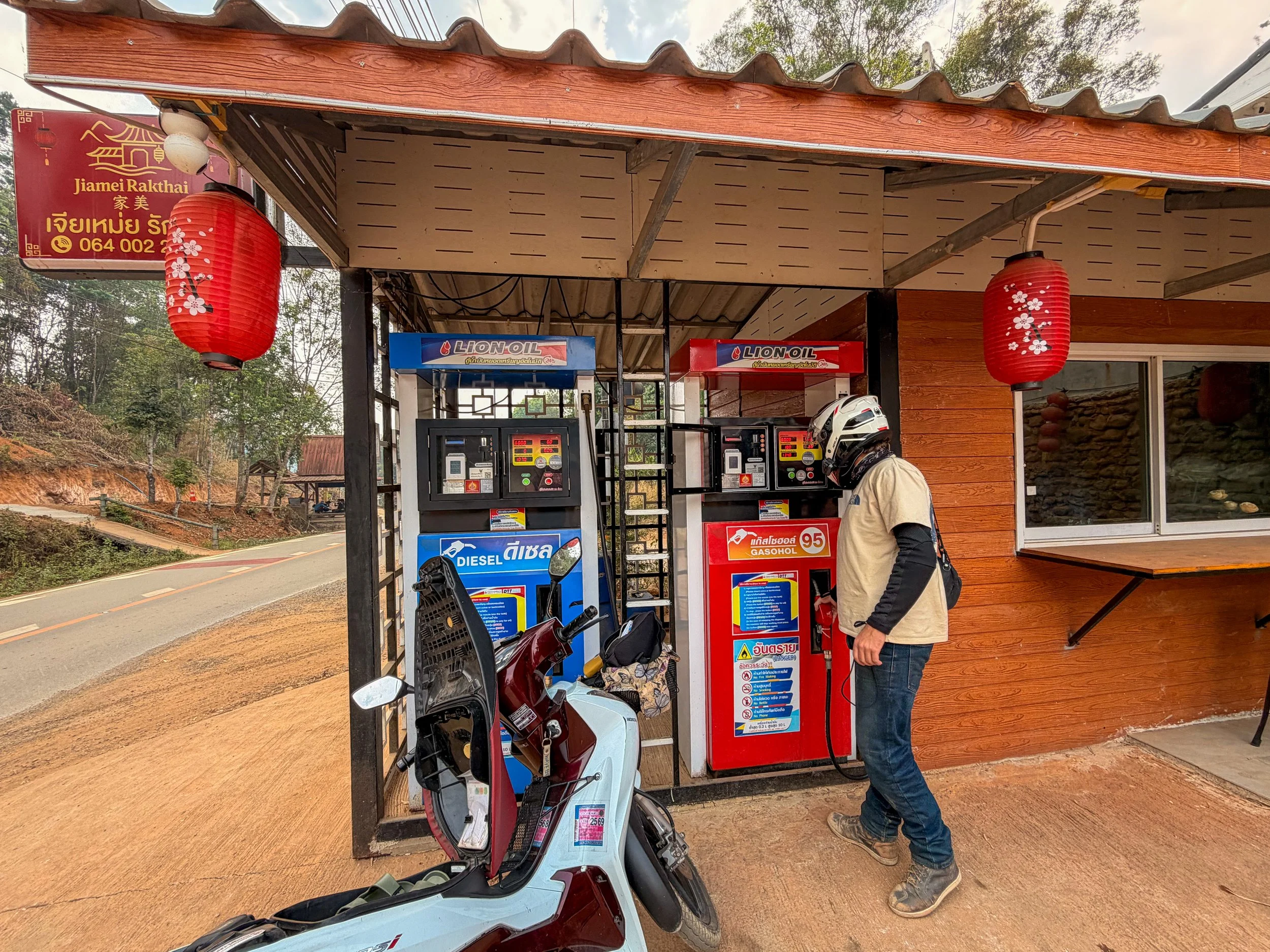
Fuel isn’t usually a major issue on the Mae Hong Son Loop, but the way petrol stations work might be a bit different from what you’re used to.
Some stations are attended, where you pay directly. Others are self-serve, where you fill up and then go inside to pay. And in some cases, you’ll come across fully self-service machines that require cash or coins — and can be a bit confusing if you’re seeing them for the first time.
On average, we paid around 150 THB to fill up our Honda Wave 125i scooters from nearly empty.
It’s not something to stress about — just something to be aware of so you’re not caught off guard.
Riding Without the Right Insurance or License
This is one of those areas that often gets overlooked.
To be properly covered, you typically need:
a valid motorcycle license
an International Driving Permit (IDP)
travel insurance that includes medical for motorbike accidents
to be wearing a helmet (this is often a condition for coverage)
a motorcycle or scooter rental that includes accident coverage for the bike itself
Even if rental shops are relaxed about requirements, insurance companies usually aren’t.
It’s worth taking the time to make sure everything is in place before you start your trip.
(If you want a deeper breakdown, I cover this more in my scooter safety guide.)
Trying to Do Too Much Instead of Enjoying the Ride
This might be the most important one.
It’s easy to approach the Mae Hong Son Loop as something to “complete” — a route to tick off.
But the real value of the experience isn’t just the road itself. It’s the small moments along the way — the stops you didn’t plan (i.e., side quests!), the quiet villages, the slower pace of life in this rural part of Thailand.
The more space you give yourself to take it in, the more rewarding the experience becomes.
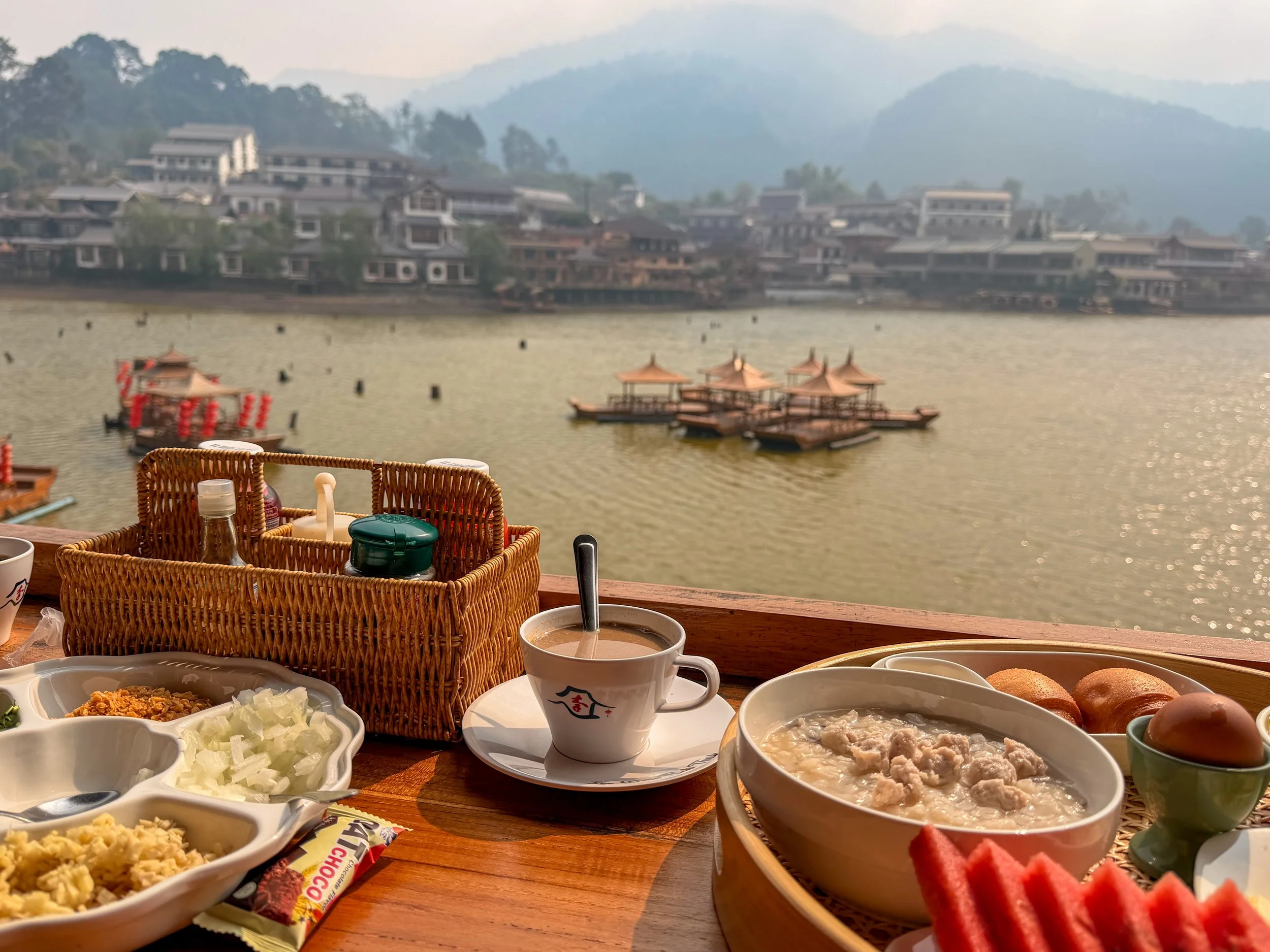
Taking our time to enjoy meals and views meant we could take in our surroundings and enjoy the journey rather than rushing through the Mae Hong Son Loop — we definitely didn’t regret taking a week to do it!
Final Thoughts
These are just a few things that are easy to overlook when you’re caught up in planning an exciting trip. With a bit of awareness and preparation, the Mae Hong Son Loop can be an incredibly smooth and rewarding experience.
Take your time, choose your setup thoughtfully, and leave room for the unexpected.
✨ That’s where the magic tends to happen ✨
Travel (and drive) well,
Lynne
Was this helpful? Have more questions? You can reach me by Instagram DM or sending me an e-mail!
HEADS UP: Some links on Travelynne are affiliate links, meaning I earn a small commission if you purchase select experiences from my links — at no extra cost to you!
This helps me invest more time and resources into creating helpful travel content like this article. Learn more about my offerings and how to support Travelynne on my booking page, where you can book tours, transportation, and accommodations.
READ NEXT: