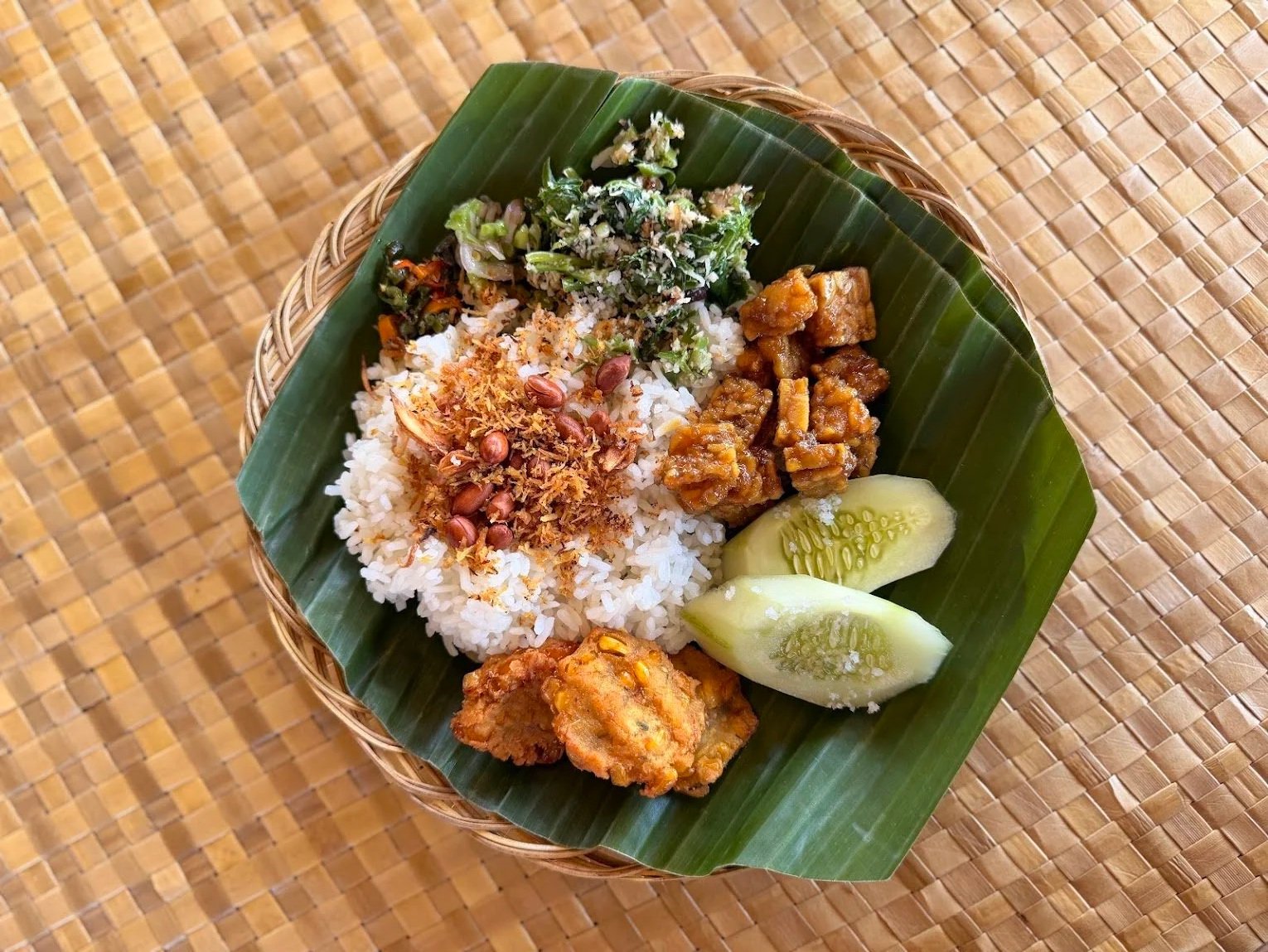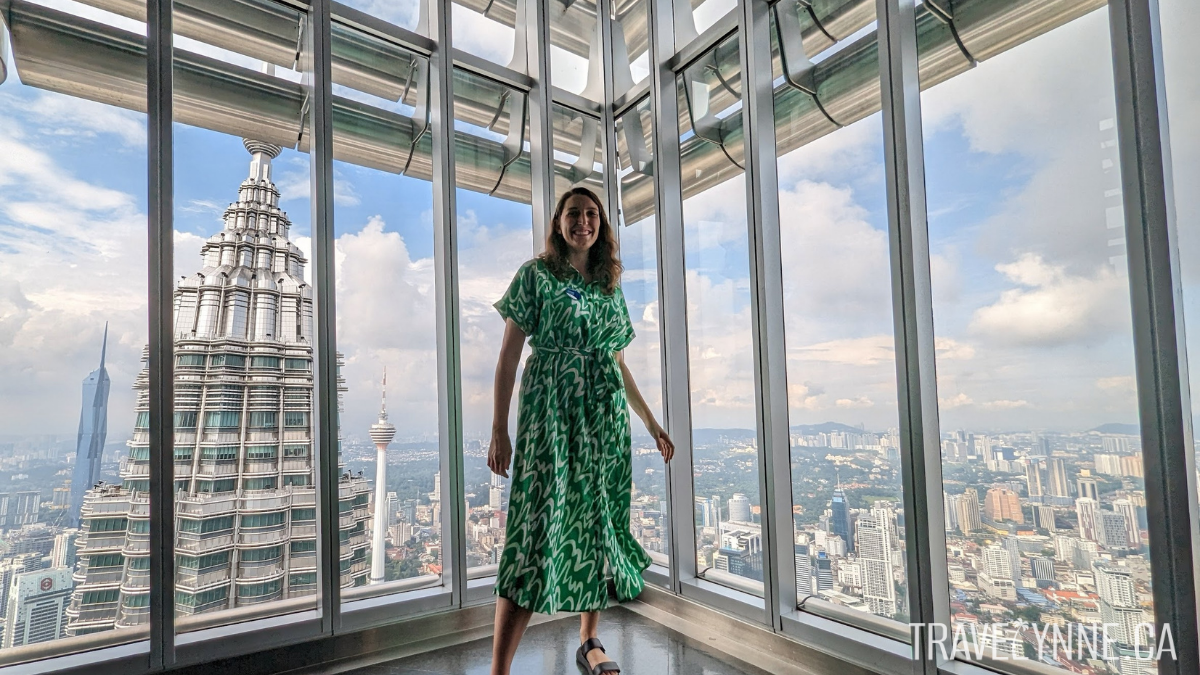
Self-Guided Ubud Walking Tour: Monkey Forest to Ubud Market
Heads up: This article may contain affiliate links. If you book through them, I may earn a small commission at no extra cost to you.
Ubud is one of those places that’s best explored slowly.
Yes, it’s busy and chaotic at times — but it’s also deeply cultural, spiritual, and creative, with lively traditions, beautiful architecture, and hidden corners that are easy to miss if you rush through it.
That’s why I put together this self-guided Ubud walking tour: an easy half-day route through central Ubud without needing a driver or scooter.
In this guide, you’ll find a free Google Maps route, local recommendations, and cultural context for some of central Ubud’s most interesting stops, including the Sacred Monkey Forest, shops, cafes/restaurants, Ubud Palace, and Ubud Art Market.
This route is ideal for travellers who enjoy exploring slowly, learning about culture, supporting local and eco businesses, and leaving space for spontaneous discoveries along the way. And if you have extra time in Ubud, I’d also highly recommend joining a local guided walking tour (I’ve included a few recommendations at the end).
IN THIS ARTICLE:
Ubud Walking Map & Route Overview
QUICK FACTS: UBUD SELF-GUIDED WALKING TOUR
🗺️ Follow Along on Google Maps ⬅️
Route Length: ~4.8 km total
Walking Time: ~1 hour 10 mins (without stops)
Short Route Option: ~3.4 km (~50 mins walking)
Best time to start: Around 9 AM
Best for: Curious & slow travel, culture, cafés, shopping, photography
Difficulty: Easy to moderate walking
Accessibility: Very uneven sidewalks, stairs, and narrow pathways
Good to know: Ubud gets very hot and humid midday, so starting early makes a huge difference
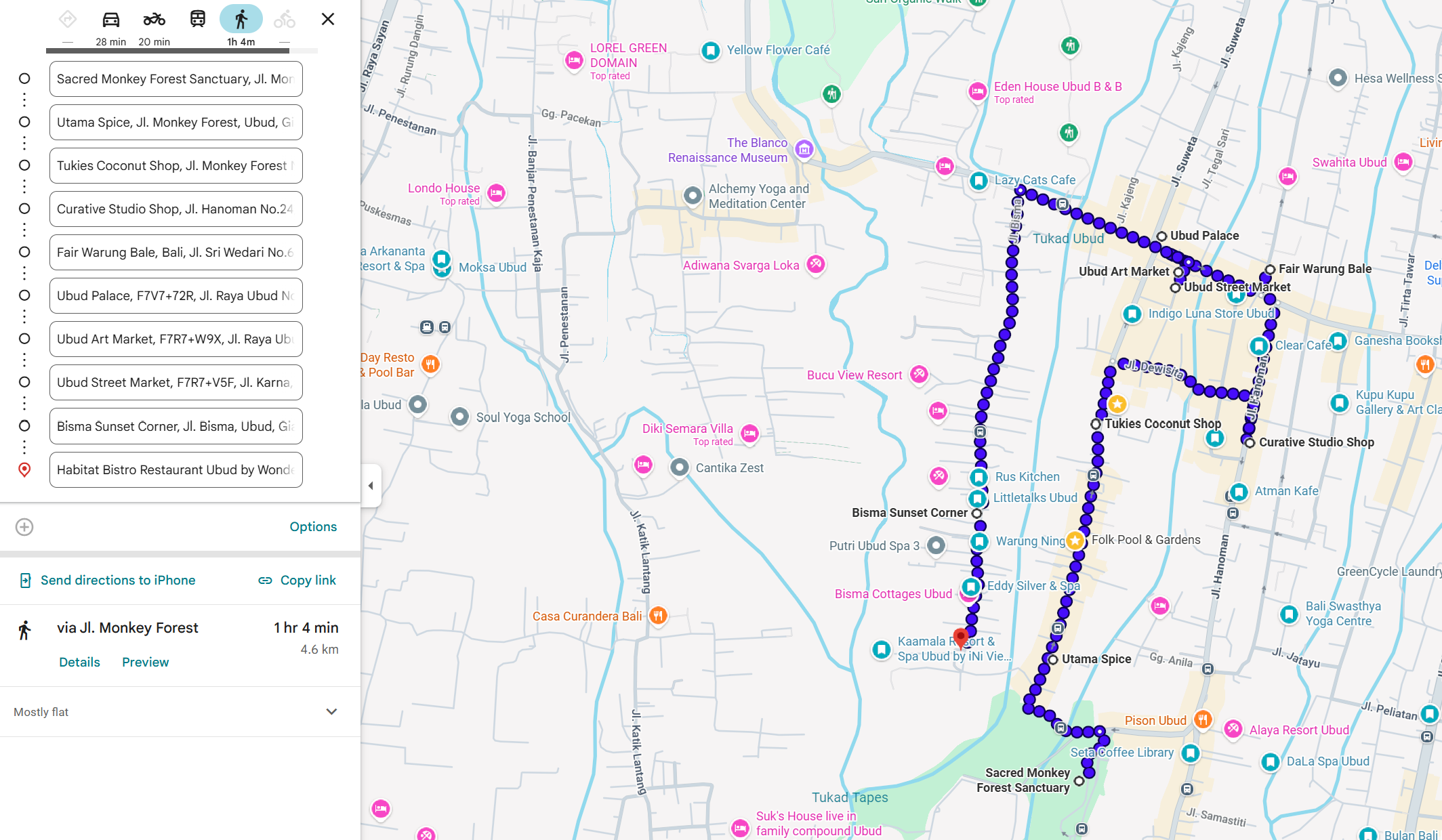
You can click the image to get the Google Maps directions for this whole self-guided tour for free! 🤍
This Ubud walking tour is thoughtfully designed as an easy half-day route through central Ubud without needing a driver, scooter, or guide.
The route begins at the Monkey Forest around opening time and gradually takes you through cafés, local shops, cultural landmarks, an amazing Balinese lunch, and some of my favourite corners of central Ubud.
The general route looks like this: Monkey Forest → DIY local product → Coconut ice cream → Local cafés & shops → Lunch at Fair Warung → Ubud Palace → Ubud Art Market → Bisma Street → Coffee with jungle view
Walking Distance
The full route is approximately 4.8 km, with about 1 hour and 10 minutes of total walking between stops (not including walking within stops).
If you prefer a shorter version, you can simply finish at the Ubud Palace and Art Market area instead, shortening the route to around 3.4 km and a total of approximately 50 minutes of walking.
Customize to Your Preferences
You can also completely customize this route based on your interests and energy levels. Spend longer in the cafés, skip the shopping stops, split it across multiple days, or wander off-route entirely — some of the best moments in Ubud happen when you stop trying to follow a perfect itinerary.
Follow the Route on Google Maps
I’d also recommend saving the Google Maps route offline before you begin. That said, don’t stress too much about following it perfectly. Some of the best little cafés, temples, and hidden shops in Ubud are tucked down the smaller side streets.
Google Maps Route:
[Insert your custom Google Maps link here]
Start at the Monkey Forest
QUICK FACTS: MONKEY FOREST
Sightseeing Time: ~45-60 mins
Cost: IDR 130,000 (~$7.50 USD) for a foreign adult
Tickets: Available online or at the gate
Best for: Nature, culture, photography
Good to know: Arrive early for cooler weather and fewer crowds
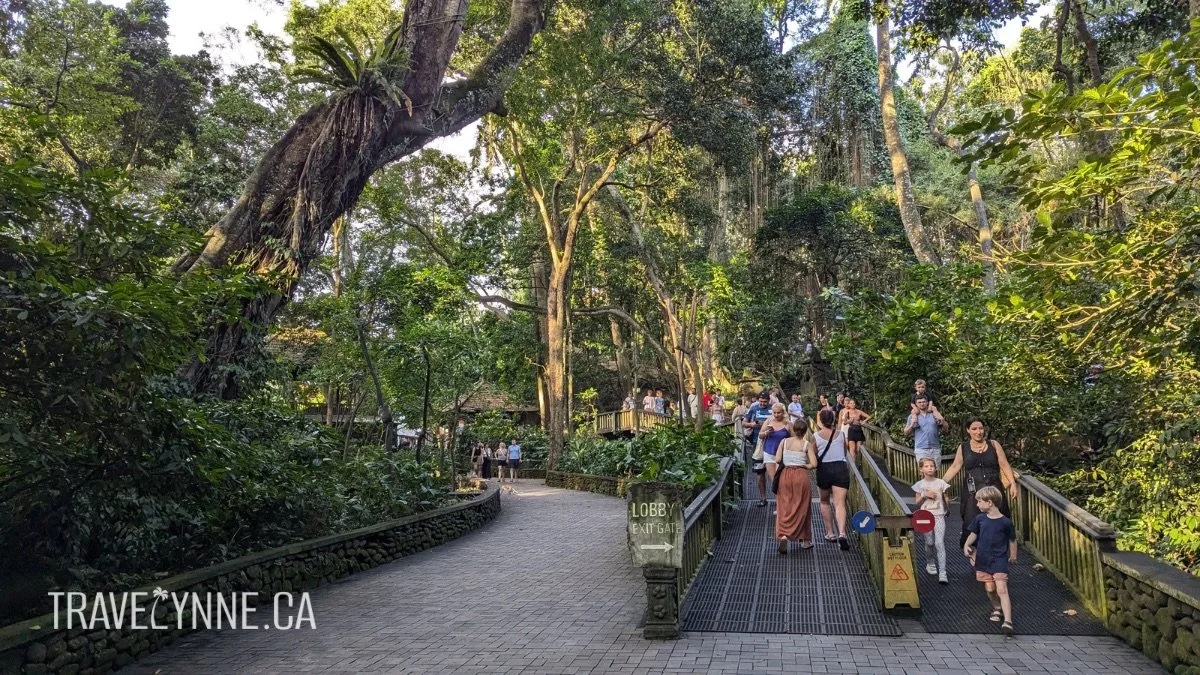
There is natural shade in the Monkey Forest, but it still gets hot and crowded mid-day, so I recommend going at opening time.
I recommend getting to the Sacred Monkey Forest Sanctuary around opening time at 9 AM to avoid the heat and crowds. Ubud gets super hot and humid, so it’s best to seize the day before the worst of the heat from 2–4 PM.
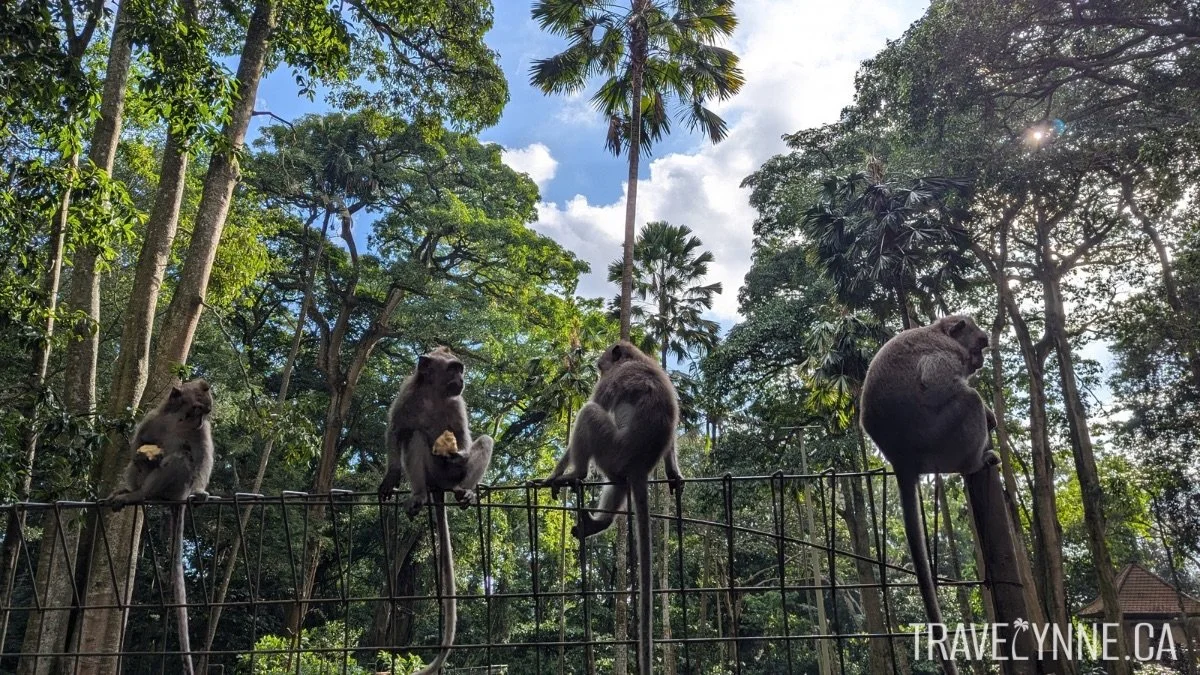
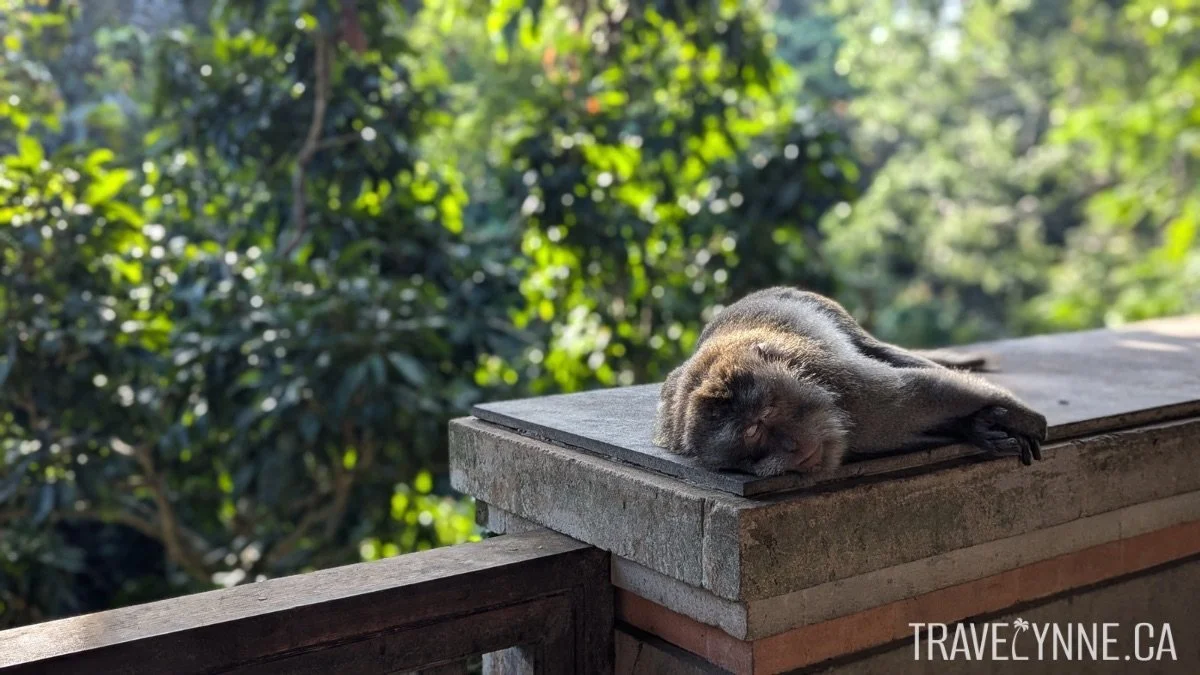
This monkey may look innocent here, but s/he is likely a bit naughty 😅
The Monkey Forest feels calmer in the morning before the tour groups arrive, and the shaded pathways are far more pleasant before midday humidity fully kicks in.
Give yourself around 45-60 minutes to explore.
At first glance, the Monkey Forest can seem like just another tourist stop in Bali, but it’s actually an important cultural and spiritual site within Ubud. The forest is home to several temples and reflects the Balinese Hindu philosophy of harmony between humans, nature, and the spiritual world.
It also plays an important role in preserving green space within central Ubud as tourism and development continue to grow.
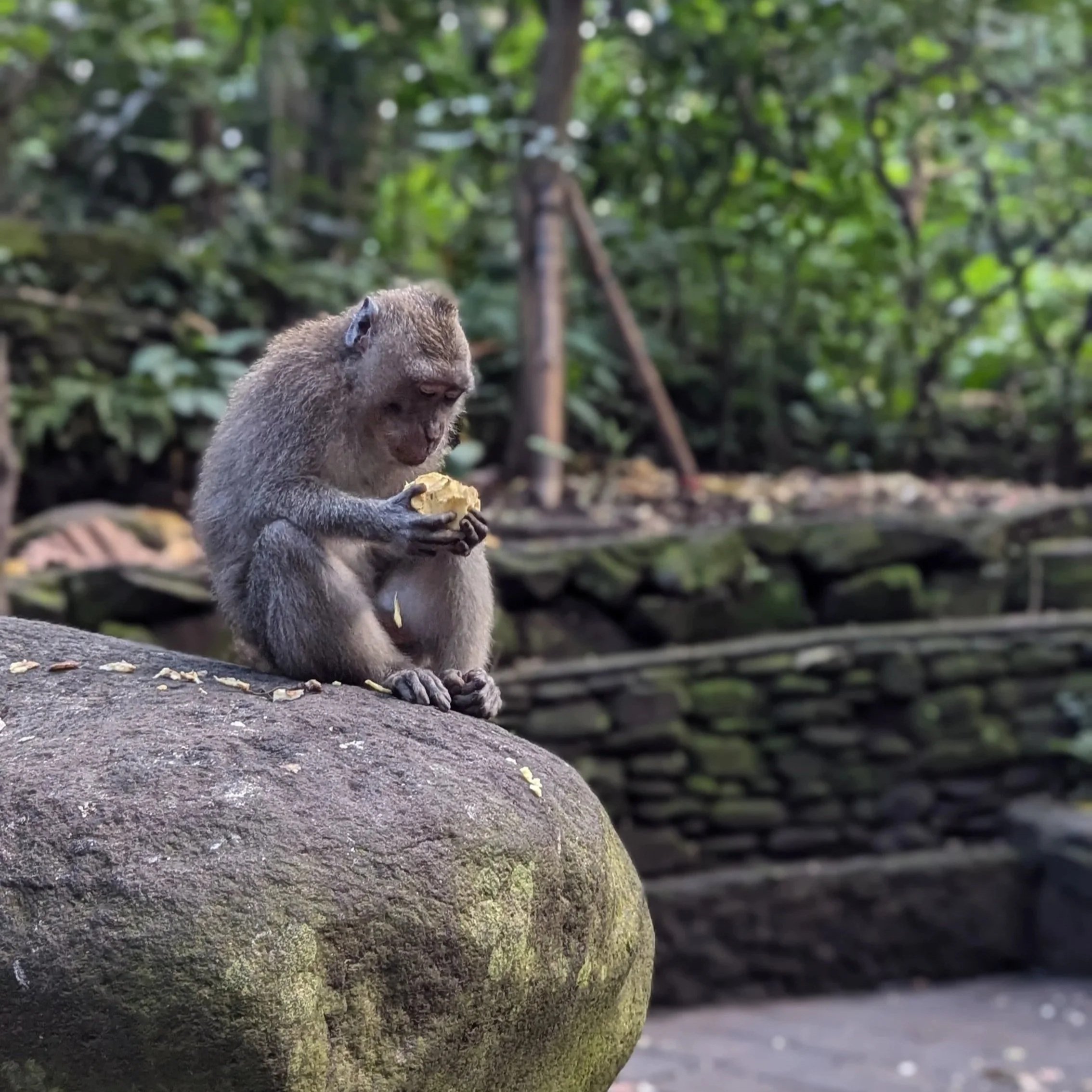
KNOW BEFORE YOU GO:
Respect the Monkey Forest guidelines and staff instructions at all times
Do not feed, touch, or taunt the monkeys
Don’t wear jewellery or bring any plastic bags, open bags, or food with you
Secure your glasses or sunglasses in your bag
Stay calm if monkeys approach you
At first glance, the Monkey Forest can seem like just another tourist attraction in Bali, but it’s actually an important cultural, spiritual, and conservation space within Ubud.
Officially known as the Sacred Monkey Forest Sanctuary, the site is home to more than 1,200 Balinese long-tailed macaques as well as several Hindu temples dating back to around the 14th century. The forest follows the Balinese Hindu philosophy of Tri Hita Karana, which emphasizes harmony between humans, nature, and the spiritual world.
Beyond tourism, the sanctuary also plays a role in preserving green space, protecting important tree species, and supporting research around the macaques that live here.
“While the monkeys here are very used to humans, it’s important to remember that they’re still wild animals. Keep space between them, don’t taunt them, and behave respectfully - this is a sacred place.”
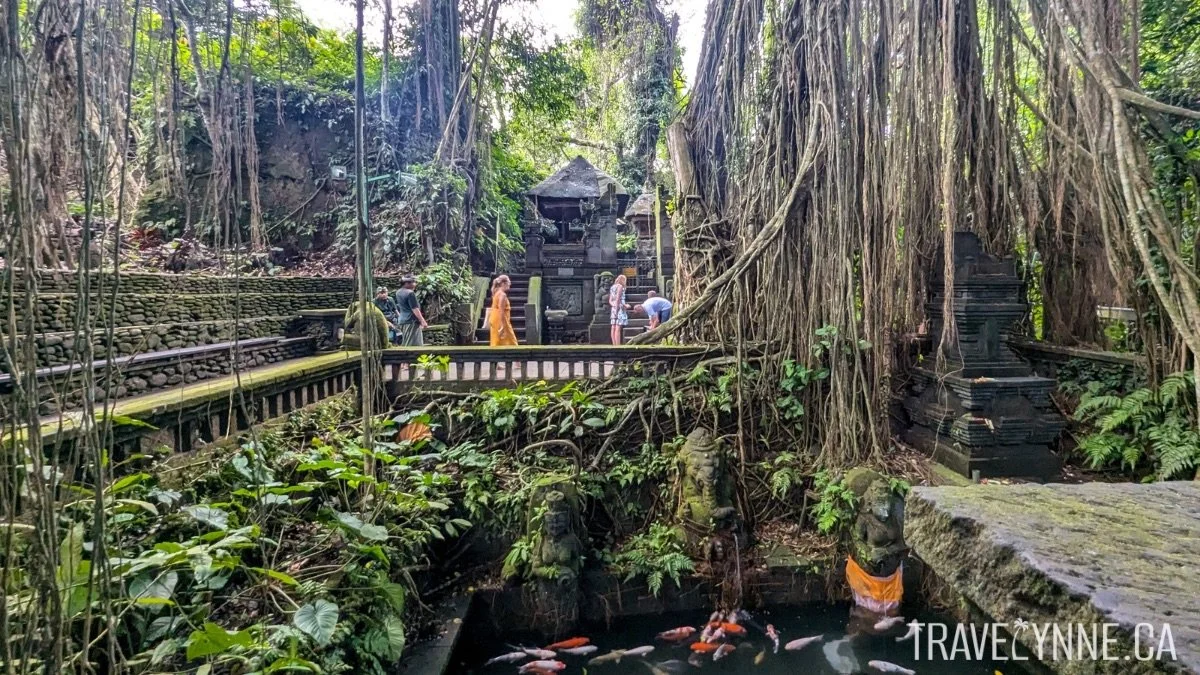
Don’t miss out on going “downstairs” at the Monkey Forest — the scale and age of the forest is more evident from here, and it’s a lovely place for a walk.
Personally, I appreciate that the Monkey Forest has become stricter over the years about visitor behaviour and animal interactions. Like many wildlife tourism experiences in Southeast Asia, it’s not perfect, but respecting the rules and observing the monkeys from a distance helps create a more ethical experience for both visitors and animals.
⬆️ BACK TO INDEX ⬆️
Natural Products at Utama Spice
QUICK FACTS: UTAMA SPICE
Sightseeing Time: ~15–30 mins
Cost: Free to browse, DIY products starting from IDR 65,000
Shopping Budget: IDR 50,000–300,000+, depending on products
Best for: Local natural lifestyle products, wellness lovers
Good to know: Great place to buy practical Bali gifts
Accessibility: Easy access from the main road
After enjoying the Monkey Forest, continue walking along Jalan Monkey Forest, and stop into Utama Spice.
This Bali-based skincare and wellness brand focuses on natural products inspired by Indonesian ingredients and traditional herbal knowledge. Their shop is small but interesting to browse, especially if you enjoy discovering locally-made products while travelling.
“The coolest part? You can even DIY a skincare product here, like body scrub, castile soap or bath salts, for a fair price. It’s a fun way to learn what natural ingredients — many of which you’ll see often in Bali’s forests and markets — can do for your wellbeing. ”
Utama Spice was actually founded in Ubud and has worked closely with local communities and traditional Balinese wellness practices for years. In a town where “natural” branding is everywhere, I appreciate that this is a genuinely local business rather than just another trendy tourist shop.
Their oils, soaps, and skincare products also make for beautiful gifts or souvenirs that are easy to pack home. Some of my personal faves are the natural Begone Bug Spray (it actually smells so good!) and the Island Spice Coconut Moisturizer.
⬆️ BACK TO INDEX ⬆️
Coconut Ice Cream at Tukies
QUICK FACTS: TUKIES COCONUT SHOP
Sightseeing Time: ~15–30 mins
Cost: Half coconut with 1 scoop starting from IDR 48,000
Best for: Cooling down, sweet treats
Good to know: Famous for coconut ice cream served in a real coconut
Accessibility: Ground floor dining
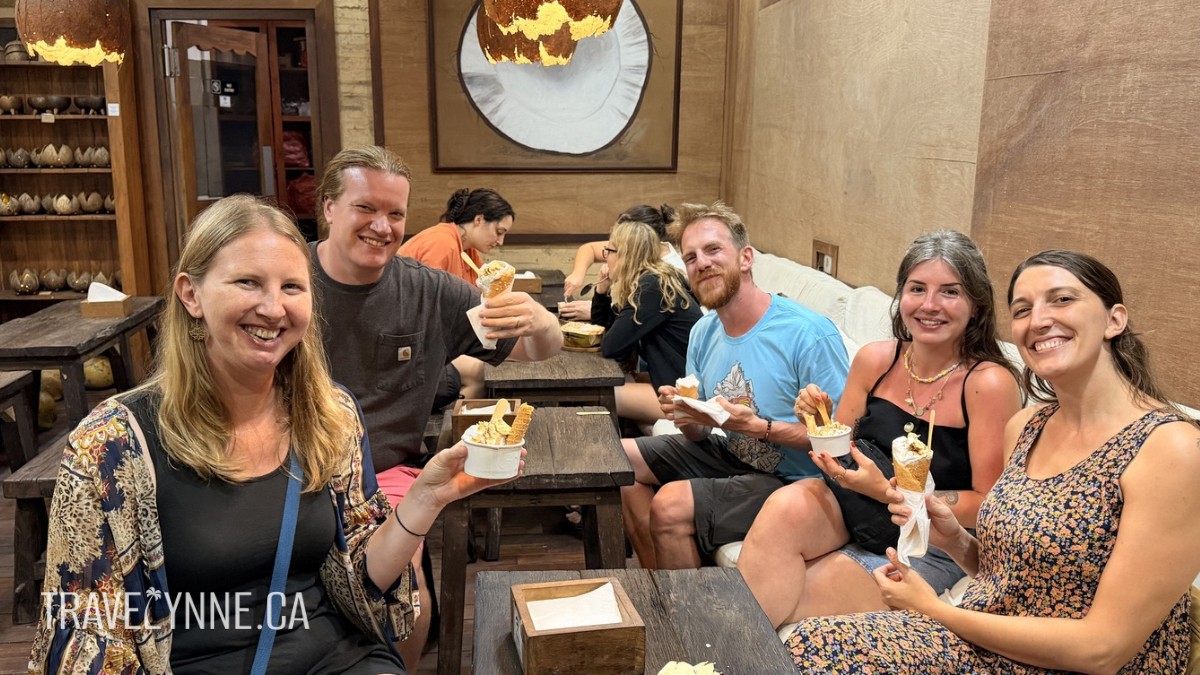
Tukies has two locations in central Ubud for coconut ice cream that will keep you coming back for more :D
You’ve been walking around for a while now, and you’ve definitely earned a cold treat! 🥇 (But if you aren’t ready for it just yet, you can grab one at their other location after lunch instead!)
Tukies Coconut Shop is famous for its coconut ice cream served inside fresh coconut shells. It’s the perfect refresher as the day starts warming up! Yes, it’s popular with tourists. Yes, it’s still worth it.
Coconut has long been an important ingredient throughout Indonesia and Bali, so while this stop is definitely more modern and playful, it’s still connected to local flavours.
Grab a seat for a minute, cool down, and enjoy the slower pace before continuing your walk through central Ubud.
⬆️ BACK TO INDEX ⬆️
Explore Ubud’s Shops & Cafes
QUICK FACTS: DOWNTOWN UBUD
📍 Google Maps Location for guidance only — it’s time to wander :)
Sightseeing Time: Self-paced, ~30–60 mins+
Cost: Free unless shopping/eating/drinking
Best for: Wandering, window shopping, cafés, photography
Good to know: This is the most flexible part of the route — feel free to explore without a plan
Accessibility: Side streets can have uneven sidewalks and cobblestone, narrow pathways, a lack of sidewalks, and some stairs
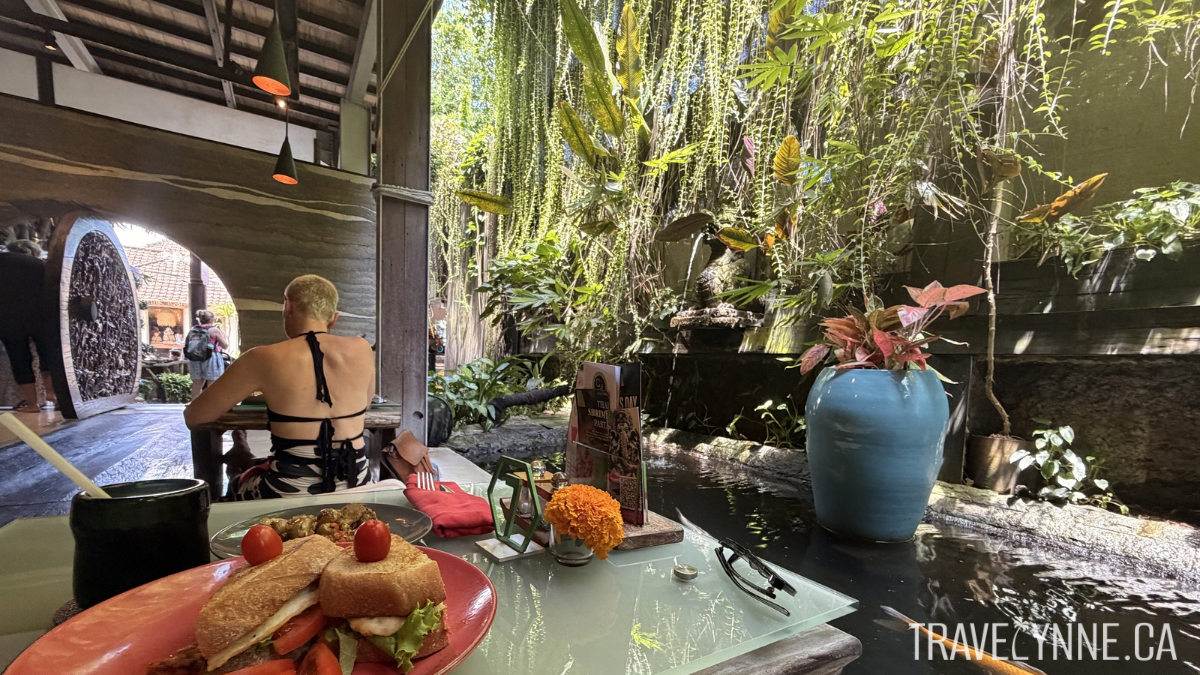
Nature meets modern in Clear Cafe, a great spot for a rest with coffee or matcha.
One of the best parts of this Ubud walking route is simply wandering through the smaller streets and side alleys around in the “downtown” area. I’m sending you toward Curative Studio, a cute shop indeed, but the idea is for you to spend some time getting lost in these charming shopping streets as you head to your lunch stop.
As you make your way through these roads, you’ll find small cafés, coffee and restaurants, boutique clothing stores, artisan jewellery, paintings and handmade ceramics, local and international design shops, and more.
“Some parts feel modern and curated, while others still feel wonderfully chaotic. That contrast is part of what makes walking through central Ubud charming and interesting in the first place.”
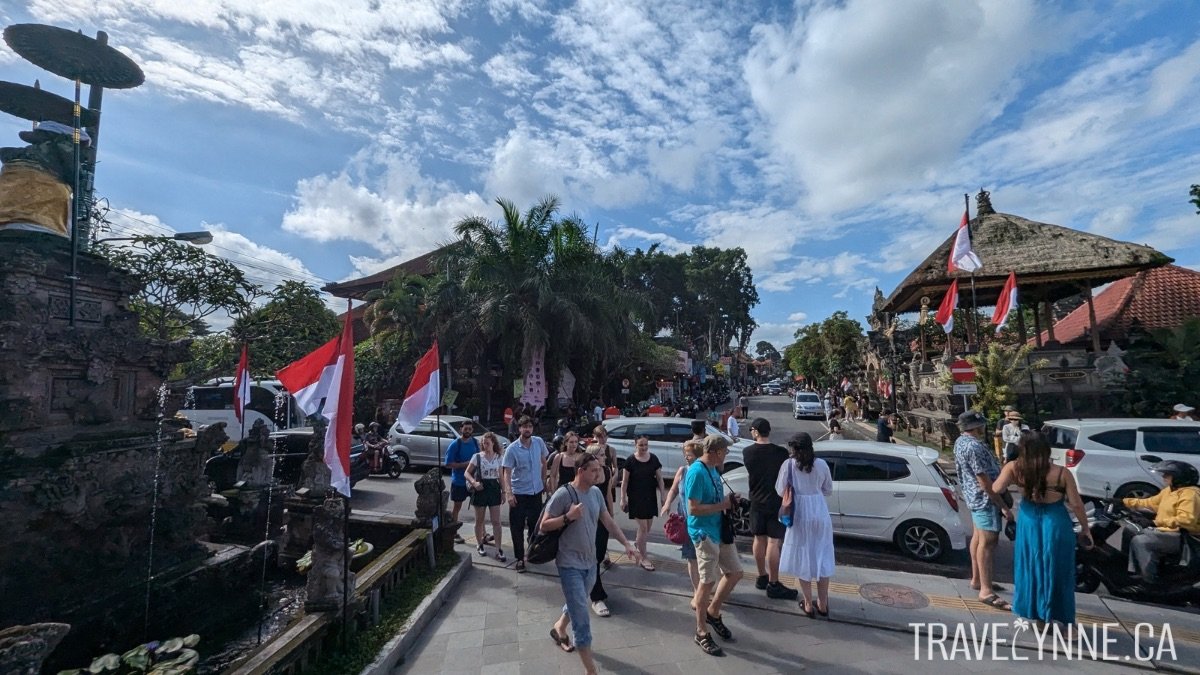
Every 5 minutes can feel different in Ubud — from crowded chaos to serene nature… it’s part of the charm ;)
You’ll also notice how quickly tourism changes from street to street here. Some shops focus heavily on mass-produced souvenirs, while others genuinely support local artists and makers. If you’re shopping, this is a nice opportunity to slow down and be intentional about where your money goes.
Here are some of my favorite shops and cafes:
SILVER JEWELLERY: Check out shops like YIN Jewelry and Filthy Gorgeous Accessories for unique finds
CLOTHES: There are so many options from mass-produced market sellers to high-end boutiques and everything in between. Some boutiques that are fun to browse include Kanani, Indigo Luna and Indosole (an Indonesian chain making shoes from recycled materials)
BOOKSTORE: Check out Ganesh Bookshop for new and used finds
CAFES: You’ll find the cutest interior with koi ponds and floor seating at Clear Cafe (which also has a beautiful sustainable menu) or a bamboo vibe over at Mudra Cafe
SWEETS: Chocolate lovers should head to Sacred Cacao, while cinnamon lovers must must must get a large bun from Sinamon Ubud
Don’t be afraid to wander a little without constantly checking Google Maps — and when hunger starts calling you, you can head to your next stop!
⬆️ BACK TO INDEX ⬆️
Lunch at Fair Warung
QUICK FACTS: FAIR WARUNG
Sightseeing Time: ~45–60 mins
Cost: Amazing Balinese platters starting from IDR 95,000–130,000
Reservations: Not usually needed
Best for: Sampling local food, meaningful travel experiences
Good to know: All of the ‘plataran’ (platters) are delicious and give you the chance to try a few Balinese specialties, plus part of their proceeds support healthcare initiatives
Accessibility: Ground-floor dining is accessible from street level
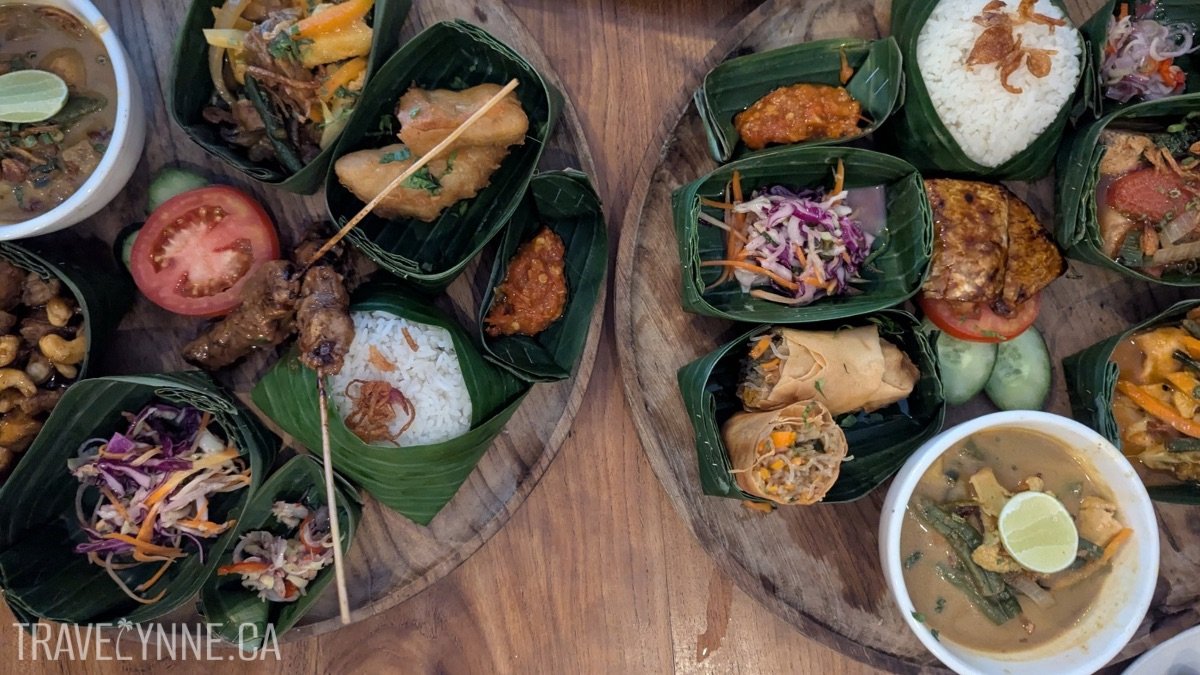
The platters at Fair Warung allow you to try several Balinese delicacies in one meal — and the flavors are outstanding!
For lunch, I highly recommend Fair Warung Bale.
Specifically, I recommend ordering any of their Balinese platters, which allow you to sample several local dishes at once. I recommend sitting upstairs for the best ambiance.
Beyond the food itself — which is truly delicious and authentic — what makes this place special is its mission. The restaurant helps support healthcare initiatives through the Fair Future Foundation, funding medical care and community projects in Bali.
I love finding places like this while travelling — somewhere you can enjoy a genuinely good local meal while also supporting businesses that care about the people and communities around them.
⬆️ BACK TO INDEX ⬆️
Visit Ubud Palace
QUICK FACTS: UBUD PALACE
Sightseeing Time: ~15 mins
Cost: Free
Best for: Balinese & Ubud culture, architecture, photography
Good to know: The Ubud royal family still lives here (these buildings aren’t accessible to the public). Traditional dance performances are held here in the evenings.
Accessibility: Mostly flat pathways
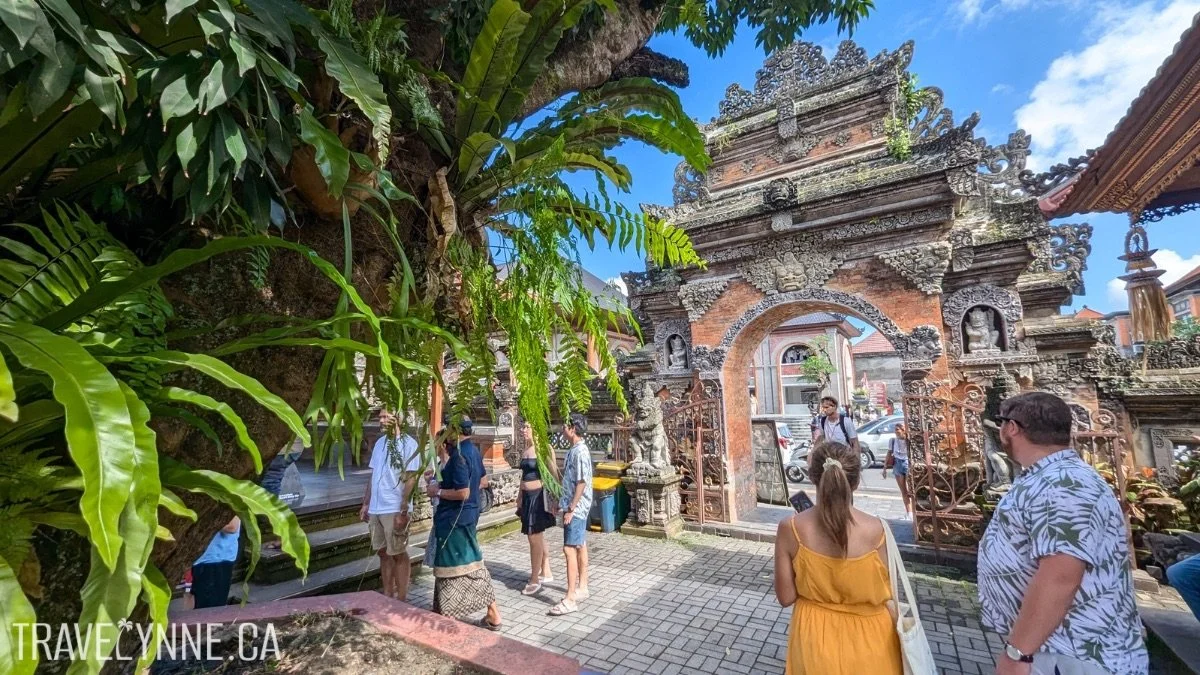
Ubud Palace is small but beautiful and worth a wander!
After lunch and ice cream, continue toward Ubud Palace for a short cultural stop.
Ubud Palace was built in the early 1800s and remains connected to Ubud’s royal family today (although the private residential areas are not open to visitors). While the palace itself is smaller than you may expect, its importance comes from the role the royal family played in shaping Ubud into the cultural centre it’s known as today.
In the early 20th century, the royal family supported local painters, dancers, musicians, wood carvers, and ceremonial artists while also welcoming foreign creatives and researchers to Ubud. Collaborations with artists like Walter Spies and Rudolf Bonnet helped bring international attention to Balinese art and culture in the 1930s, and much of the “creative and spiritual Ubud” image people associate with Bali today grew from this period of artistic exchange.
If you want to know more about the significance of the palace & Ubud’s history,
I highly recommend booking ➡️this walking tour⬅️!
While they no longer serve a political role, today the royal family plays an important ceremonial and cultural role within the community — particularly in supporting religious ceremonies, traditional arts, and cultural preservation in Ubud.
As you walk through the palace grounds, look out for symbolic Balinese features, such as:
Protective guardian figures near entrances
Split gates (candi bentar) symbolizing the transition from the human world to more sacred spaces
Daily offerings placed throughout the grounds
The courtyard’s orientation toward Mount Agung, Bali’s most sacred volcano
Even small architectural details here reflect how deeply spirituality remains woven into everyday life in Bali — and these are beautiful features you’ll start to notice all over Bali!
TRAVELYNNE TIP:
Ubud Palace is also the venue for evening cultural performances with dancers and live gamelan music, which can be a beautiful way to experience Balinese storytelling and traditions firsthand.
⬆️ BACK TO INDEX ⬆️
Check Out the Ubud Art Market
QUICK FACTS: UBUD ART MARKET
📍 Google Maps Location + Ubud Street Market next to it
Sightseeing Time: ~30–60 mins
Cost: Depends if/what you buy 😉
Best for: Souvenirs, textiles, local crafts
Good to know: Bargaining is expected, but keep it respectful and friendly
Accessibility: Can become crowded with uneven walkways in some sections
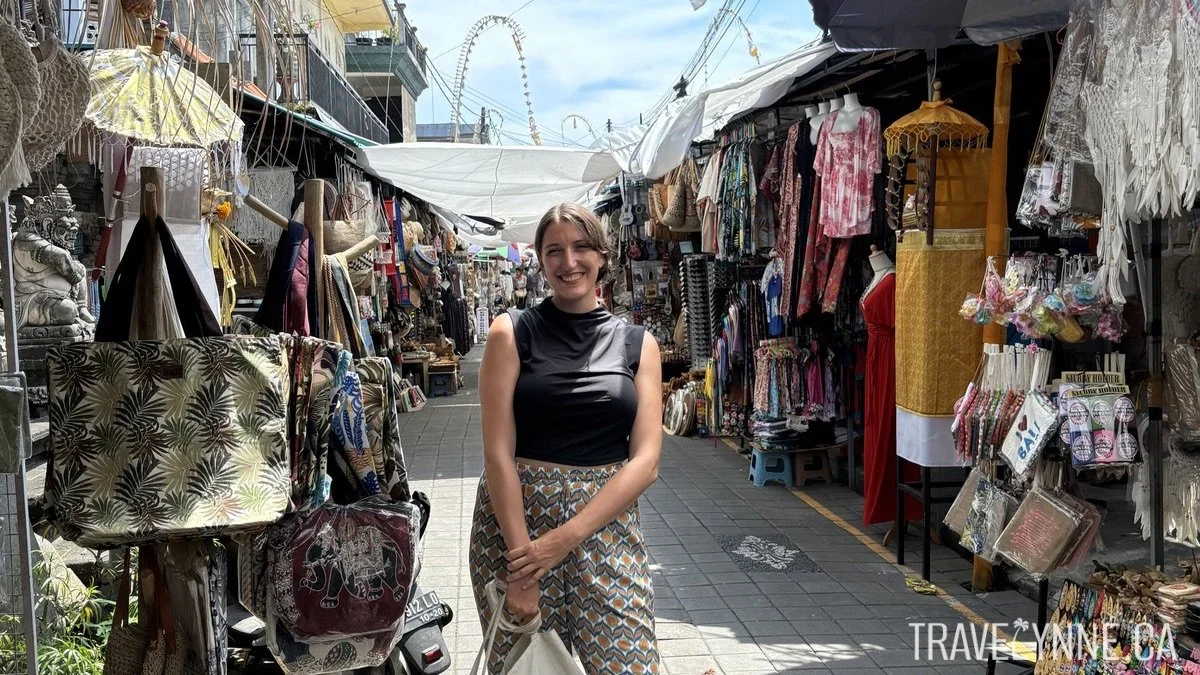
The street next to Ubud Market has a street market with loads of stalls selling mostly manufactured souvenirs. It’s fun for a wander but do poke behind these stalls to find some artisans and local businesses.
Right across from the palace, you’ll find the Ubud Art Market. Just note that the market is not limited to the building — it’s also on the road next to it, and in the evenings on the road across the street, too.
This is one of the most famous (touristic) market areas in Ubud, filled with stalls selling things like batik clothing, paintings, wood carvings, silver jewellery, woven bags, etc.
Like many popular markets in Bali, some stalls feel more tourist-focused than others. But if you take your time, you can still find genuinely beautiful handmade items and support smaller local vendors directly.
TRAVELYNNE TIPS:
Bargaining is expected, but keep it respectful
Local stalls won’t take credit/debit, so try to carry small notes for purchases
Quality and prices will vary a lot from stall to stall, so don’t feel pressured to buy quickly
Even if you’re not shopping, it’s still a fun place to walk through and soak up the energy of central Ubud.
⬆️ BACK TO INDEX ⬆️
Optional: Walk Through Bisma Street
QUICK FACTS: BISMA STREET
📍 Google Maps Location (walk the whole street, this is just a restaurant in the middle of it)
Sightseeing Time: ~30–60 mins
Cost: Free unless shopping
Best for: Window shopping, cafe stops, nature city vibe
Good to know: A peaceful way to end the walk away from the busier market streets, which will loop you back to where you started
Accessibility: Bisma is a cobblestone street and is very uneven
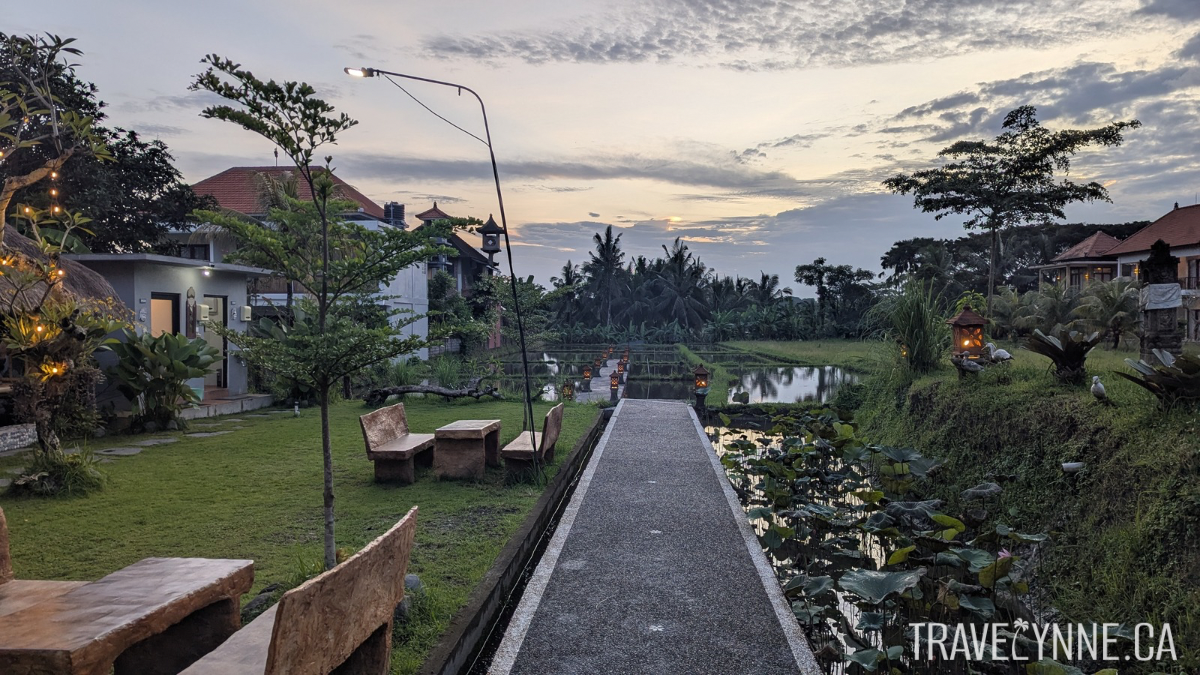
Behind all the chaos, you’ll still find ricefields and farms — just peak behind any restaurant to the one side of Bisma Street, like this!
If you’re up for the longer version of this self-guided tour, you’ll finish your walk on the cobblestone road called Jalan Bisma, with ricefields tucked behind.
This area can become crowded with traffic, too, but it still feels noticeably calmer since the restaurants and shops on one side of the road are directly on ricefields.
It may be hard to sense it when you’re in an urban setting like this, but keep in mind that ricefields in Bali are literally part of a centuries-old agricultural and spiritual system connected to Balinese culture and community life. Plus, they are super pretty when it’s green season!
The ricefields around Ubud (and all over Bali) have dwindled significantly over the years due to tourism and development, which makes these quieter pockets of green space feel even more important now.
There are great shops, cafes, and restaurants for you to explore all along this road — I encourage you to enjoy at leisure and see what calls to you! Just don’t miss out on turning on to Sunset Boulevard for sweet ricefield vibes (you can pop into a warung or grab coffee or juice here too), and I’d also recommend stopping in at Little Talks, which is a great little restaurant/cafe that also has quirky art, gifts, and books.
If you feel like ending this tour with a jungle view, your next stop will take you to a great bar at the end of Bisma Street.
⬆️ BACK TO INDEX ⬆️
Optional: Coffee With a Jungle View
QUICK FACTS: COFFEE WITH A JUNGLE VIEW
Sightseeing Time: ~30–60 mins
Cost: Coffee from IDR 60,000 / Cocktails from IDR 150,000
Reservations: Not usually necessary
Best for: Slow travel, cocktail lovers, nature views
Good to know: It is located a bit deep inside the resort
Accessibility: Stairs required
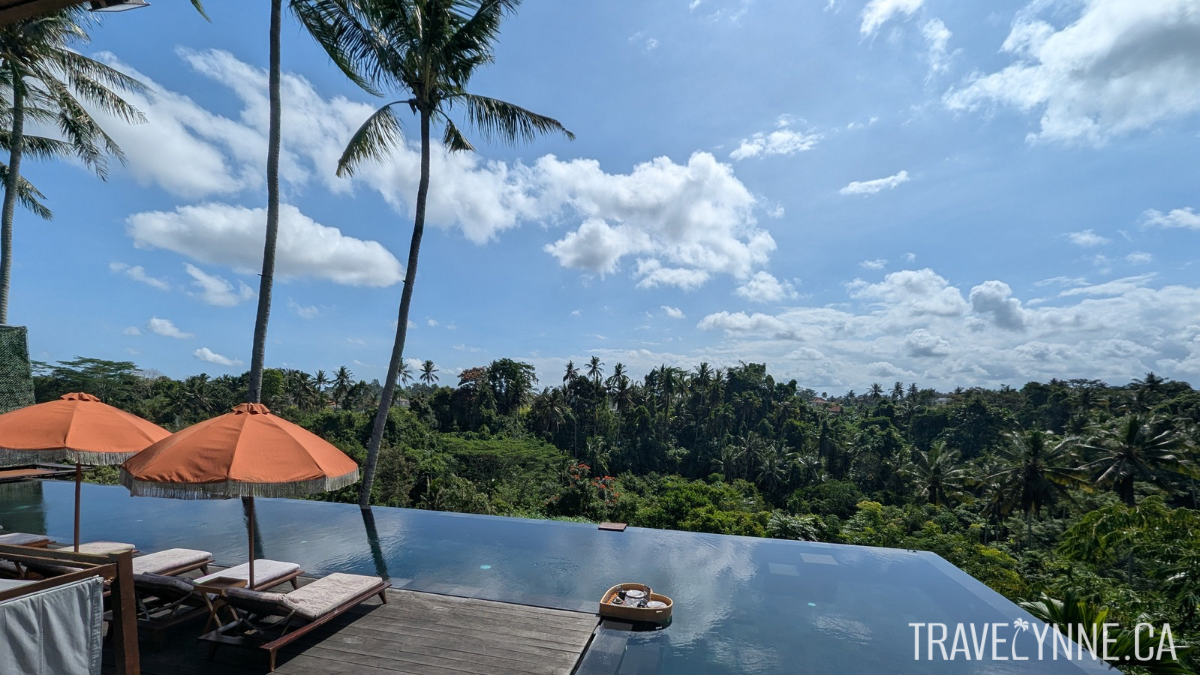
It’s not only ricefields and the monkey forest in central Ubud, there’s a lot of greenery to be enjoyed beneath the chaos!
Nearing the end of Bisma Street, and nearly looping back to the Monkey Forest, you can find Habitat Cafe, hidden inside Kaamala Resort & Spa.
The resort is quite high-end, but the restaurant is reasonable enough, especially for the jungle ambiance. So if you feel like slowing down after a day of wandering, this is a lovely place to stop for coffee or a cocktail with a peaceful jungle view.
This spot will highlight just how quickly Ubud moves between city chaos and surprisingly calm nature corners. A few minutes away from the traffic, everything suddenly feels much quieter.
Take your time here and enjoy :)
⬆️ BACK TO INDEX ⬆️
A Few Thoughtful Travel Tips
Ubud has changed a lot over the years.
Tourism has brought opportunities and income to many local businesses, but it has also created challenges around traffic, development, waste, rising prices, and pressure on cultural spaces.
You definitely don’t need to travel perfectly to visit Bali responsibly. But with a bit of mindfulness, there are a few ways you can be a kind visitor in Ubud:
Not all temples are open to tourists: Never enter a temple or ceremony without permission or proper attire
Dress respectfully: Sarongs are required when visiting Balinese temples
Respect wildlife: There are still many cafes profiting from wild civets here (luwak coffee) — this is a controversial practice, as it’s known that most often this coffee isn’t harvested from wild civets but captured and caged ones. To be on the safe side, it’s best to avoid these cafes.
Support local: Where possible, support smaller locally owned businesses, artists, and designers
Bring a tote: Politely decline disposable bags (“no plastic, thank you”) and use your own bag when possible
Don’t undersell: Bargain respectfully at markets without trying to push prices unrealistically low
One thing I always try to remember while travelling is that places like Ubud are not just destinations — they’re people’s homes, communities, and spiritual spaces first.
And really, approaching travel with a little more patience and respect usually leads to a much richer experience anyway.
Stay curious, open & kind-hearted for the best results ♥️
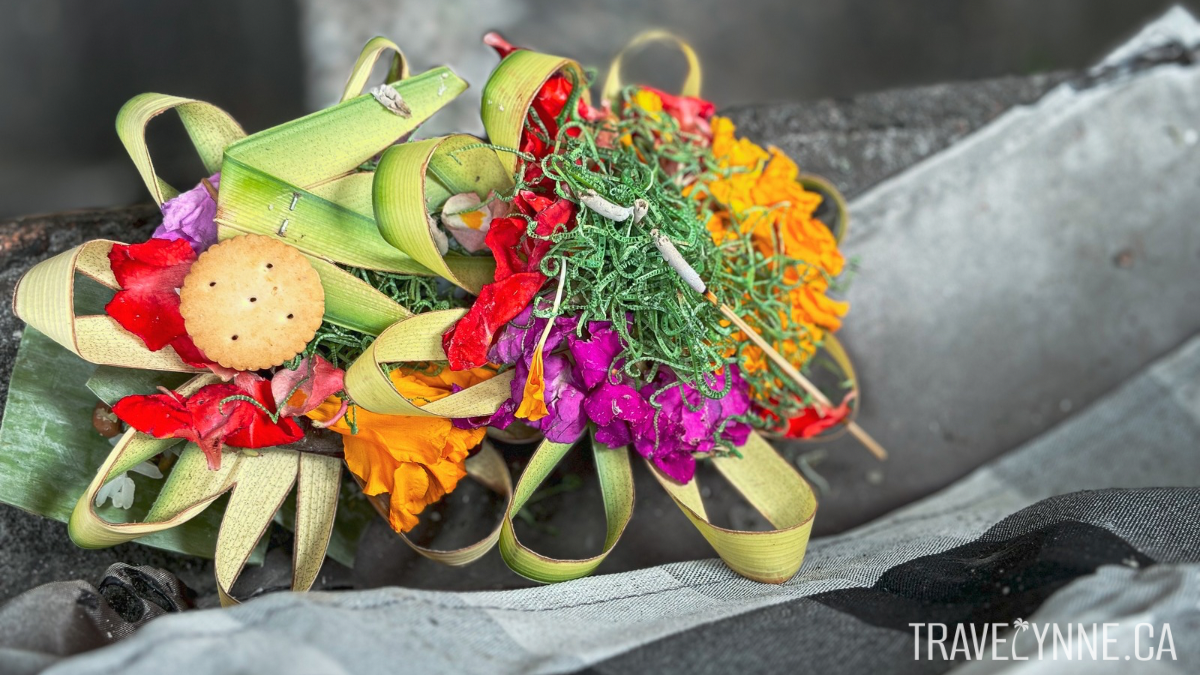
You’ll notice Balinese Hindu offerings like this — called canang sari — all over Bali. They are placed near entrances, on streets, at temples, at cash registers, and more, as offerings to gods and for good fortune.
Book a Guided Walking Tour
While I personally love exploring Ubud independently, joining a great local guide can compliment your experience of this unique city by bringing more depth and insight.
Many of the things you’ll pass during this walking route — temples, architecture, daily offerings, ceremonies, family compounds, and even the layout of the streets themselves — carry cultural and spiritual meaning that’s easy to miss without local insight.
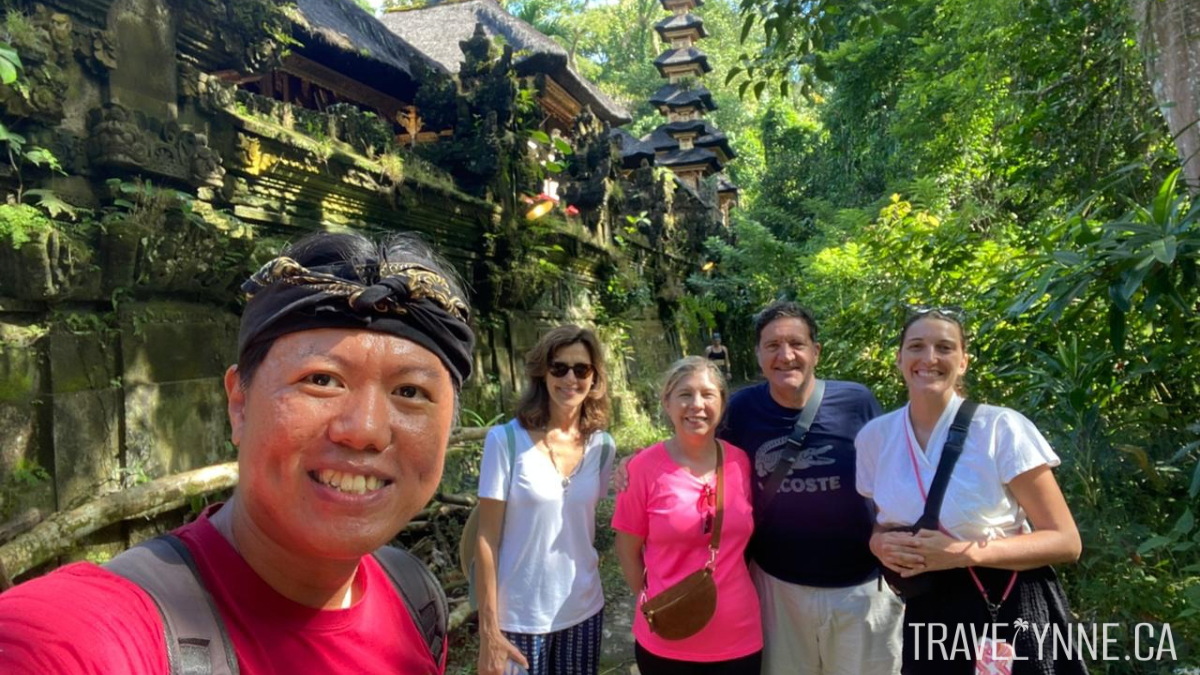
It’s not a replacement for wandering, but a guided walking tour can give you deeper insights to help you appreciate Ubud (and Bali!) even more. See my recommendations below!
If you have extra time in Ubud, I’d highly recommend adding a guided experience alongside this self-guided walk. It’s one of the best ways to better understand Balinese history, local Hindu traditions, community life, and the cultural changes Ubud has experienced over the years.
Here are a few highly rated tours worth checking out:
⭐ Ubud's Journey from Past to Present — My personal favorite! This is ideal for travellers wanting more historical and cultural context. I personally learned a lot on this tour with Jo at Ubud Story Walks, even after nearly two years in Bali.
Ubud Food & Cultural Tour with 10+Tastings — Discovering a place through its food is always a fun approach, and I can definitely recommend this one. They also have a Plant-Based Food Tour for vegetarians or vegans.
The Myth of Pejeng— This is another tour offered by the same company as the first, but with a focus on storytelling and local legends, ancient artifacts, temples, inscriptions, and burial sites from the first kingdoms.
Ubud: Walking Tour with Campuhan Ridge & Monkey Forest — This is more of a traditional ‘highlights’ tour, taking you on a short nature walk, temples, art market, monkey forest, etc. Personally, I prefer something like those above if I take a guided tour because it adds more depth, but if you want a guide to take you through the top sights, this is a great option.
Personally, I think combining independent wandering with at least one thoughtful local guide experience creates the most meaningful balance while travelling in Bali.
Final Thoughts
Some travellers love Ubud for the cafés and shopping. Others connect more with the temples, art, spirituality, or with nature in the surrounding rice fields and waterfalls.
The best version of this self-guided walking tour lets you experience a mix of all of it, making it a great introduction to the city and to Bali.
Take your time, enjoy, and let me know if you find any cool surprises along the way! 🌺
Travel well,
Lynne

Planning a complicated Asia itinerary? I help independent travelers design custom trips that balance logistics, local culture, and meaningful experiences. Click here to learn more about my travel planning services.
Was this helpful? Have more questions? You can reach me by Instagram DM or by sending me an e-mail!
READ NEXT: