Where to Go for Healthcare in Bali: Hospitals, Clinics & Pharmacies for Travelers
Heads up: This article may contain affiliate links. If you book through them, I may earn a small commission at no extra cost to you. This helps keep the lights on so I can keep creating content — thanks for your support.
For emergencies or an ambulance, call 112. This article is not intended to address emergencies; it is a preparation resource.
Nobody plans a trip to Bali expecting to get sick or injured.
But having lived in Southeast Asia since 2019, including Bali, and helping travelers navigate the island, I've learned that things happen. Maybe it's Bali Belly after one too many adventurous meals. Maybe it's dengue fever. Maybe it's a scooter accident. Or maybe you wake up with a mystery rash and spend the morning frantically Googling symptoms (speaking from experience 😅).
While Bali has several reputable clinics and hospitals that can handle many common travel-related illnesses and injuries, it's important to understand that healthcare here isn't on the same level as major medical hubs like Singapore or Kuala Lumpur.
In fact, if someone asked me where to go in Southeast Asia for planned medical treatment, I'd recommend Singapore, Kuala Lumpur, or Bangkok before Bali. But that's not what this article is about.
This is for those planning a trip to Bali — or already there — and wanting to be prepared for an unlikely scenario. Because in those situations, knowing your options, having good insurance, and understanding how the healthcare system works can make a huge difference.
This guide is based on my own experiences navigating healthcare abroad, as well as recommendations from friends who live in Bali. I'm not a healthcare professional, but if a friend were visiting Bali and asked where to go for medical care, this is what I'd tell them.
IN THIS ARTICLE:
What Travelers Should Know About Healthcare in Bali
The best time to prepare for a medical issue is before one happens.
Here are a few things I'd recommend before your trip:
Know the emergency number: 112.
Get travel medical insurance & save your policy details somewhere easy to access. Share it with travel companions and/or a loved one back home. Make sure you know how to make a claim before you go.
Check whether adventure activities are covered, like scooter riding, surfing, or diving.
Download Air Doctor so you can quickly find English-speaking doctors and clinics if needed
Keep digital copies of important documents, such as your passport, insurance policy, and visa, somewhere secure and easy to access.
Bring enough prescription medication for your trip, along with a copy of the prescription in case you need more.
Hopefully you'll never need any of it. But if you do, you'll be glad you planned ahead.
Understanding Healthcare in Bali
Here’s everything you need to know about where to go, bookings, payments, and communication for healthcare in Bali.
Pharmacies vs Clinics vs Hospitals
For many common travel-related issues, I'd start with a pharmacy.
Pharmacists in Bali regularly help travelers with stomach problems, dehydration, mild illnesses, and other everyday concerns. They're often able to advise whether you should see a doctor or seek additional treatment.
Many (though not all) Kimia Farma pharmacies also have doctors available for consultations, making them a convenient option for minor concerns. Kimia Farma has multiple locations (see all here) across the island, such as:
Kimia is a bit more expensive than other pharmacies, but can be worthwhile for consulting a pharmacist or doctor.
For other pharmacies, search for ‘apotek’ on Google Maps or look for ‘apotek’ signs to find local ones, which are often less expensive. Note that Indonesia has high import fees, so foreign medications are quite expensive here. Note that in many pharmacies, staff will try to upsell you on buying supplements and other things — you can politely decline.
If a pharmacy isn't enough, Bali has clinics throughout the island that can help with common travel illnesses and minor injuries.
For more serious concerns, hospitals offer access to specialists, diagnostic testing, and inpatient care. Larger private hospitals such as Bali International Hospital, BIMC, and Siloam generally offer access to departments including dermatology, ENT, cardiology, imaging, and other specialties (more on this below).
There are also public hospitals; however, the level of care may not meet the standards expected by foreigners, and they may be less well-resourced.
“Since we had a KITAS (working visa), it was super affordable to go to a public hospital, so we did when my partner broke his ankle. The hospital was OK, and the doctors seemed knowledgeable, but they literally did not have an MRI machine big enough to do the scan, and sent us to a private hospital for imaging.”
🆘 TRAVELYNNE TIP: If you're unsure where to go, services like Air Doctor can also help connect travelers with local healthcare providers and English-speaking doctors for both in-person and online consultations.
Making Appointments at Clinics & Hospitals
You can, of course, walk into emergency rooms and clinics for an in-person consultation and treatment when it comes to urgent care.
For non-urgent issues, you can usually book an appointment either on the clinic or hospital website or via WhatsApp — both of which are often available on the Google Maps listing of the clinic or hospital in question.
Alternatively, you can book with an app like Air Doctor, which will cost a small fee but match you with an English-speaking doctor or specialist.
P.S. WhatsApp definitely rules for communication all over Southeast Asia, whether that’s for booking a doctor’s appointment, a haircut, or coordinating when you want breakfast at your guest house, so make sure you have it set up before you arrive; it will be handy for many situations.
Paying for Healthcare in Bali
Payment and pricing can vary between healthcare providers in Bali. It’s all relatively more affordable than in Western countries, but of course the international and higher-end hospitals will set you back more than local clinics.
Some hospitals have different pricing structures for Indonesians, KITAS holders, and foreign visitors. If you have a KITAS, mention and show it during registration, as staff may not automatically ask.
Payment policies also differ from one hospital to another. Some providers may be able to bill your insurance directly, while others may require payment upfront and reimbursement through your insurer afterward. It's worth checking your coverage details before you travel and carrying a credit card with sufficient available credit in case you need to pay for treatment before making a claim.
This is one of the reasons I consider travel medical insurance essential. Beyond helping to front and cover medical expenses, it can provide access to support services, emergency assistance, and additional options (ex. repatriation) if a situation becomes more serious.
Hospitals in South Bali
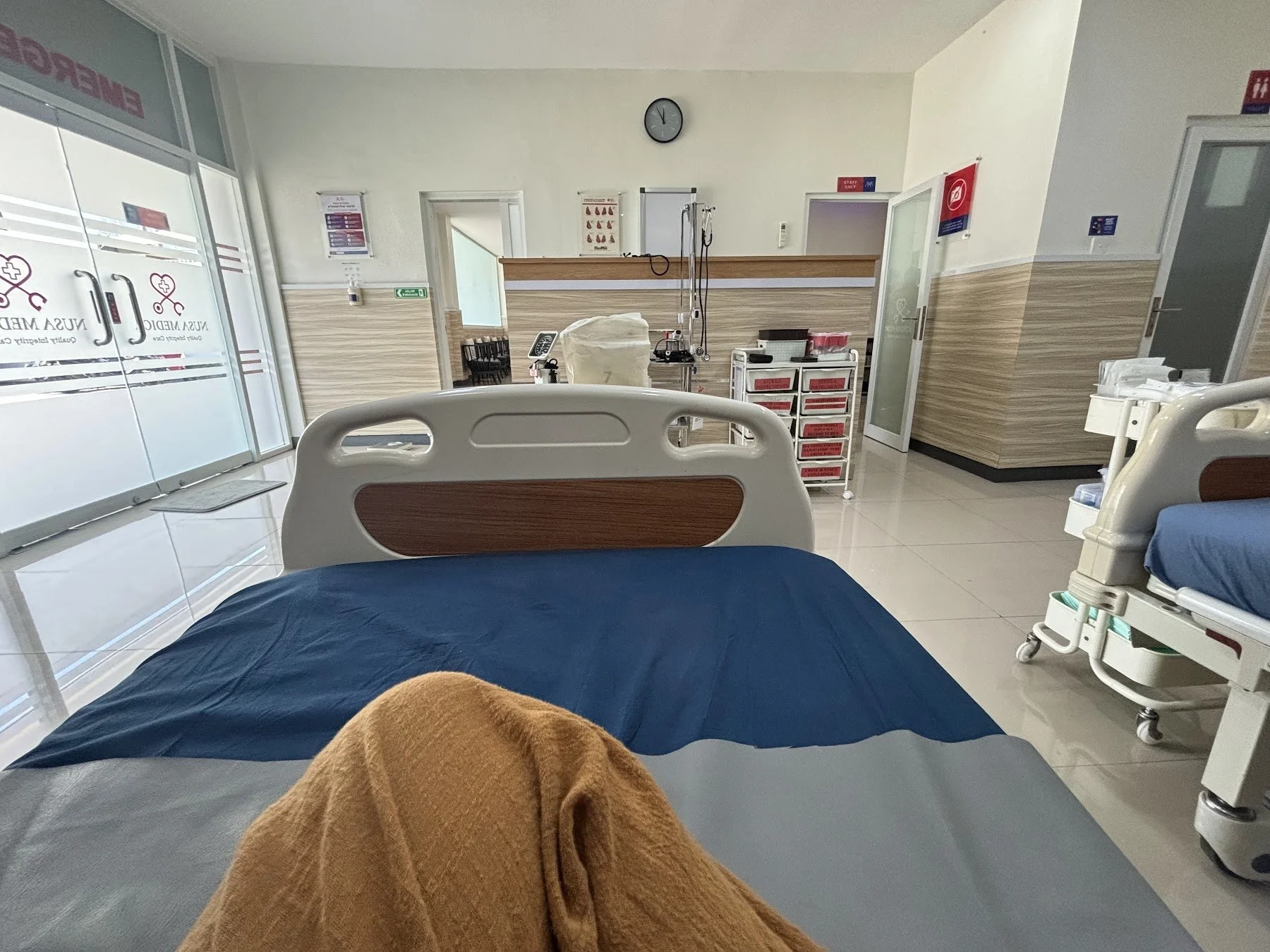
Whether you're staying in Seminyak, Canggu, Uluwatu, Jimbaran, Nusa Dua, or Sanur, South Bali has the strongest healthcare options on the island.
Bali International Hospital in Sanur
Bali International Hospital is definitely the buzz of healthcare on the island right now. It's modern, internationally focused, and would likely be my first recommendation for travelers seeking hospital-level care in Bali.
Newly opened and located in Sanur, the Bali Sun writes that the hospital “specializes in Cardiology, Oncology, Neurology, Gastroenterology, Orthopedics, Stem Cell, Aesthetic Surgery, Fertility Treatments, Eye Specialists, and Geriatrics,” meaning it could well offer great services for medical tourism as well as emergency care.
BIMC Hospital in Nusa Dua
BIMC Hospital has been a trusted name among expats and travelers for years, and it was the hospital recommended to me by colleagues when I had an undiagnosable cough for months soon after moving.
With modern facilities in Bali and extensive experience treating international patients, it's often one of the first hospitals recommended when visitors need more advanced care.
“My experience with the medical staff has been incredible. At BIMC, they did an excellent job fixing my broken ankle. I love how here you can directly message the clinic or the hospital and they respond to you quickly.”
Siloam in Denpasar and Canggu
Siloam is another major healthcare provider in Indonesia and a solid option for both residents and visitors. I visited Siloam Hospital Denpasar (which is on the border of Jimbaran/Denpasar, near the airport) on several occasions to consult specialists in dermatology, ENT, health check-ups, and imaging.
I’ve also been to Siloam Medika Canggu, which is probably the most convenient clinic in Canggu. They were the first clinic I visited when I needed help with my mystery rash. While they had to refer me to the hospital for testing and to see a specialist, they were very professional and helpful.
Lotus Medical Clinic in Pecatu, Uluwatu
Not a hospital, but I’ll include it here because there are no hospitals in Uluwatu, so this is the closest you’ll get for emergencies. It has high ratings (4.9) on Google Reviews and is the most comprehensive option without driving an hour to Siloam Denpasar Hospital or BIMC Hospital.
There are other, more local, hospitals in Jimbaran and Denpasar; however, if you are a foreigner with insurance, the hospitals listed here are more likely to suit your needs and standards.
Hospitals in Ubud
BIMC Ubud or Royal Hospital Ubud
While I haven’t visited any hospitals in Ubud, BIMC Ubud Medical Center (which I’ve been to in Nusa Dua) has a branch there, which is probably where I’d go due to familiarity. However, there is also Ubud Royal Medical, which is highly rated on Google reviews with 4.9.
One of the biggest advantages is simply proximity. When you're feeling unwell, avoiding a long journey to South Bali can make a significant difference.
Hospitals in Nusa Penida & Nusa Lembongan
Healthcare in the islands just off Bali — Nusa Penida, Nusa Lembongan and Nusa Ceningan — is a lot more limited than on mainland Bali.
There are clinics available on both Nusa Penida and Nusa Lembongan, and they can provide initial treatment and basic assessments for many situations. Penida also has a general hospital with more possibilities for imaging and more serious incidents.
However, if a serious medical issue occurs, patients may need to be transferred to a hospital on mainland Bali for more advanced treatment. This is one of the reasons I strongly recommend always having a comprehensive travel insurance plan, especially if you're planning to spend time on smaller islands.
Hospitals and Clinics in the Islands
In Nusa Penida, there is one general hospital as well as four clinics:
RSUD Gema Santi Nusa Penida: General hospital that can attend to basic emergencies and imaging, located on the west side of the island
Nusa Medica Clinic: Located near the ferry pier on the west side of Nusa Penida
Praktik Perawat Mandiri Medical Care: Located further Southeast, this is the first line for those staying further south on the island
UPTD Puskesmas Nusa Penida I & Griya Penida Medikal Clinic: Both located further northeast on the island, these are better bets for those staying on the east side of Nusa Penida
In Nusa Lembongan, there are a handful of clinics available, and it’s a much smaller island, making care more accessible no matter where you are on the island:
Note: There are no clinics in Nusa Ceningan, but it’s a short ride to Nusa Lembongan for care from there.
Hospitals in North & West Bali
You will need to go to South Bali or Ubud for specialized care, but for emergencies, BaliMed is the most recommended option in West Bali.
While you’ll find clinics and even on-call doctors or nurses all over Bali, depending on where you are in the north, your closest hospital option may be in Negara or Singaraja:
West Bali: BaliMed in Negara
North Bali: RSIA Puri Bunda, Kertha Usadha or Buleleng General Hospital in Singaraja
When You Might Need Treatment Outside Bali
Most travelers will never need to think about this. However, for highly specialized care or complex medical situations, patients may sometimes be referred elsewhere in Indonesia or choose to seek treatment in regional medical hubs with excellent healthcare, such as Singapore, Kuala Lumpur, or Bangkok.
This is one of the reasons I recommend travel insurance that includes emergency evacuation, repatriation, or coverage for treatment elsewhere if required.
Why I Never Travel Without Insurance
Good travel insurance isn't just about covering a doctor's visit.
It's also about having options.
Over the years, I've used travel medical insurance for routine doctor visits, physiotherapy appointments, specialist consultations, infections, mystery rashes, and more.
Personally, I've used SafetyWing for several years and have successfully submitted multiple claims.
While most travelers will never need that level of support, it's worth having coverage that includes emergency evacuation, repatriation, or treatment elsewhere if required.
One reason I consider insurance non-negotiable in Bali is that serious situations can become complicated quickly. Emergency transfers, specialist treatment, or care outside Bali may all come into play depending on the circumstances.
Alongside travel insurance, I also keep Air Doctor bookmarked when I travel. It helps connect travelers with local doctors, clinics, and specialists, which can be especially useful when you're feeling sick, stressed, and trying to figure out where to go in an unfamiliar destination.
You can read my full review of SafetyWing and my personal claims experience here.
Final Thoughts
Hopefully, this guide ends up being completely unnecessary for your trip 😁
But if something does go wrong, knowing where to go and what to expect can save valuable time, money, and stress.
A little preparation goes a long way when you're far from home.
Travel well,
Lynne

Planning a complicated Asia itinerary? I help independent travelers design custom trips that balance logistics, local culture, and meaningful experiences. Click here to learn more about my travel planning services.
Was this helpful? Have more questions? You can reach me by Instagram DM or by sending me an e-mail!
READ NEXT: