13 Tips for Starting a Travel Blog: What I’ve Learned After 4 Years
Are you dreaming of sharing your travel experiences and advice through a blog? Just four years ago, I was right there with you, starting an exciting yet daunting journey with the launch of Travelynne.ca.
This has turned into quite the adventure, paralleling my travels across ten countries in my first year of blogging while juggling a full-time marketing career in Malaysia, then in Indonesia, and now as a freelancer while I launch my ecotourism business. Along the way, I've honed an array of new skills, diving into everything from web design and SEO to content writing, affiliate marketing, and social media strategies.
So, if you're contemplating starting a travel blog or feeling overwhelmed by the vast sea of information out there, I’ve got you. Stay tuned for the practical, honest advice I wish I had known when I was starting my own blogging adventure.
Some links on Travelynne are affiliate links, which means I may earn a small commission — at no extra cost to you — if you book something through them. These earnings help me keep creating free, thoughtful guides like this one. This article contains sponsored links from Discover Cars.

Travel + work meet in interesting places for a travel blogger! In this case, sitting behind my beautiful A-frame hut on a river in Kampot, Cambodia.
Keep scrolling to read all my tips, or pick and choose here:
1. The Biggest Secret to a Successful Blog: Start Now
Your travel blog won't start itself! Mastering blogging and search engine optimization (SEO) takes time and volume, so the longer you wait to start, the longer you'll wait to see results.
Don't worry much about how good your website looks, if you chose the right travel blog domain name, or if your content is good enough. You will probably never feel ready, but the longer your site is out there and publishing authentic and reliable content, the higher the chances you'll have of seeing results in the coming months and years.
“The only way to get good at travel blogging is to start travel blogging. Create content, publish it, monitor it, learn from it, and repeat.”
Time is precious in the travel blogging space — so get your content up as soon as possible. It can sometimes take weeks for content to be indexed by search engines like Google (although this part usually happens quickly once your website builds trust with Google), and it will likely take months for good content to start ranking on Google search - so get posting!
In fact, this very article started ranking highly only two years after I published it. While this isn’t common, it does happen, and you never know what will take off! As a result, I’ve fully revamped the article to reflect my three years of experience with Travelynne.
2. Know Your Why & Don't Complicate It
Even if you are planning to blog "just for fun", you will quickly learn that it's a commitment of your time and money, so I suggest setting aside a few hours to think about your "why" and jot down some ideas or even a business plan.
Of course, it seems obvious that one of the reasons you want to start a travel blog is because you love to travel and you want to share your passion and travel tips. But if you take an hour to sit down and dive in, you'll find that there's more to it.
When I decided to start a travel blog, I used Ryan Robinson's free blogging business plan to make my own blog plan, and I highly recommend it. It challenged me to think about what I want to achieve and how I'll get there. Having a business plan can help you formulate your vision and serve as a guiding light. It should outline your goals, target audience, content plans, and ideas for how you would like to make money blogging (one day!).
If you have big plans for making money blogging, I urge you to research more to understand the work and investment ahead of you. It is possible to make money blogging, but for most people, it's definitely a labour of love more than anything, and it can take a long time to build up trust with Google and AI search engines.
“My business plan is a map that helps me progress when I have too many competing priorities or need to realign my progress towards the broader vision I have for Travelynne.”
Remember: A business plan is not a set of shackles; it’s a living document that evolves with you. Don't overcomplicate this exercise! You can use the template I shared, but it doesn't have to be elaborate or rigid; even a loose framework in point form, a note in your phone, or a one-pager can offer immense benefits.
If it seems too daunting, try free-writing one page of bullet points answering this question: "Why do I want to start a travel blog?" or "What do I want to achieve with this travel blog?"
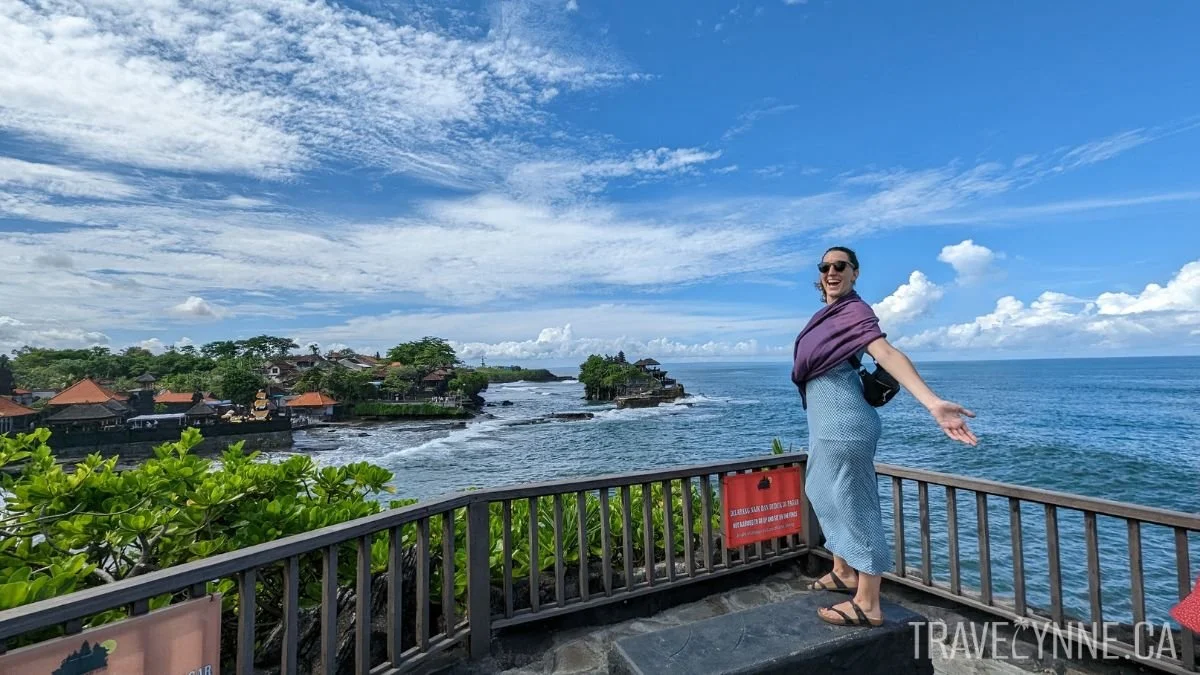
Having a business plan might sound a little intense if you’re starting a travel blog “just for fun”, but it will help you think about what you really want to achieve and get out of your blog. It’s actually a really fun exercise that can provide you with a lot of clarity and inspiration.
3. Perfect Blog Branding Can Wait
I'm a professional marketer, so for me to say that branding can wait is a big deal. And it’s not that branding doesn’t matter — it’s just not as important as starting to publish content. For branding, I highly suggest new bloggers start quickly and use a typeface logo (aka a text-based logo), which you can make yourself with Canva's Typography Logo Templates or generate one using Logo.
“Don’t make the same mistake I did and spend months mulling over potential travel blog names, logos, colour schemes, templates, and so on. I lost a lot of time (and money) on this!”
As you start to see results with your blog posts, you can evolve the visuals if you want, but you should know that it's not necessary for a successful travel blog. To be frank, I am certain of that because numerous successful travel bloggers I follow have kind of ugly and unsophisticated websites. Yet, they did better than I did just by focusing on publishing a high volume of valuable content as well as building community (and therefore trust and loyalty) with their audiences.
“You can change the look and feel of your blog later - and you probably will. But you can’t get the time back that you spent stressing over it, so just keep it simple and start travel blogging already!”
Your blog is sure to evolve as you find your voice. Travelynne is still evolving four years in, and that's okay! I have been taking in many valuable lessons over the last few years and, with each one, I have seen incremental improvements — and sometimes monumental improvements.
4. Trial Travel Blogging Before Committing
If you want to test the waters before committing to (and investing in) your own site, consider guest posting for another blogger. I wrote "A Beginner's Guide to Living in Kuala Lumpur" for a blog called Find A Way Abroad before I started my own, and it was the nudge I needed. Thanks to that experience and some informal mentorship from that blog's founder, Kat, I was empowered to create Travelynne a year later.
If you're using Instagram to follow and engage with like-minded people in the travel world, you're likely to come across similar opportunities to write blog posts. Look for smaller blogs, because the big travel blog sites (ex. Time Out, Rough Guides, The Crazy Tourist, Culture Trip, etc.) get bombarded with writer requests and aren't very responsive, whereas small to medium-sized bloggers are more likely to welcome some extra content.
I know I would love to hear from you, so please feel free to contact me, and we can discuss a guest blog spot!

A love of travel does not necessarily equate a love for travel blogging. Besides loving to travel, you need to love writing about travel and/or explaining how to travel, and be willing to learn technical web and marketing skills. It’s a longterm game!
5. Keep Expenses Low: A Website and Domain Are All You Need
In the time I wasted humming and hawing over the nitty-gritty of look and feel, I also spent too much money on designers to create a logo and other visual assets for Travelynne. While I am happy with what I ended up with, this was not a necessary expense at that early stage.
Many new travel bloggers, myself included, get caught up in the allure of fancy tools, like a premium theme, a travel blogging course, or high-end equipment. While these can be great investments for the future, the reality is you're unlikely to see a return on these expenses anytime soon. If you want to invest in skills, think practically and start with the array of free resources available.
Paid Tools You Must Have to Start
There are only two things you absolutely need to purchase to launch an awesome travel blog, and those are:
a website builder (like Squarespace) OR a content management system (CMS, like WordPress.org)
If you're using a content management system, you’ll also need to pay a small fee for web hosting
a domain (aka your website link).
Be sure to opt in for domain privacy protection when purchasing your domain
Free Tools You Should Set Up To Start
Don’t forget to set up GA4 (Google Analytics), Google Search Console and Microsoft Clarity right away.
These are free tools and will always be your most trustworthy resources for tracking your website’s performance and keywords.
Optional Paid Tools to Consider
Optionally, you can consider adding Keysearch to your arsenal. It has a fair monthly price, starting from $24, or a yearly price starting from $20. Considering how much power it packs for bloggers — not only keyword research, but site audits, SERP analysis, competitive analysis, YouTube tools, and more — I think it’s worthwhile.
When you’re more advanced and earning money consistently, you can consider investing in more sophisticated writing, keyword analysis and AI tools like Surfer SEO or Ahrefs, but these aren’t at all necessary for starting out!
Once you start getting engagement on social media, you may also consider automating responses with ManyChat. I would keep engagement 100% personal while you’re small, but ManyChat can be great for connecting followers with your freebies and building your email list from socials.
“Keep it simple, let your early investments be on what matters: writing and publishing high-quality content.”
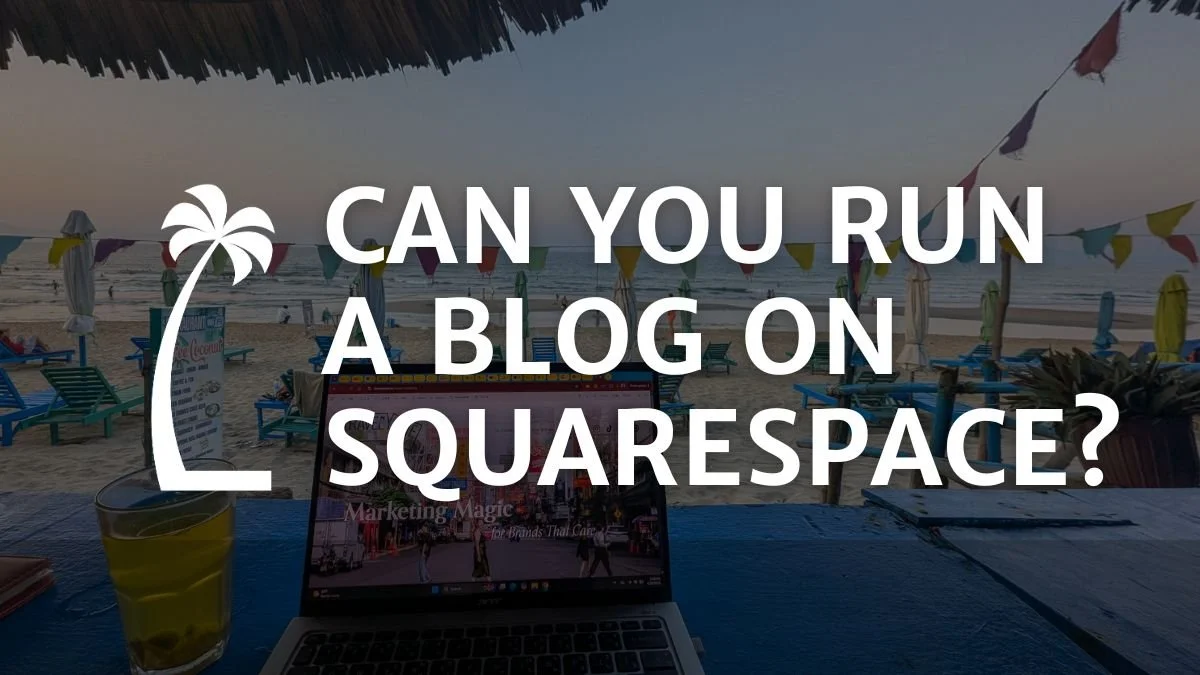
Wanna know how I chose my website builder/CMS? Check this out 👇
6. Explore Monetization Possibilities Early On
You don’t need to wait until you have high traffic to start monetizing your blog. In fact, I recommend lightly integrating affiliates from the very beginning.
To give a simple definition: affiliate marketing lets you earn a small commission on your recommended travel products and services via tracked links. When someone purchases something from an affiliate link, it’s automatically tracked, and you earn the commission.
“To maintain your credibility, always do your due diligence and be sure to recommend products or services you genuinely trust.”
Starting this early will help you learn how to work with affiliates and convert sales from your website. That way, you’ll be set up once your website traffic grows, and affiliate earnings can grow with it instead of being an afterthought.
The affiliates you choose may depend on the topics of your blogs. For example:
If you focus on road trips or independent travel, you could become an affiliate with a car rental company like Discover Cars, who offer great incentives (see below)
If you are focused on accommodations, create an account with Stay22 to set up automated link switching, recommendations & accommodations maps
If you’re mixing in experiences, stays & more, you may be interested in TravelPayouts integrations instead
I love using Stay22 and TravelPayouts because they streamline affiliates and payouts into their platforms (it used to be a nightmare of separate accounts and payout schemes with dozens of affiliates!).
However, there are sometimes great benefits to working directly with individual affiliates. For example, if you work as a direct affiliate with Discover Cars, their offer is much more generous than via TravelPayouts. As a direct affiliate, their commissions can go up to 70% for car rentals and 30% for Full Coverage (insurance), and the cookie life is a generous 365 days.
For those who prefer to keep all affiliates in one place, Discover Cars is also available on TravelPayouts, but commissions there are capped at 50%.
7. It's Okay to Adapt Your Plan
When I first launched Travelynne, my ambitious plan was to publish two articles a month. Well, that plan had to be adapted significantly as I went. While I actually did hit my annual target of 24 articles in my first year, it wasn’t exactly a consistent effort. Some months, I published more than two articles, and other months, I published nothing at all. In my third year, I became extremely busy with a full-time job and moving to a new country, and I published a lot less. I just did what I could and made sure that when I invested time in my blog, it was for the creation of high-quality, experience-led content.
“The reality of balancing a full-time job and a side gig quickly set in. Yet despite not always meeting my frequency and consistency goals, I still saw growth and success with my blog.”
The lesson here? It's okay to adjust your plans. Life happens, and your blogging journey won't be linear.
What's important is staying committed and finding a routine that works for you, including adapting your original plan to one that meets your current reality and lessons learned along the way.
You will learn a lot as you go, and your priorities may need to change in line with the insights you develop. For example, there’s a lot more to running a successful blog than writing new content. You also have a website to maintain, older content to optimize (more on that in #10), videos and/or images to produce, research to do, and probably a full-time job and personal life to maintain!
Do your best, come back to your “why,” and eventually your perseverance will pay off.
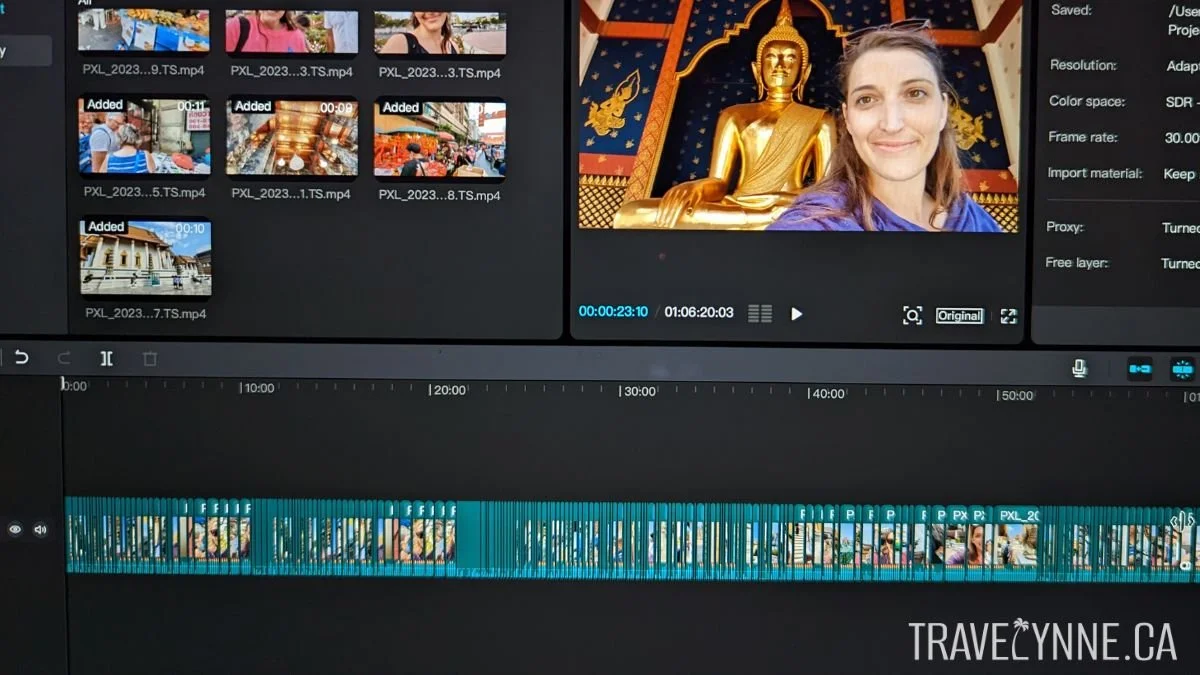
You’ll deal with multiple competing priorities when blogging, such as writing new content, capturing and editing great photos, video production and editing, social media, and optimising past content. It’s okay to adapt your plans as you go, especially if you base your decisions on your business plan and analytics.
8. Write As You Go
Maybe it’s just me, as I'm an ADHD girlie with big tendencies towards procrastination, but I can easily get into bad habits of starting multiple blog posts and leaving them unfinished, or having a great idea and never acting on it.
That's why creating content as I experience it has been a game-changer. I know this probably sounds ridiculously obvious, but it has saved me a lot of time and made the writing process more authentic. This is especially the case for logistics-heavy blog posts, like step-by-step instructions for transportation or tracking costs, which can be daunting to write after the fact.
For example, I took notes and context photos along the way when I saw Harry Styles in Bangkok to produce “Bangkok Concerts: What to Expect at Rajamangala National Stadium” right after, and I wrote “Whoosh High-Speed Train: Jakarta to Bandung Travel Guide (2025)” during the actual train ride.
Remember that one of the most time-consuming writing tasks is doing research for blogs on topics that are further back in the mind, and the more logistics involved, the harder it becomes.
Personally, I use a Google Doc set to offline access and jot notes on the go, which often end up as nearly complete blog posts that I transfer to Squarespace to finalize when I'm at my computer.
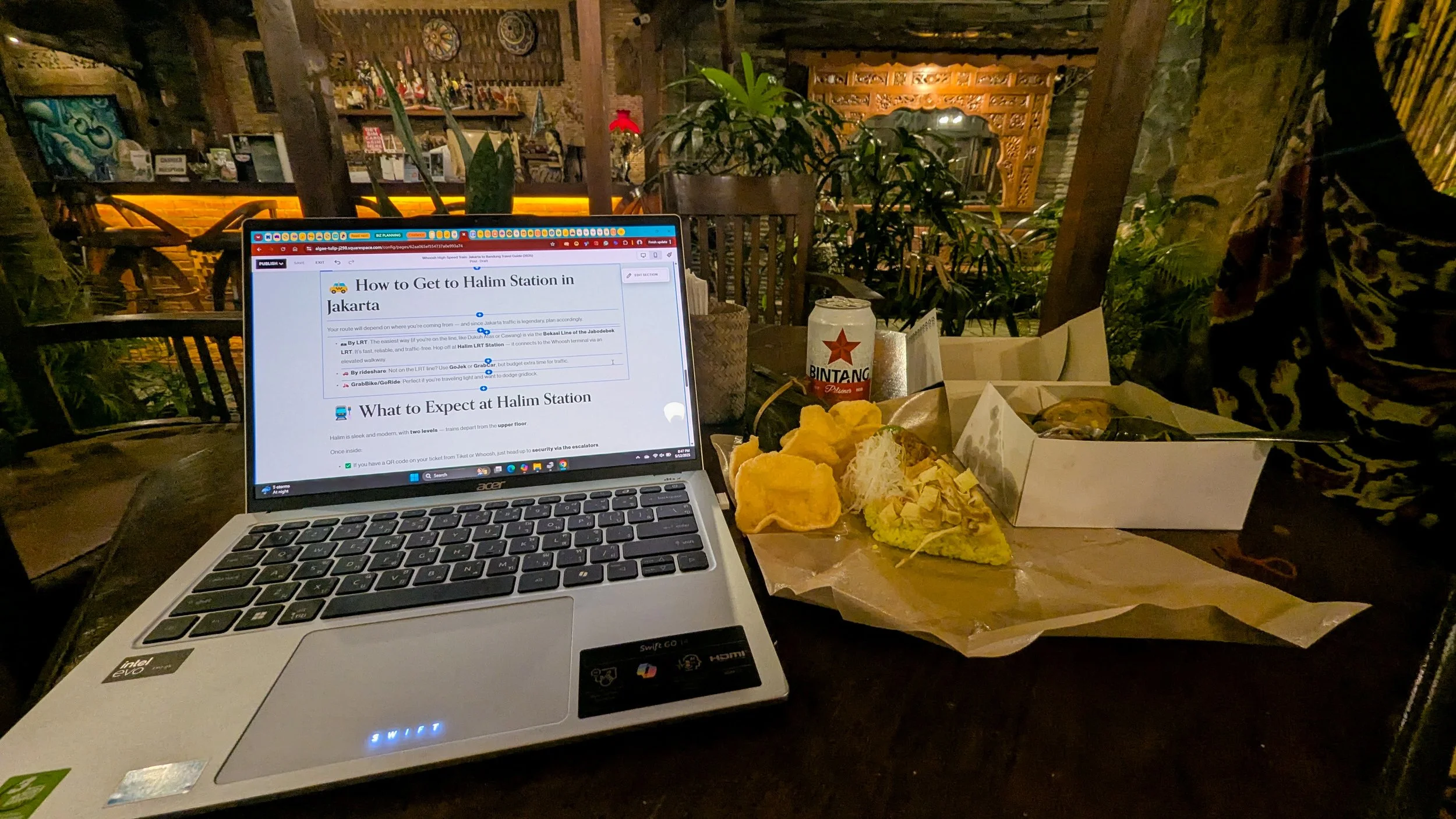
I wrote most of my article about taking the high-speed train from Jakarta to Bandung on the train and finalized it when I got to Yogyakarta a couple of days later. I snacked on foods gifted to me from Bandung while formatting the article upon arrival to my guesthouse!
9. Community is Key: Find Your People & Resources
Networking isn't just for the corporate world; it's crucial in blogging too. I am always on the lookout for travel bloggers and content creators I admire so that I can connect with and learn from them. On the other hand, I also take note when I come across those who don't appeal to me, because there's a lot to learn from that, too.
“When I find travel content creators I like, it usually means they are doing something I aspire to, whether it’s their content format, their style, the way they connect to people or their overall success. Plus, I’m always interested in different monetisation possibilities and what they could mean for me in the long-term.”
There are many adventurers out there who inspire me, whether for their realness (@footloosefemme, @karaandnate), their silliness (@claireandpeter, @jordentually), their value-add (@two_can_travel, @katsights, @girlvsglobe), or their commitment to successful blogging or vlogging (@a_wayabroad, @amandamoniquebrown, @britadventures, @acrosseveryborder).
I am constantly learning from creators like them, getting inspired, and sometimes even swapping stories and words of encouragement. For example, my friends Jen and Stevo of Two Can Travel have helped me with early questions or venting sessions about blogging, and Kat of A Way Abroad shared invaluable advice and encouragement with me early on.
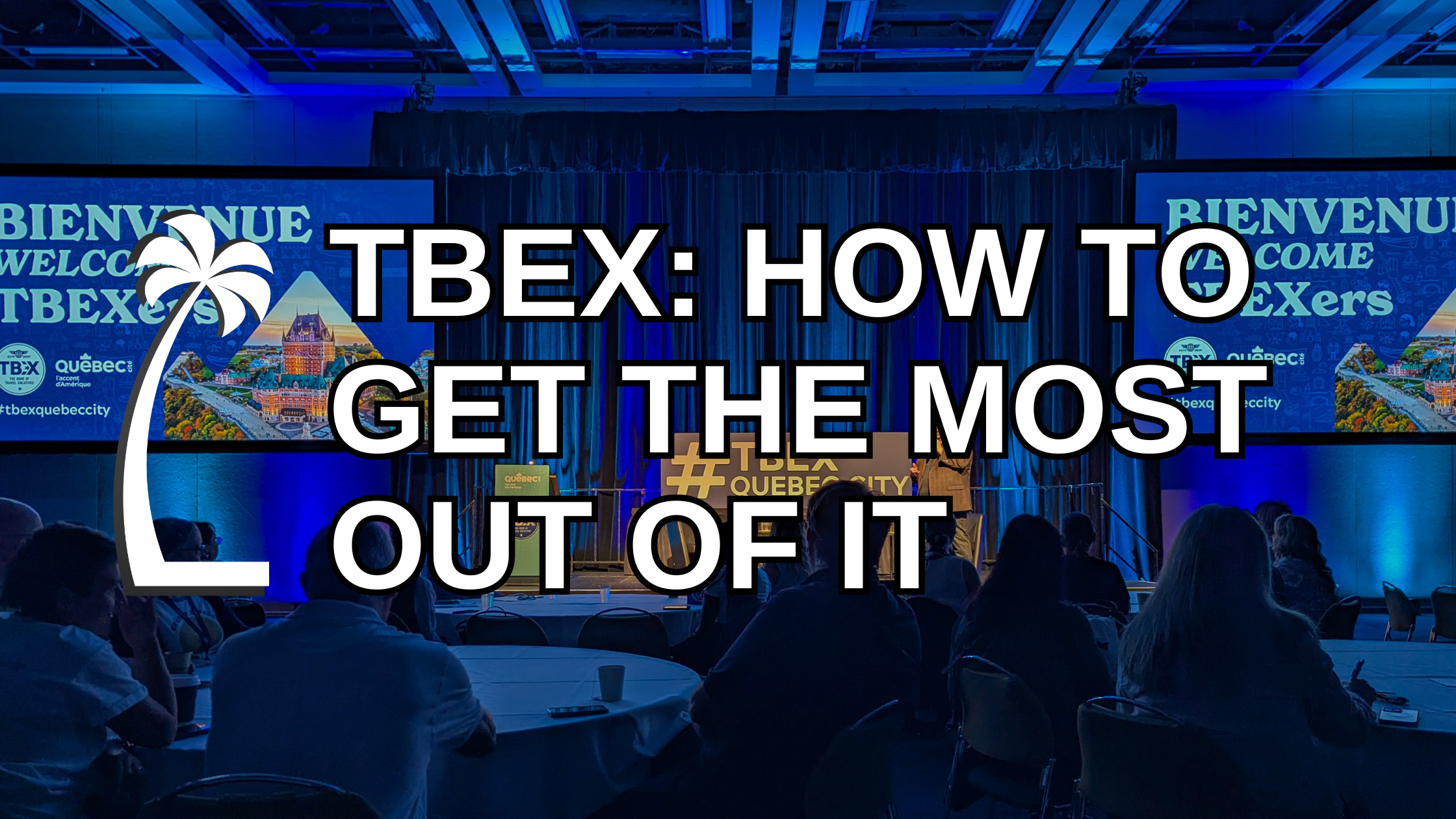
You can also attend in-person events. I highly recommend attending a Travel Bloggers’ Exchange Conference — known as TBEX, if you can! You can read my review and tips from attending my first TBEX in Quebec City here.
TRAVELYNNE TIP: Download the GetYourGuide app & join their blogger community! It's one of my favourite affiliate platforms, offering travel bloggers an 8% commission on tours and activities. P.S. Save 5% on your first booking with LYNNEOUTLOUD5.
“The things you share in common will help you find new friendships, supporters and collaborators. Forming connections like this is instrumental to your growth as a blogger because they provide you with a network of like-minded people, and a constant reminder that you are not alone in your struggles and that you can be successful.”
This is also key because learning to blog means learning so many things, which can include search engine optimization (SEO), web design, content creation, video editing, graphic design, and more. And while I may be a solopreneur, I didn't go at it alone, thanks to a wealth of free advice from fellow bloggers and free resources online.

In 2025, I attended my first-ever travel bloggers’ conference: TBEX North America. It was such a worthwhile experience to meet others on a similar path, meet potential partners and destination offices, learn about new tools and strategies, and more.
Some of my go-to blogger resources have been:
Ryan Robinson's blog and YouTube channel for all things blogging
Nina Clapperton’s SEO Facebook group & other resources
Paige Brunton's blog and YouTube channel for all things Squarespace
Alex Cattoni & The Copy Posse for copywriting and marketing skills
Maha Copy for copywriting skills
Bootstrap Blogging for blogging tips and inspiration
People and resources like these have helped me gain confidence and fine-tune my analytics, writing, and web design skills. Huge shoutout and thank you to all of these content creators and friends in blogging!
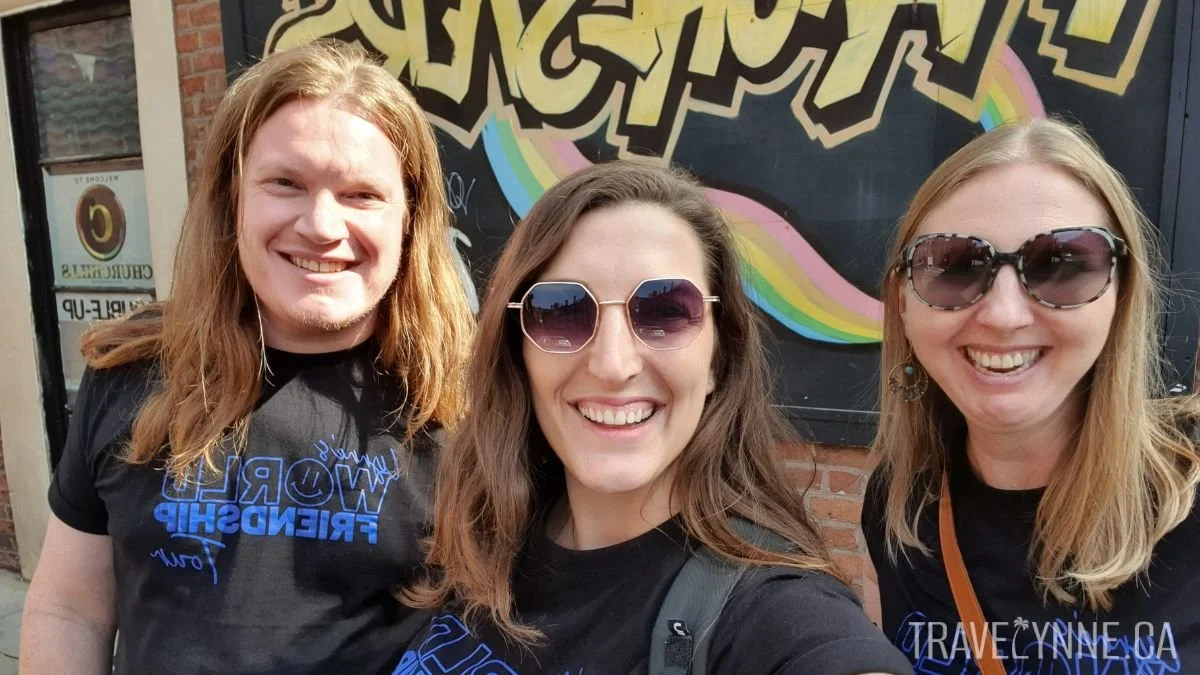
My friends Jen and Stevo, who blog at Two Can Travel, have been a big support and inspiration for me in my travel blogging journey — among many other areas of my life!
10. Mastering SEO and AI Search is a Marathon
Mastering search engine optimization (SEO) — the craft of climbing the search engine ranks — is a challenging yet rewarding process. Add to that the newer challenges of learning to appear in AI answers and AI search engines like ChatGPT, Claude and Gemini. This is sometimes referred to as Generative Engine Optimization (GEO) or Answer Engine Optimization (AEO) — but at the end of the day, they are all search engines, and we want to appear in as many places as possible.
SEO itself is a long-term game. Around year two of blogging, when I experienced a surge in Google search traffic from a "viral" blog post, I understood the value of revisiting and optimizing older articles instead of solely focusing on creating new content.
“Here’s a tip: after consistently publishing for over six months, carve out time monthly to re-evaluate a few older blog posts (ideally something at least 6 months old) that are underperforming. Make informed tweaks based on analytics, like adjusting headings, meta data, and possibly rewriting sections to enhance their E-E-A-T score.”
Prioritize E-E-A-T for Google and AI Search
If there’s one thing you need to understand about SEO, it’s the concept of E-E-A-T (Expertise, Experience, Authoritativeness and Trustworthiness). Essentially, it's about writing for real people, offering tangible value, establishing credibility, and embracing originality.
These elements can set your content apart in Google’s algorithm — and they are equally as important for earning mentions in AI search engines.
I also suggest you familiarize yourself with free tools like Google Analytics, Google Search Console, and Google's Keyword Planner early on. These aid in tracking your blog's performance, indexing pages on Google, and conducting basic keyword research.
“You’ll need to strike a balance between creating new content, refining existing posts and learning new technical skills. Travel blogging demands a nuanced approach, regular updates, and sharp SEO skills – competencies that you’ll develop and refine over time.”
It is not necessary to do it right away, but if you eventually want to go deeper, you can also take a course about SEO and/or AI search. I took the SEO Specialization through UC Davis on Coursera, which I enjoyed. Alternatively, you could check out the free AI SEO Course and SEO Course for Beginners offered by Ahrefs or the free SEO Certification Course by HubSpot.
Remember, it's an ongoing effort in which you’ll balance integrating existing knowledge, applying new skills, and iterating over time. Learning by doing, baby!
11. Discover Your Niche (…a work in progress!)
What's your niche? What do you offer that is unique compared to the existing travel bloggers out there?
Depending on your area of expertise, this may seem easy or obvious. For me, finding the unique space and audience that resonates with my passions and expertise was a challenging process of experimentation and self-reflection. I navigated these waters for a long time and finally, in year three, started to lean deeper into ecotourism themes like sustainability, conservation, culture, and social enterprises. Sometimes these themes are woven into my regular guides (especially as I update content), and sometimes I develop standalone articles on these topics.
“While a well-defined niche can certainly help in targeting a specific audience and making money, it might be equally important to allow your interests and experiences to guide you naturally towards your niche, especially in your first year.”
Travelynne still reflects a broad spectrum of travel experiences, mirroring the diversity and richness of the world as I explore it. But as I allowed myself to explore what I love most, my niche eventually became obvious.
One of the harsh realities of “career” blogging is that niching down is key to increasing traffic and trust, which are characteristics needed to make more money with a blog.
Some of my favourite travel bloggers who have successful niches include:
A Way Abroad: Kat specializes in helping women who want to move abroad on her blog and, more recently, on Substack
Two Can Travel: Jen and Stevo focus on helping Americans and others who want to become full-time international house and pet sitters
The Navigatio: Nele specialized 100% in Japan content via her blog and her “Japan Travel Tips & Planning” Facebook group
I get a bit closer (albeit it was wobbly for a while) to my niche definition with every post I write — although I’ve finally found my footing. If you have insights on this, I would love to hear about how you found your travel blogging niche.
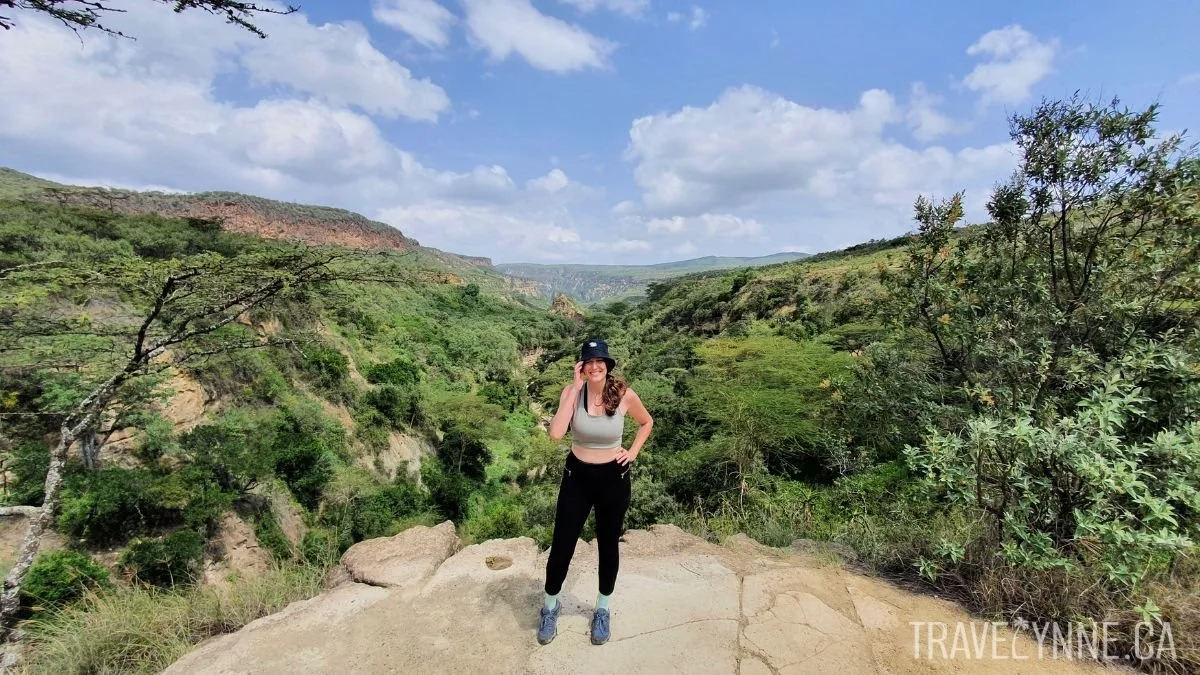
Picking a niche was always stressful to me because I don’t like putting limits on myself, but as a marketer, I know it’s needed. I let this be a work in progress and adapting based on what I enjoy doing most and what readers are finding most helpful.
12. Create a Ritual for Blogging
One of the simplest things I’ve learned is just how helpful it is to dedicate the right time, space and energy to your blog. It's not just about finding the time to write or research; it's about creating a ritual that makes blogging an enjoyable and rewarding part of your life.
For me, this ritual often looks like a cozy Saturday morning at a café, sipping on a carefully crafted cup of coffee as I dive into writing for Travelynne. Other times, my ritual unfolds on a Friday night, transforming my living room into a personal retreat with a relaxing lofi hip-hop playlist, my favourite takeout food on the table, and a glass of rich merlot in hand as I immerse myself in research.
These moments are not just about productivity; they're about pleasure and passion. These habits have helped me implement routine and self-discipline to achieve the goals I set for myself with Travelynne. So, I encourage you, aspiring bloggers, to find your own ritual. Make your blogging time special and enjoyable - it's a powerful way to fuel your passion and creativity for your blog, and most importantly, to be consistent and rewarded for your efforts.

Treating myself to a nice coffee or matcha while I work on blog is one way that I make sure that my personal project remains a labour of love.
13. Make Peace With Self-Doubt
As a travel blogger, I've often found myself questioning my place in a world overflowing with information and brimming with talented content creators. Before hitting “publish” on my first blog post, I grappled with so many doubts and questions: "Will people even read this?" "How can I balance blogging with my full-time job?" “Will I be able to keep up?” "Can I make money blogging?" This self-talk was a constant backdrop to the exciting yet daunting prospect of starting a travel blog.
As a first step, know that self-doubt is a common experience, especially when you're surrounded by an ocean of seemingly flawless content. Remember that every blogger or creator, at some point, has faced similar fears and uncertainties.
The key to overcoming self-doubt, I've learned, is to embrace your unique voice and perspective. I focus on what sets Travelynne apart — my personal travel experiences, my perspective, my storytelling style, my knack for explaining logistical details, and my bravery in solo adventures. Instead of comparing my journey to others, I concentrate on my growth and learning. I celebrate small victories and understand that each post is a step forward in honing my craft.
“It sounds cheesy, but it’s true: In a world where everyone is a content creator, your most powerful asset is being authentically you. Embrace your unique journey, stay true to your vision, and let your passion for travel and blogging shine through.”
At the end of the day, I have my roadmap to come back to (ICYMI, see #2). I remind myself of the reason why I started Travelynne: to share my love for travel and to help more people discover the world’s beautiful cultures, nature, and kind people. I also surround myself with people who support my vision and my goals, from friends and family to like-minded creators, and do my best to tune out the rest.
Starting a Blog? Let's Connect!
If you plan to start a travel blog, I would love to hear from you and form a travel blogging community! Please feel free to drop me questions via my contact page, comment below, or simply connect with me on LinkedIn and Instagram.
Travel Bloggers: Share Your Journey
Blogger friends, I'd love to hear about your experiences! By exchanging our stories and tips, we create a community of support and inspiration, helping each other grow and succeed in this exciting world of travel blogging and content creation.
Whether you're a seasoned pro with years of stories or a freshman like me, your experiences can be valuable and inspiring to others. Share your lessons learned, the obstacles you've overcome, and the triumphs you've celebrated along the way by leaving a comment, sending me a message, or connecting on Instagram.
Happy Anniversary to Travelynne.ca!
A note on my first year of blogging (I’m now at 4 years and it’s still true!):
Closing my first year as a travel blogger with Travelynne, I can confirm that the journey is as exciting as the destination.
Through trial and error, I've discovered that starting is more critical than perfection, and adapting plans is part of the process. Embracing simplicity in branding and being mindful of expenses taught me valuable (and hard!) lessons. Community building and learning from experienced bloggers and content creators became pillars of my growth — and something worth investing in. After a year of blogging, I feel more confident in my abilities and the possibilities for making money through blogging platforms, and I'm both excited and daunted by what the future holds.
Thank you to everyone who has supported me along the way. My friends and family who never doubted me, and who continually encourage me (& who use my links!), send me messages of support, open every blog post I share, and engage with every social media post — you know who you are, and I truly appreciate you!
At Travelynne, I am so excited about the community I'm building, and I look forward to continued improvement and growth in the year ahead. I hope the travel blogging tips and insights provided through my own blog's growing pains will help other aspiring travel bloggers get motivated and work towards their success. There is room for all of us!
Here's to many more years of exploring, learning, and sharing this beautiful world through Travelynne!
Follow my adventures:

✨ Support Travelynne and plan smarter: Visit the DIY Booking page to book tours, operators, transport, and stays.
🧭 Need a personal touch? Schedule a free 15-minute consult for custom travel planning or blogging advice.
NOTE: This article was originally published as “13 Tips for Starting a Travel Blog: Lessons from My 1st Year” in 2022 and was fully revised in 2026 based on learnings in my first 4 years of travel blogging.