How to Spot Fake Visa Websites and Avoid Visa Scams
If there’s a travel scam that’s easy to fall for, it might be a visa scam…
They are increasingly common, and they can be surprisingly convincing, even for savvy travellers. While I don’t consider myself particularly gullible, these have nearly got me once or twice.
Some scammy third-party websites are designed to look like official government pages and pay for ads that appear above the official government websites when users search for visa information on Google and other search engines. These scams rely on travellers being in a hurry or unfamiliar with the process.
Spoiler alert: It is critical that when applying and paying for a visa, you do so through the official government source or a legitimate visa agent.
In this guide, I'll show you how to find official visa information, spot common red flags, and decide whether using a visa agency is worth it (and how to pick a legitimate one!).
HEADS UP: Some links on Travelynne are affiliate links, meaning I earn a small commission if you purchase select products or experiences from my links — at no extra cost to you! This helps me invest more time and resources into creating helpful travel content like this article. You can also book a consultation or book a trip with me.
IN THIS ARTICLE:
READ NEXT:
How Visa Scams Work
I love planning trips, but the visa process is not one of my favourite parts. Applying for a visa — aka permission to travel to another country —is convoluted because it is different in every country and for every passport. There is little consistency; official application websites are often difficult to find or very glitchy, rules change frequently, and prices vary across the board.
This creates the perfect scene for scammers, who create multiple websites, Facebook profiles, and more to trick people into paying excessive fees for visas or paying for services they never receive.
Here’s how you can get tricked into excessive payments or not getting a visa at all.
Taking Your Money and Ghosting
In the worst-case scenario, a fake company promises to deliver your visa, takes your money, and doesn’t deliver any service or documentation.
Not only does this mean you can’t get your money back, but your trip or status in the country can be jeopardized completely, as you can be denied entry or asked to leave. This really is a scam because the “companies” pretend to be visa agencies, but aren’t legitimate or ethical.
Charging for a Free or Easy Visa
Some companies may use marketing to trick you into thinking you need them to apply, i.e. charging you for a visa that would be free or inexpensive and easy to apply for yourself.
These companies are generally legitimate, as you will still get your visa, but their whole game is tricking people into paying for an otherwise free document.
Charging Excessive Fees
There are companies which are legitimate and will provide you with a visa, but will charge you highly excessive fees to process it for you. This is not illegal, but it is not ethical either, and can be avoided with a little research.
NOTE: There are legitimate visa agents who will charge a reasonable amount for processing. You just need to learn what to look for.
“A friend of mine recently paid $175 instead of $28 for his Vietnam tourist visa, all because he clicked and trusted the 1st result on Google when searching “Vietnam tourist visa”.
It’s an easy mistake to make. Luckily, the site was a legitimate visa agency, and they did issue his visa. However, they charged a really excessive price for a simple service, and they purposely designed their website to imitate the official government one to trick users into paying their fees.”
How to Spot Fake Visa Websites
When you're not paying attention, it's easy to click the first result that appears on Google.
And this is exactly what scammers are counting on. So please don't assume the top result is the official one.
Third-party visa agencies and scammers often pay to appear above government websites, and some use web addresses, colours and branding that closely resemble official sources.
In this way, it’s easy to be tricked into paying a lot more than necessary, paying for a visa that would otherwise be free, or — in the worst-case scenario — paying and not receiving anything in return.
Before entering any personal information or payment details, double-check the website address. Non-official government websites won’t have government domain suffixes, such as .gov (USA), .gc.ca (Canada) or .gov.uk (UK).
You need to pay close attention. Take a moment to confirm you're on the official government website before submitting an application or making a payment.
How to Find the Official Visa Website
If you're not sure where to start, check your own government's travel advisory website first. These pages often link directly to official entry requirements and immigration resources for your destination.
For Canadians: Government of Canada's travel advice page (travel.gc.ca)
For Americans: U.S. Department of State at travel.state.gov
Before entering any personal information or payment details, double-check the website address. Official government websites will have government domain suffixes, such as .gov (USA), .gc.ca (Canada) or .gov.uk (UK).
You should always apply directly through the official government website of the country you're visiting. Specifically, that’s usually the country's immigration, foreign affairs, embassy or high commission website.
CAUTION: Sponsored results and third-party websites often appear above official sources in search results. Some are legitimate visa agencies, but others are designed to look official and rely on travellers not noticing they're not on a government website.
Are Visa Agencies Legitimate?
Sometimes yes, sometimes no. I've used visa agencies in Indonesia when the process felt too complicated or time-consuming to manage alone.
The key is doing your research first. A legitimate agency should communicate clearly, explain its fees upfront, and help you feel more confident — never pressured or confused.
Here are some things to consider when judging the legitimacy of an agency.
When Visa Agencies Are Legitimate
Many visa agencies are legitimate businesses that help travellers navigate complex application processes.
For some trips, especially those involving work, study, long-term stays, or travel to countries with complex requirements, using a visa agency can save time and reduce stress.
Some countries also allow visa agents to offer an expedited process, meaning you can save time by applying through them, which is sometimes necessary or convenient.
When Visa Agencies Are Not Legitimate
However, not all agencies are created equal.
Some charge high fees for services you could easily complete yourself, while others may misrepresent themselves as official government websites or provide poor service.
In the worst-case scenario, it’s possible to get scammed by a website posing as a visa agency, which will take your payment and not provide anything in return.
Recourse in these scenarios is next to nil, so avoiding them altogether is your best defence. That's why it's important to do your research before handing over your passport details or payment information.
Check that the website is legitimate and, before using a visa agency, search for recent reviews on Google Maps, Facebook groups and/or Reddit threads. Look for patterns in people's experiences rather than focusing on a single review.
If multiple travellers report hidden fees, poor communication, delayed applications, or unexpected issues, avoid that agency.
Signs a Visa Agency May Not Be Legitimate
If you decide to use a visa agency, watch for these red flags:
🚩 No website or a very unprofessional-looking website
🚩 Only very recent reviews, very few reviews, or negative reviews
🚩 Website tries to imitate the government’s look and feel
🚩 Sense of pressure or feeling rushed into decisions
🚩 Slow or unclear communication
🚩 Lack of transparency about fees or payment methods
🚩 Requests to send money to a personal account instead of a registered business account
🚩 Promises of guaranteed visa approval
🚩 Refusal to provide a proper invoice
🚩 Charging significantly more than the official government fee without clearly explaining added value
🚩 Multiple negative reviews or complaints in Facebook groups, Reddit threads or travel forums
How Much Should a Visa Agency Cost?
Visa agencies normally charge a service fee that already includes the official government visa fee.
In my experience, legitimate visa agencies may more or less double the cost of the visa on its own. It can also cost more than that — it all depends on the destination country, the complexity of the application, the visa type, and the processing speed.
Expedited visas can cost significantly more, but in some cases, you can only expedite a visa via an agency. Some countries allow agents to process visas within 24-48 hours, whereas the online process could take a week or more.
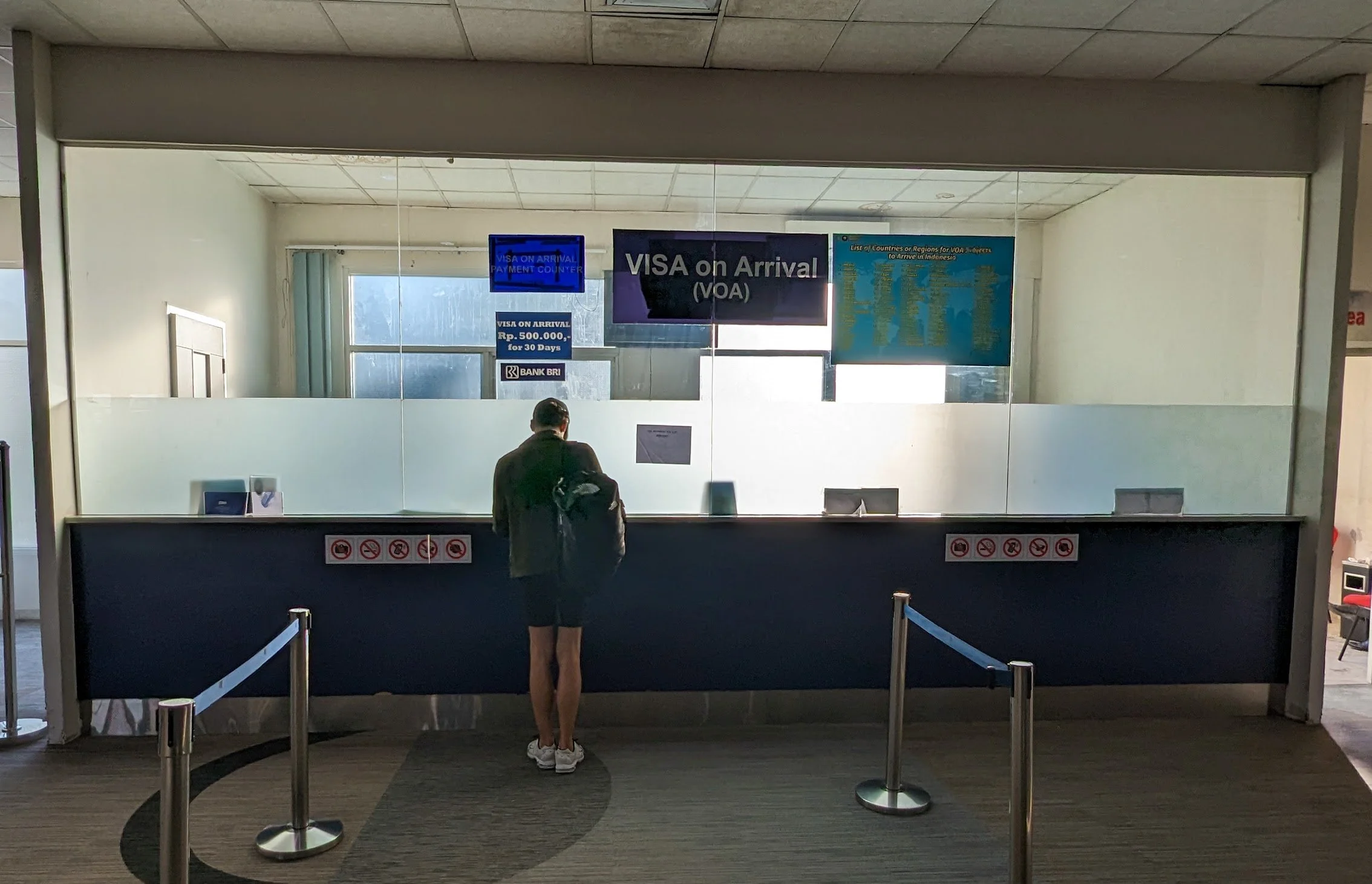
“For example, a tourist visa application in Indonesia - which you can easily do yourself online - costs IDR 500,000 (~ USD $28). A legitimate travel agent will charge you about IDR 1,000,000 (~ USD $56). But fees will vary country-to-country.”
Despite the price tag, this doesn't mean all agencies are scams. You're paying for convenience and support. b
Before using an agency, compare their fee and timeline with the official government cost so you know whether the extra expense is worth it for your situation, and make sure you understand exactly what you’re paying for.
Unsure? Contact the Embassy or Consulate
If you're unsure whether a website or agency is legitimate, contact the relevant embassy or consulate directly.
They can confirm:
Whether third-party agencies are authorized
The official visa application process
Current visa fees
Where to find accurate information
You can usually find their contact (email or phone) through your government’s foreign affairs website, or by searching for their embassy or high commission location on Google Maps.
Planning a complicated Asia itinerary? I help independent travelers design custom trips that balance logistics, local culture, and meaningful experiences. Click here to learn more about my travel planning services.
Final Thoughts
Guaranteeing a little bit of confusion every time you travel, each country has its own visa rules, application process, and fee structure… and unfortunately, confusion creates the perfect conditions for scams 🙄
I really believe that the best way to protect yourself is to slow down. Check for visa requirements before booking any flight tickets, and apply earlier than necessary to give yourself a buffer. Take a few extra minutes to verify the website, check official fees, and read reviews before sharing your passport details or making a payment.
If something feels unclear, overly complicated, or too good to be true, trust your instincts and double-check with the relevant embassy or consulate.
Travel well,
Lynne
Was this helpful? Have more questions? You can reach me by leaving a comment below, Instagram DM, or sending me an email!
READ NEXT: