
Surfing in Bali for Beginners: Where To Go & What To Know
Guest post by Zander Le Bel, Surf & Mindset Coach
Bali is a magical place for surfing because there are waves almost every single day. Whether you’re a complete beginner or a seasoned pro, there are over fifty different surf spots across the island, from the west coast to the east.
This guide will help you choose the right instructor and the right part of the island to surf waves suitable for your level. I’ll explain the difference between private surf instructors and camps, and share some recommendations. Then I’ll go over some top spots to consider surfing for beginners.
I won’t give a spot-by-spot breakdown of every single wave because there are so many of them. Instead, you’ll get a good idea of where to go based on your level and what to expect from the area you choose to surf.
Lastly, I’ll go over some key things to know before you start surfing, and what to bring with you.
IN THIS ARTICLE:
Choosing a Surf Instructor or Camp (with recommendations)
—> Private or Semi-Private Instructors in Bali
When To Go: Bali’s Surf Seasons
—> Best Surf Spots for Beginners in Dry Season (April–October)
—> Best Surf Spots for Beginners in Wet Season (November–March)
—> Surf Spots Beginners Should Avoid
Choosing a Surf Instructor or Surf Camp in Bali
Do you choose a private instructor or a surf camp? This is up to you, but here’s what each option is like.
Private & Semi-Private Surf Lessons
There’s a huge advantage to having a local surf guide/instructor, especially as a first-timer: they offer more flexibility and can tailor the experience to your specific needs. Lessons can be offered 1-on-1 or semi-private, and it’s actually pretty affordable in Bali.
Semi-private lessons start at IDR 550,000 (around USD $32) for 2-hours with a great instructor like Arfas (see below), a small group (up to 3 pax), and board & rash guard rental. Private lessons can run around IDR 700,000 but offer excellent 1-on-1 attention.
TRAVELYNNE-APPROVED BALI SURF INSTRUCTORS
✅ If you want to try surfing in Bali, I highly recommend going with a reputable instructor rather than a random one from the beach
🤍 I have trusted partners I recommend to friends and clients who want to learn to surf, or level up their surf, in Bali: Arfas on the main island & Agus over in Lembongan
➡️ To book with either of them, just email me or DM me on Instagram and I’ll set it up for you!
My Recommendation:
For a surf instructor or guide, I can’t recommend Arfas enough.
He is very attentive, speaks excellent English, and is based in the Bukit. I have personally recommended him to many surf friends who have visited Bali, and they all ended up booking more lessons with him.
➡️ You can book with him through his website here, or book through Lynne.
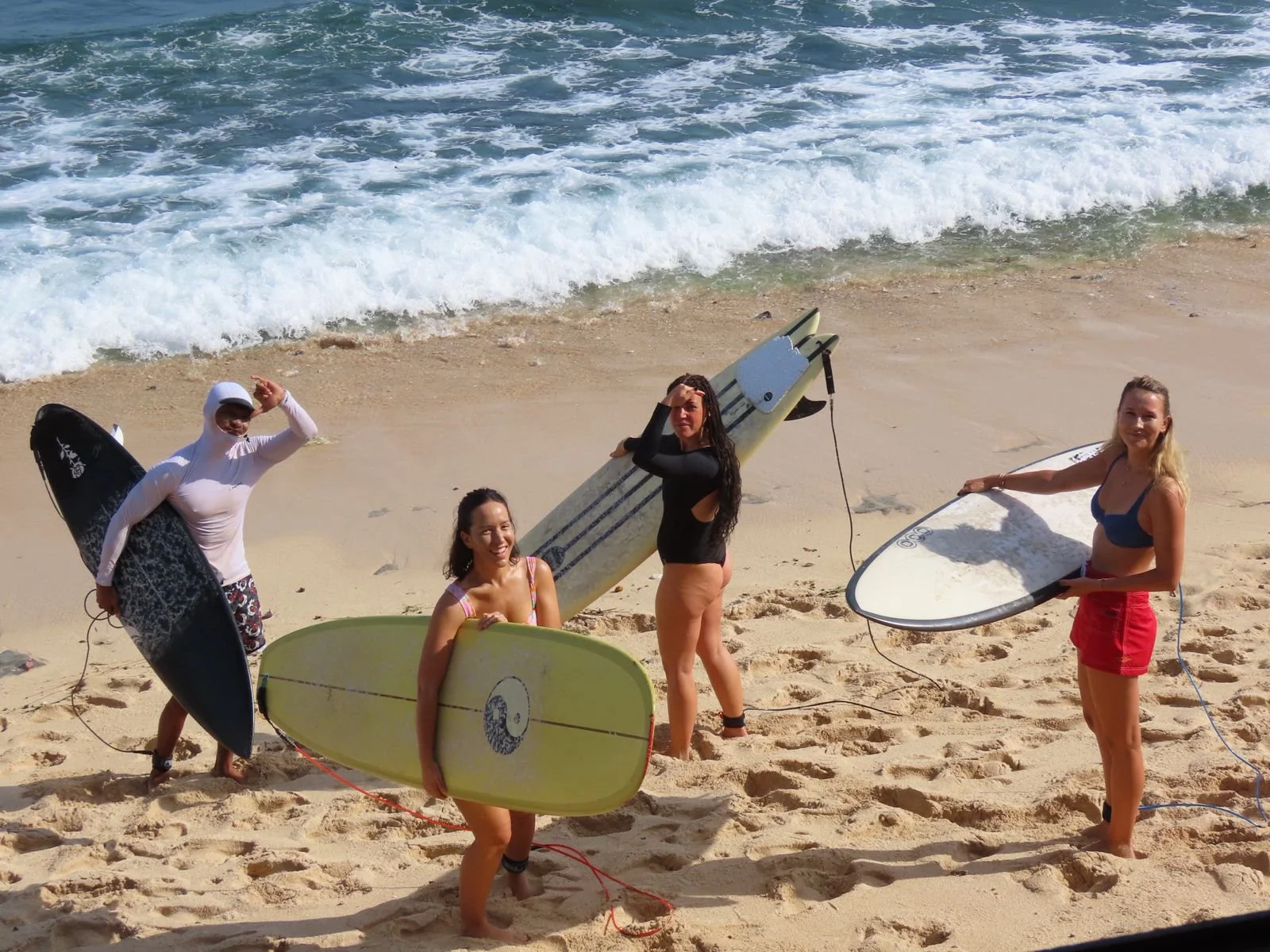
Arfas is a trustworthy surf instructor in Bali - he’ll choose the right spot for you to learn based on the day’s conditions, and provide the direction you need on land and in the water, with excellent English.
How to Assess Surf Instructors’ Legitimacy
If you aren’t going with one of our suggested instructors, then pay attention to a few common green/red flags when choosing your instructor.
In Bali, the locals are generally very tight-knit. Shady characters usually get run out of Bali or banned from taking guests to certain spots — I have seen this firsthand.
To assess if they are professional, you’ll want to:
Know things like whether they’re a member of the local beach association, whether they have ISA or ASI instructor certification, whether they have lifeguard certification and carry first aid supplies, etc.
If they have a website, that’s another positive sign
You can also check reviews on Google or TripAdvisor — with a grain of salt, given that everyone in Bali seems to have 4.8 stars… but read through to see legitimate feedback
Good instructors are also openly welcomed at local warungs (Indonesian restaurants), don’t ask to meet you in a secret parking lot, and don’t seem nervous around other locals.

Planning a complicated Asia itinerary? I help independent travelers design custom trips that balance logistics, local culture, and meaningful experiences. Click here to learn more about my travel planning services.
Surf Camps
If you want to fully live the eat, sleep, surf, yoga, repeat lifestyle, a surf camp can be a great option.
Surf camps in Bali provide room and accommodation packages during your stay. They are a great way to meet people, especially if you’re traveling solo.
Depending on the surf camp, there will be different packages based on the length of stay and surfing level. Many surf camps also offer yoga packages, which can be great for cross-training.
Generally, you get what you pay for, so the more you pay, the better the quality of food and accommodation.
Bali Surf Camp Recommendations:
Many surf camps in Bali are pretty great; it just depends on how much you want to spend and what experience you want. Here are a few options to consider:
Rapture Surf Campin Padang Padang (more community-oriented)
Mojosurf Camp Canggu for a more budget-friendly and beginner-focused space
Kima Surf Camp in Seminyak for a higher-end experience
When To Go: Know Bali’s Surf Seasons
The wet season (November–March) and dry season (April–October) affect which side of the island works best for waves. Without getting too technical, what happens is that the direction of the trade winds shifts.
Dry Season (April–October)
In the dry season, everything switches:
West coast waves start working
East coast spots are blown out, meaning they’re not surfable because of the direction of the wind, making the waves unsuitable for surfing
Surf can become much more powerful
There are also times during the dry season when professional surfers fly in to chase big swells.
Wet Season (November–March)
Generally, in the wet season:
The west side of the island’s surf spots is blown out, so it’s less ideal for surfing
Waves are more mellow and less powerful
Conditions are often better suited for beginners and learners
Unexpected Swells in Bali
Something to note: the Indian Ocean can go off at any time of year due to cyclones in Australia or storms off Antarctica. It is possible to see freak swells during the height of the wet season, even though waves are usually mellower during that time.
This is why I recommend going with a coach or guide who understands the forecast and can take you to a spot suitable for your level based on what the ocean is doing that particular day.
Dry Season: Best Surf Spots in Bali for Beginners and Intermediates
The west coast of Bali generally works best for surf during the dry season (April–October). Beginners and intermediate surfers can find surf instructors, schools or camps to take them to these spots to start.
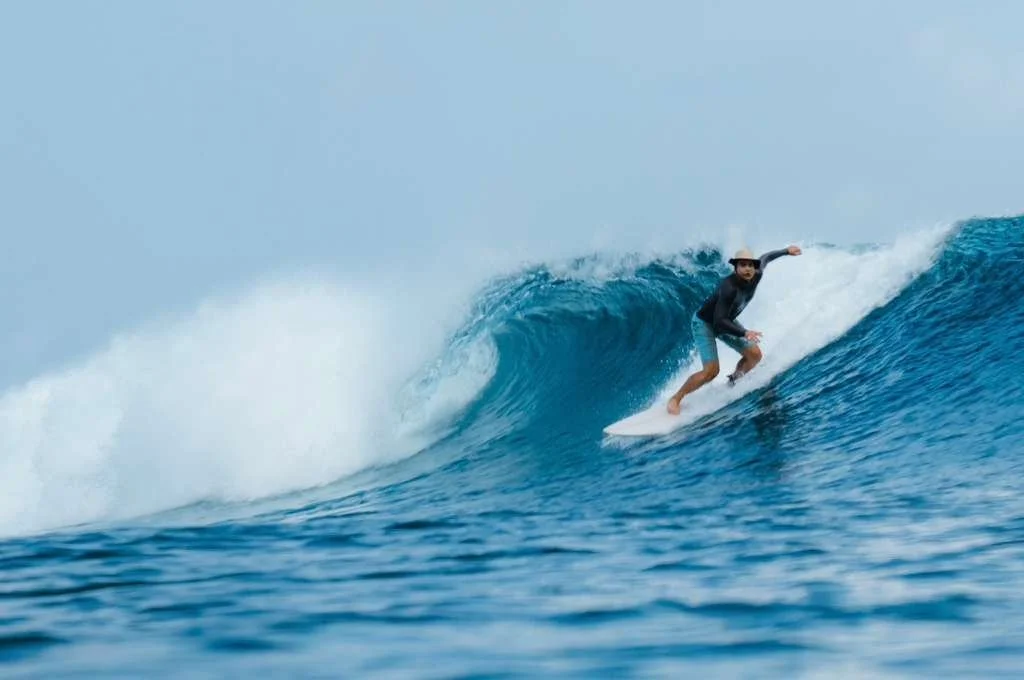
Zander is a surf mindset coach and has surfed off 10 Indonesian islands
Best Surf Spots for Beginners in Dry Season (April–October)
Kuta, Legian, and Double Six
The Kuta, Legian, and Double Six stretch of beach, located on the west side of Bali, are among the best places for first-timers to learn to surf.
Many surf spots in Bali have reef or rock bottoms, but not here.
This beach has a soft sandy bottom, which makes it much safer if you fall off your board (and this will happen, especially as you’re learning!).
Many local surf schools and instructors operate along this beach, and several surf camps bring their beginner guests here as well. It does get crowded and can feel chaotic at times, but the vibe is generally very friendly. The Kuta and Legian areas have more of a backpacker feel, which is nice for solo travelers, especially.
There are many accommodation options and places to eat or drink nearby, and even tons of options to get a massage afterward to relax sore muscles after a day of surfing.
For someone who has never surfed before and wants to try surfing in Bali, this is an excellent place to start.
Intermediate surfers will enjoy this area as well because it can offer fun waves on the right day
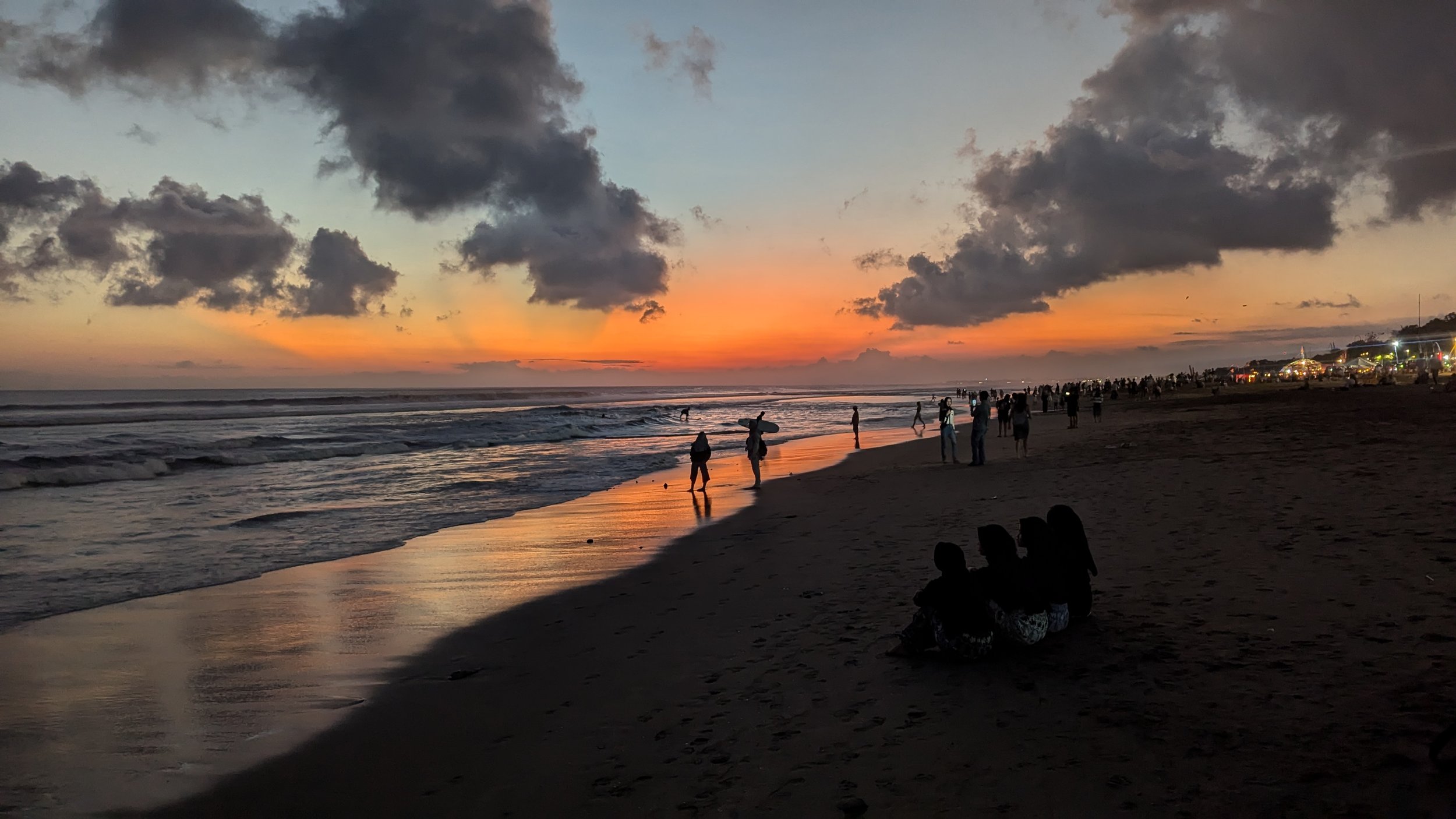
The bonus of an afternoon surf in places like Kuta and Canggu is that you’ll often be rewarded with an epic orange sunset
Canggu: Batu Bolong and Old Man’s
Old Man’s and Batu Bolong Beach in Canggu have a somewhat similar setup to Kuta and Legian for beginners. You can easily get a lesson right on the beach, rent a board, and enjoy food or drinks on the beach afterward.
On the right day, Batu Bolong can give you very long and easy rides. It’s a great place to transition into catching green, unbroken waves.
However, I highly recommend going out with someone who knows the beach and can help you navigate the crowd. The lineup is often shared with many locals and expats who live there year-round.
Canggu itself feels a bit more upscale, with trendy cafés and restaurants. The overall vibe is definitely more bougie. Many surf camps are also based in this area.
Advanced Spots in Canggu
Slightly to the north, you have Echo Beach and the rivermouth, note that these are better suited for more advanced surfers.
Nusa Lembongan
This tiny island is located 25 minutes east of Bali by a fast ferry. You will find the pace in Lembongan to be a lot slower and less chaotic than the south of Bali — it’s the perfect place to relax.
For surf, Lembongan is very dependent on the tides and can have a bit of current. The water is crystal clear, so you will be surfing over reef, but the playgrounds surf spot can be really suitable for beginners.
As an advanced surfer, I’ve also had a great time surfing all the different breaks here. Something to note though is that the current can get a bit strong here.
➡️ Go with Agus, he knows the area and what conditions will be suitable for your level, and has a boat to go chase waves with. To book with him, just message Agus on Instagram or email Lynne to set up your trip.
Besides surfing, Lembongan has snorkeling trips to see mantas, nice places to eat, a mangrove you can row through — and Lynne can organize some really special tours or adventures for you on this island too!
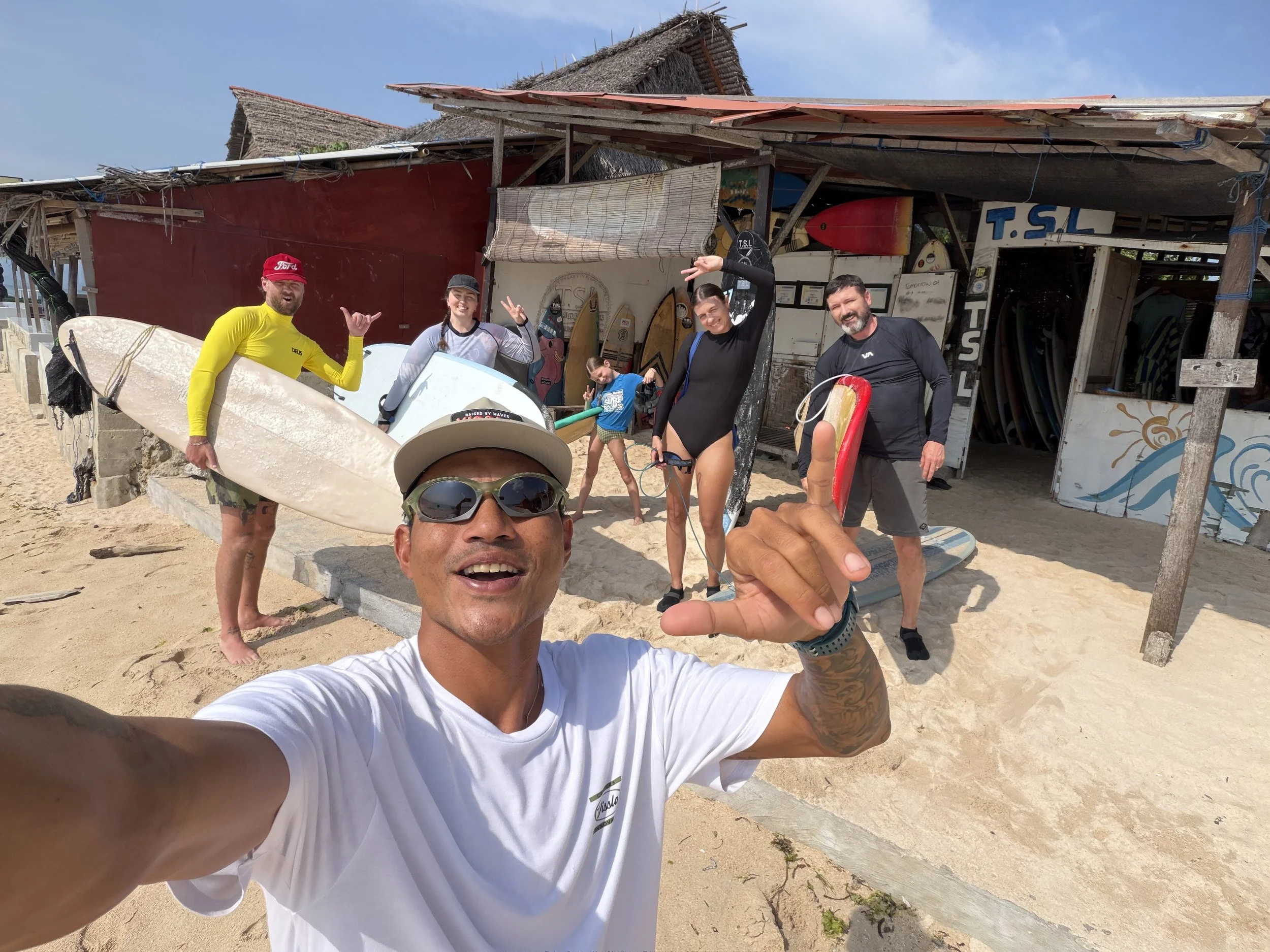
Agus is our trusted surf instructor in Nusa Lembongan - you’ll be in good hands chasing waves with him!
Medewi
Medewi feels quite different from the other surf spots mentioned so far. The vibe here is more local than in places like Canggu, Kuta, or Legian.
Medewi is about a three-hour drive from Denpasar airport and is home to the longest left-hand wave in Bali.
NOTE: As of early 2026, beginners are not allowed to
surf Medewi without an instructor in the water.
This rule exists for safety because of the rocks and currents that make the wave challenging for inexperienced surfers.
Intermediates with stronger ocean-reading skills will enjoy this wave a lot. On the right day, it offers very long rides. That said, it is still a good idea to go with a guide the first few times so you understand how the spot works and where to safely paddle to avoid the rocks.
There isn’t as much going on in Medewi compared to the south of the island, but there are still plenty of places to eat and stay, along with several surf schools and camps.
Wet Season: Best Surf Spots in Bali for Beginners (November–March)
If you’re visiting during the wet season (November–March), the east coast comes alive for surfers.
Nusa Dua
Nusa Dua is an excellent beginner surf spot during the wet season. That said, the vibe here is quite different from the rest of the island, as its less local and more of an upscale resort area.
Still, it has its benefits for beginners: not as many people visit Bali during the wet season, so the surf is usually less crowded, and the conditions can be optimal.
Spots like Geger, Nico, and Nusa Dua Beach can all be suitable for beginners in the right conditions. Geger also has several local warungs where you can grab a drink or food after surfing.
Going with a local instructor or surf school is usually the best option because they will take you out when the conditions are appropriate for your level.
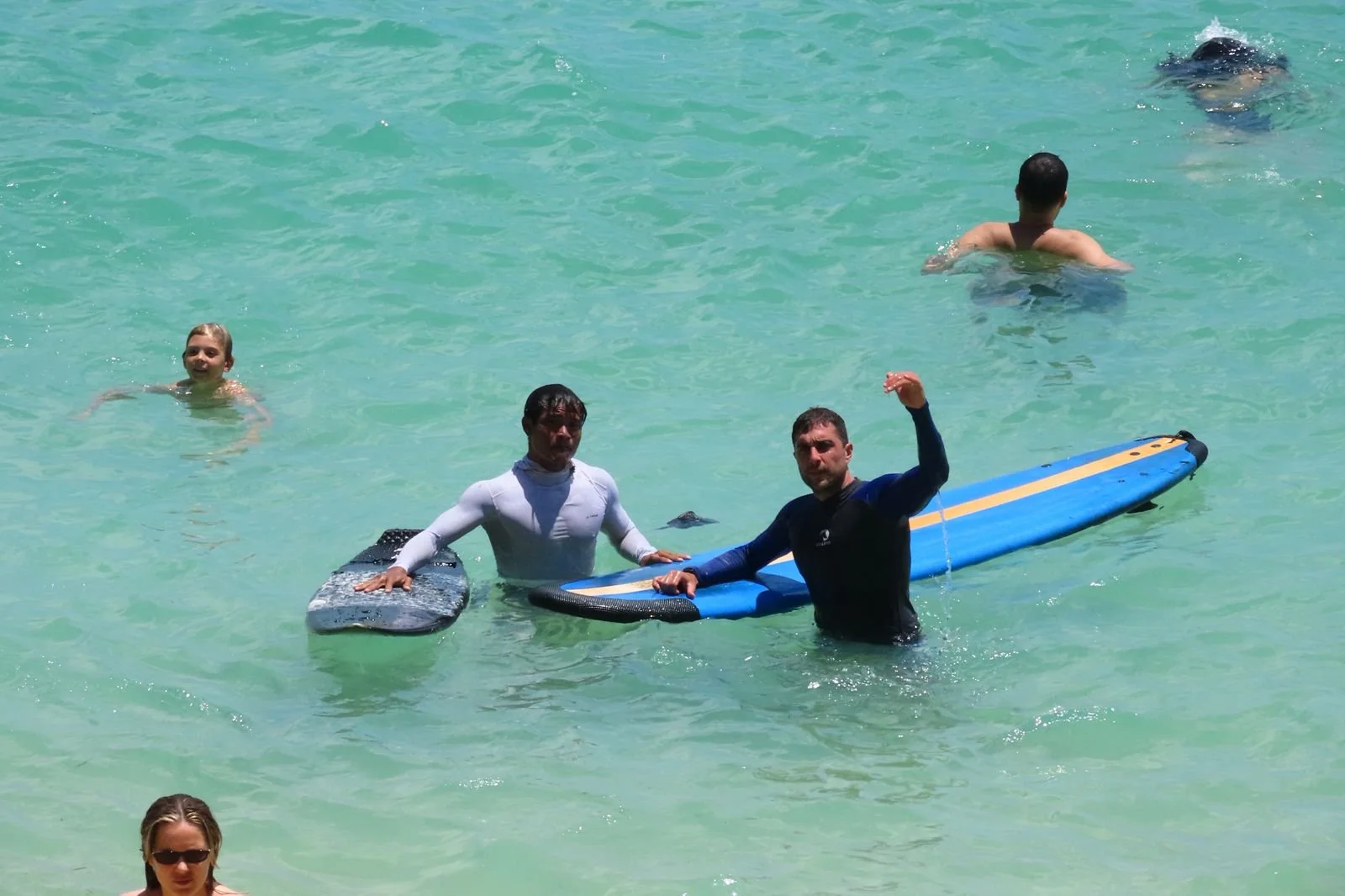
Arfas, one of our trusted surf instructors, will take you through the basics of surf and help you level-up your skills at the right pace for you.
Surf Spots Beginners Should Avoid in Bali
While Bali is an incredible place to learn to surf, not every surf break on the island is beginner-friendly.
Many of the most famous surf spots have sharp reefs, powerful waves, and strong currents, which require experience in the ocean. Here are a few areas beginners should avoid until they’ve gained some experience.
Avoid: Uluwatu and the Bukit Peninsula
Uluwatu and the Bukit Peninsula have some of the best waves in Bali, especially in the dry season, but they are generally not suitable for beginners. Most of the surf spots on the Bukit Peninsula have sharp reefs and strong currents, which can make them dangerous for inexperienced surfers.
I often see inexperienced surfers out there who really shouldn’t be. They can become a danger to themselves and others in the lineup. These areas are great fun for advanced surfers, so it’s something to work towards.
Padang Padang (the left) is considered the heaviest wave in Bali and should only be surfed by advanced surfers. There is a right-hand wave there that can be suitable for lower intermediates, but you should only go with a guide or instructor who knows the area.
Meanwhile, you can enjoy Uluwatu as a visitor. Check out cliffside bars like Single Fin, where you’ll have an amazing view of surfers catching waves from the cliffs. There are plenty of trendy cafés, beautiful places to stay, and some of the best sunsets on the island in this area.
Again, if you are a beginner or lower intermediate surfer, I would recommend skipping the Bukit and Uluwatu Peninsula area entirely for now.
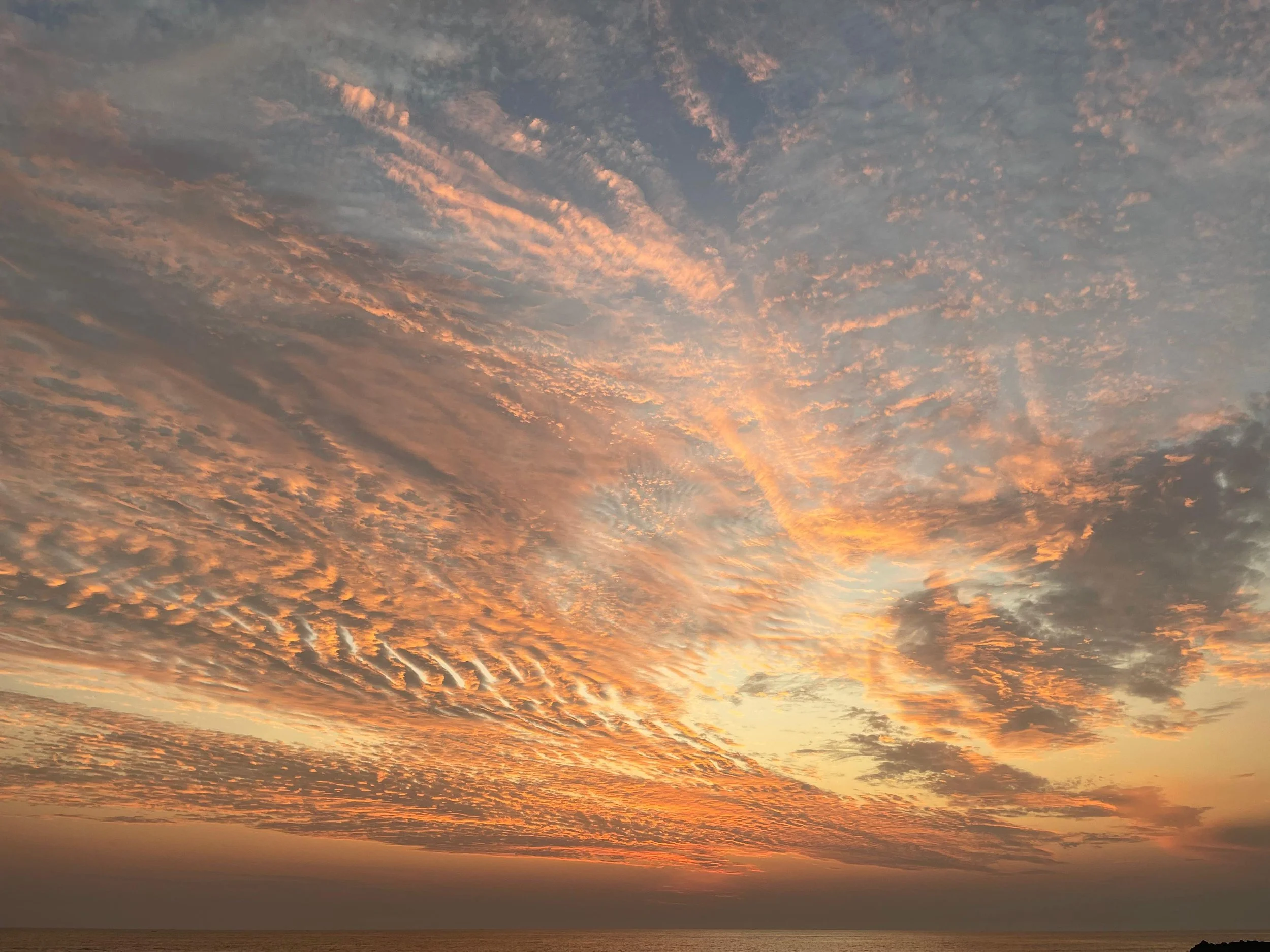
While Uluwatu is not suitable for beginners to surf, the beaches and restaurants/bar here, like Single Fin, offer extraordinary views of advanced surfers hitting the waves, plus incredible sunsets like this!
What You Need To Know Before Your First Surf in Bali
Once you’ve booked your first surf lesson in Bali and you’re ready for an adventure! Here are a few key things to consider and prepare for in the days before heading out.
Mental Preparation
Once you’ve booked your surf session, start visualizing yourself riding a wave. Picture yourself on the board, feel the water, feel the sun on your face. Really get into it. It’s amazing how much this helps — that’s why I have all my clients do this.
Spending just 10 minutes visualizing before your session can make a huge difference in your enjoyment. Using my Flow State Method™, I’ve helped many people overcome anxiety and fear in the ocean and in life. If that’s something you’re interested in, you can reach out to me on Instagram.
Respect the Lineup
Surf spots in Bali can get crowded because of the island’s popularity and warm water. Be patient and respectful with other surfers, and especially with the locals who welcome surfers and visitors from around the world.
Respect people in the lineup, especially the local surfers who live there year-round.
It’s also a good idea to learn a few Indonesian greetings, which can go a long way during your trip.
Use Reef-Safe Sunscreen
We want to enjoy Bali’s ocean and beaches for generations to come, so let’s help take good care of it:
Pack out anything you take with you to the beach and dispose of trash in a bin. If there are no bins at your surf spot, take it back to your hotel.
The sun is strong in Bali, so choose reef-safe sunscreen that protects both your skin and the reefs.
Psst! Learn more about how to be a responsible traveler in this article:
Watch What You Eat
While Indonesian and Balinese food can be incredibly delicious, many people feel sick (the infamous “Bali Belly”) when they first arrive and are introduced to new foods and water sources. It’s happened to me twice in the last three years I’ve been in Bali.
Don’t drink the tap water. Refill your bottle from filtered water sources, often provided at hotels and restaurants.
Be cautious about where/what you eat. Outdoor restaurants are normal in Bali, but you want a basic level of hygiene. It’s not always possible to know what will make you sick, but to help spot red flags, you can avoid places with low Google ratings and avoid empty restaurants.
Pharmacists can help you get inexpensive solutions to help stomach issues pass more quickly or less painfully, such as Diapet/Loperamide, activated charcoal tablets, and ORS rehydration salts for your water.
If it doesn’t pass quickly, visit a clinic.
Be Prepared with Travel Medical Insurance
Accidents can happen to anyone, even when we’re careful and prepared. That’s why learning to surf with reputable instructors and having travel insurance are essential:
Select reputable surf teachers, schools, or camps to make sure you get the best safety guidance
Don’t ignore advice from locals and danger signs at beaches, and don’t try to surf as a beginner in advanced waters
Both Lynne and I use SafetyWing travel insurance and have successfully made claims with them that helped us in some tricky situations. You can sign up with them here or read Lynne’s review of SafetyWing here.
What to Bring On Your First Surf Lesson in Bali
You don’t need much for a surf lesson, just a few essentials:
Wear a comfortable swimsuit that will stay on when you fall
A rashguard is essential to protect your skin while lying on the board paddling
Sunscreen is a must in the tropics; the sun here is no joke.
For the same reason, make sure you have a water bottle and keep hydrated
A towel for drying off after your surf
Some cash for post-surf coconut or food
I also recommend bringing a small bag, ideally a dry bag, to keep your things in
Lastly, bring a good attitude, smile, and enjoy riding the forces of nature.
If you have any questions about getting started in surfing or surfing in Indonesia, don’t hesitate to connect with me on Instagram.
If you have questions about travel in Bali or Indonesia, you can reach out to Lynne for travel planning services, too.
About the Author
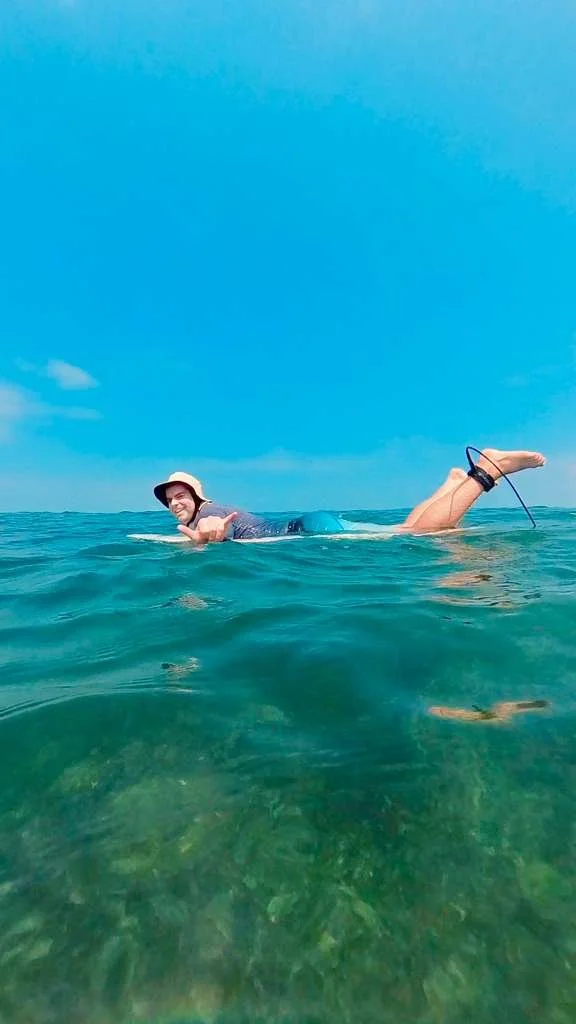
Zander has surfed 10 Indonesian islands, from Sumatra to Sumbawa, since moving to Bali in 2023. He has traveled to 30 countries — many for surf trips — and works online as an anxiety and mindset coach with clients from all over the world. Using his Flow State Method™, he has helped several surfers overcome fears and anxieties related to surfing and life. Connect with him on Instagram!
READ NEXT:


HEADS UP: Some links on Travelynne are affiliate links, which means I may earn a small commission — at no extra cost to you — if you book something through them. These earnings help me keep creating free, thoughtful travel guides like this one.
✨ Support Travelynne and plan smarter:Visit the DIY Booking page to book tours, operators, transport, and stays.
🧭 Need a personal touch? Schedule a free 15-minute consult for custom travel planning and soulful trip advice.