
How to Check Visa Requirements for Any Trip: A Beginner Traveller’s Guide
Planning your first international trip can feel like a lot.
You've got flights to book, hotels to reserve, travel insurance to compare, and packing lists to make.
Then you realize you need to figure out whether you need a visa… and hopefully it's not too late.
If you're new to international travel, visas can seem confusing. Honestly, they can still be confusing even after years of travelling because every country has its own rules and process (and often its own glitchy website, too).
And no, we're not talking about the credit card. 🙃
We're talking about the official permission you may need to enter another country.
That might sound a little intimidating, but once you understand the basics, checking visa requirements becomes just another step in planning your trip.
In this guide, I'll walk you through what a visa is, the different types of tourist visas, how to find trustworthy information, and the common mistakes travellers make.
IN THIS ARTICLE:
What Is a Visa?
A visa is a document or digital approval that lets you travel to another country for a specific reason, like tourism, work, or study.
Whether you need one depends on the passport you hold and the country you're visiting.
Your visa tells immigration officials:
Why you're visiting
How long you can stay
Whether you can enter once or multiple times
Whether you're allowed to work
Some visas are stickers or stamps placed in your passport. Others are digital and linked to your passport number.
Some need to be arranged before your trip, either online or through an embassy or consulate. Others can be issued when you arrive at a border crossing, airport, or other port of entry.
Depending on your destination and airline, your visa approval may be required in order to check in to your flight and board the airplane. (Funny story, due to a delay with our visas during the Lunar New Year, my parents and I were denied boarding our flight in Cambodia to Vietnam — we ended up needing to buy new flights a few days later when they came through!)
One important thing to know: a visa does not guarantee entry.
This sounds scary, but being turned away is rare if you have the right documents and follow the rules. Immigration officers always make the final decision when you arrive.
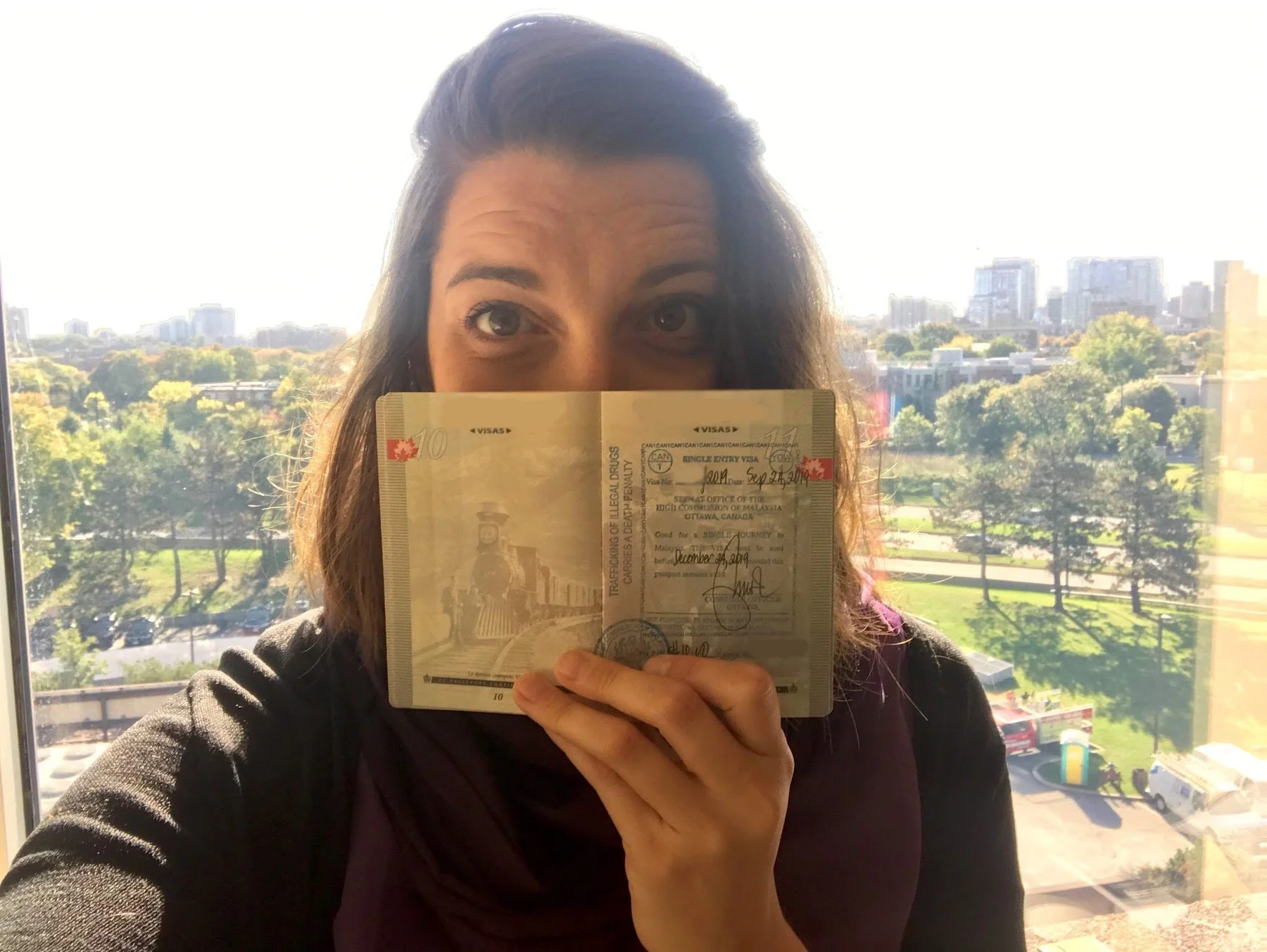
Headed to Malaysia for my first-ever foreign work visa, the first step was to obtain a single-entry tourist visa. Since the intention was to get my work visa once in the country, the single-entry process took a long time and required an in-person visit to the High Commission.
Do I Need a Visa to Travel?
Maybe.
Whether you need a visa depends on two things:
The passport you hold
The country you're visiting
And it's not always straightforward.
You might be able to visit one country without a visa but need to apply months in advance for another.
I'll show you exactly how to check visa requirements later in this guide, but here's the most important rule: always use official government sources.
It's Different for Every Passport and Destination
You should always check the rules for your specific passport and the country you're visiting.
Don't assume the requirements are the same for everyone.
Your friend may not have needed a visa for their trip, but if they hold a different passport, your experience could be completely different. For example, when I lived in Malaysia (I’m Canadian), I invited my Egyptian friend to come to Thailand with me, and he couldn’t because he needed about a month to apply for an entry visa, whereas I can just show up and enter visa-free.
That's because some passports offer more visa-free access than others.
You may hear people talk about "strong" or "weak" passports — in fact, there’s a whole Global Passport Ranking index. This simply refers to how many countries a passport holder can visit without applying for a visa in advance.
This difference is sometimes called passport privilege.
Travellers from countries with more visa-free access often have fewer barriers when planning a trip. Others may face longer applications, higher fees, more paperwork, or stricter entry requirements.
It's not always fair, but it's an important reality of international travel.
No matter where your passport ranks, the most important thing is to check the latest information from official sources before you book your trip.
TRAVELYNNE TIP
Make checking visa rules one of the first steps in choosing your next destination.
You'll want to know whether you need a visa, how long the process takes, how much it costs, and how long you can stay before you book your flights.
Just because you have a strong passport doesn’t mean you’ll never have to apply in advance for visas
Types of Tourist Visas Explained
Once you know whether or not you need a visa at all, you’ll need to know which type of visa you’re applying for. There are special visas for working and studying in other countries, but here we will only discuss visas for tourists.
Visa-Free Travel
Some countries allow travellers from certain nationalities to enter without applying for a visa at all.
You'll simply receive permission to enter when you arrive, with specific conditions, such as how many consecutive days you can stay (often it’s 30, but varies), whether you can extend your stay, how many total days a year you can stay (for example, Canadians can stay in the European Schengen Area for 90 days out of any 180-day, and that you cannot work on this visa. This can vary greatly, so you’ll have to check your specific conditions carefully.
Single-Entry Visas
Often, when a visa is required, the most common is a single-entry visa.
This lets you enter a country once, which means if you leave the country — even for a quick side trip — you'll need a new visa to come back.
Multiple-Entry Visas
A multiple-entry visa lets you leave and re-enter a country multiple times during a set period.
This can be especially helpful if you're planning to visit nearby countries during your trip, or if you’re planning to spend a lot of time in a country and don’t want to re-apply each time you return.
That said, multiple entry visas are normally for work visas or other more long-term situations.
Transit Visas
Some countries have special rules for travellers who are only passing through on their way to another destination.
In most cases, you won't need a transit visa if you're staying in the airport and catching your next flight.
However, a few nationalities may have to apply. And you should especially check if you plan to leave the airport, need to collect and re-check your luggage, change airports, or have separate flight bookings.
Just make sure you look up the rules for any country where you'll have a layover, even if it's only for a few hours.
What Is a Visa on Arrival?
A visa on arrival (VoA) is a visa you get when you enter a country instead of before your trip.
If you qualify, this can make spontaneous travel easier because you don't need to apply in advance, as the approval is immediate.
But you have to check whether you’re eligible, as it’s not an option everywhere, and rules can change.
Before you travel, check whether your passport qualifies, if there’s a fee, how you can pay (some places will require you to get cash), and what documents you’ll need (often your passport and your return flight ticket).
What Is an eVisa?
An eVisa is a visa you apply for online before your trip. They are becoming increasingly available as countries simplify their application processes to ease queues in airports.
If your application is approved, you'll usually receive a confirmation email or a document to download and present when you arrive. Often, they won’t ask to see it, as it’s linked to your passport, but it’s best to have it in case. Some destinations still require you to print this confirmation.
As always, make sure you’re using the official government website to apply.
What Are Travel Authorizations and Arrival Cards?
Getting a visa isn't always the only step before an international trip.
Some countries also require travellers to complete an arrival card or apply for an electronic travel authorization.
Arrival Cards
An arrival card is a form you fill out before entering a country.
It usually asks for basic information like:
Your passport details
Your flight information
Where you'll be staying
How long you'll be visiting
Some countries still hand out paper forms on the plane, while others require you to complete them online before you travel.
An arrival card is not a visa. Even if you don't need a visa, you may still need to complete one.
Electronic Travel Authorizations (eTAs and ESTAs)
An electronic travel authorization is a digital approval required by some countries for travellers who don't need a traditional visa.
Think of it as a quick online security check before you travel.
You'll usually complete a short application online and pay a small fee.
Popular examples include:
Canada's eTA
The United States' ESTA
The United Kingdom's ETA
The European Union's upcoming ETIAS
These aren't visas, but airlines may not let you board your flight if you don't have one when required.
As always, check the official government website for your destination before you travel.
How to Check Visa Requirements
If you remember only one thing from this article, make it this: Always use official government sources.
Visa rules can change quickly, and — while these can be super helpful resources — info in Facebook groups, travel forums, or older blog posts may no longer be accurate. While I do my best to keep this blog up-to-date, it’s up to you to check the specifics about the visa you need, at the time you need to apply, using the official websites.
Start by checking:
The official immigration website of the country you're visiting
Your own government's official travel advisory website
For Canadians, that means checking the Government of Canada's travel advice and advisories page.
If you're from another country, your government likely offers a similar service.
Before you book your flights, confirm:
Whether you need a visa
How long you can stay
Whether you're eligible for a visa on arrival or eVisa
The visa cost
How long approval takes
Which documents you'll need
How long your passport needs to be valid
Whether you'll need proof of onward travel
Some airlines check these rules before you board and may ask to see proof of your return or onward ticket.
Quick reminder: Visa rules can change at any time. Double-check the official information again a few days before you leave.
How to Apply for a Visa
The exact process will vary depending on the country you're visiting, but most tourist visa applications follow the same basic steps.
Step 1: Check the Official Requirements
Refer to the above section on requirements and double-check that you qualify.
Step 2: Gather Your Documents
Requirements vary, but commonly include:
✅ Valid passport
This usually means your passport must be valid for at least 6 months after arrival, and some countries also require at least 2-4 blank pages in your passport.
✅ Completed application form
Use the official application, usually an online form, on the immigration website of the destination country. Make sure to select the correct tourist visa type.
✅ Passport photo
Some have very specific requirements, such as a specific background color or size.
✅ Proof of onward travel
You may need to present proof of your air ticket to exit the country before your visa expiration date. This is sometimes required by the airline at check-in as well.
✅ Accommodation bookings
While I haven’t been asked for proof of accommodations before, they will often request the name of your hotel/airbnb and the address. If you’re staying in more than one place, you should usually provide the first one you’ll stay at on arrival.
🟡 Immunization Records
Some countries may require proof of immunization records, especially if you’ve been to certain countries, worked on farms, or other specific circumstances. This can also happen during disease outbreaks such as COVID-19, when immunization records were required for many countries.
🟡 Bank statements or proof of funds
This isn’t common for tourist visas, but it is possible for countries to require a certain amount of money in your bank account in order to approve your visa.
🟡 Travel insurance
Some countries (like Thailand) are talking about requiring visitors to have travel medical insurance. If you don’t already have travel coverage for your medical insurance, you’ll need to purchase a policy for your trip. I always recommend having travel insurance in any case!
Not every country asks for the same documents, so check the official list carefully.
Step 3: Submit Your Application
Depending on the destination, you may need to:
Apply online for an eVisa
Visit an embassy or consulate in person
Mail in your passport and documents
Use an official visa application centre
Be sure to keep copies of everything you submit.
Step 4: Pay the Fee and Wait for Approval
Visa fees and processing times vary widely.
Some eVisas are approved within minutes, while others can take several weeks—or even months.
Apply earlier than you think you need to, especially if you're travelling during busy periods or around major holidays.
Step 5: Double-Check Before You Travel
Once your visa is approved, review all the details carefully.
Make sure your:
Name is spelled correctly
Passport number matches exactly
Visa type is correct
Number of entries is correct
Dates are valid for your trip
If your visa is digital, save a copy on your phone and email. If you're asked to print it, bring a paper copy too.
Visa approved? Great—you can move on to the fun parts of planning your trip.
Should You Use a Visa Agency?
In most cases, you can apply for tourist visas yourself.
While legitimate visa agencies exist, many charge high fees for services you can easily complete online.
Unfortunately, scams are also common.
Before paying anyone to help with your visa application:
Verify whether the country offers an official online application process
Check the official government website first
Be cautious of websites that appear before official sources in search results
If you're unsure, contact the relevant embassy or consulate directly.
Common Visa Mistakes to Avoid
Assuming the Rules Are the Same for Everyone
Visa rules depend on your passport.
Always check the information for your specific nationality.
Waiting Until the Last Minute
Some visas are approved within minutes. Others can take several weeks.
Give yourself more time than you think you'll need.
Forgetting to Check Your Passport Expiry Date
Many countries require your passport to be valid for at least six months beyond your arrival date.
If your passport is close to expiring, renew it before you apply for a visa.
Focusing Only on the Visa
A visa isn't always the only thing you'll need.
Some countries may also ask for:
Proof of onward travel
Accommodation bookings
Vaccination certificates
Proof that you have enough money for your trip
Using Outdated Information
Visa rules can change with little notice.
Always check official sources again shortly before you travel.
Final Thoughts
Visas can feel intimidating at first, but once you understand the basics, they're just another part of planning a trip.
The most important thing to remember is simple:
Always double-check information using official government sources.
A little research now can save you a lot of stress later.
I hope this guide helps you feel more confident planning your next adventure.
Travel well,
Lynne
Was this helpful? Have more questions? You can reach me by leaving a comment below, Instagram DM, or sending me an email!